


Maqamat-E-Sufiya Series | Episode-2 Sabr | By: Habib Ahmed Al Huseni


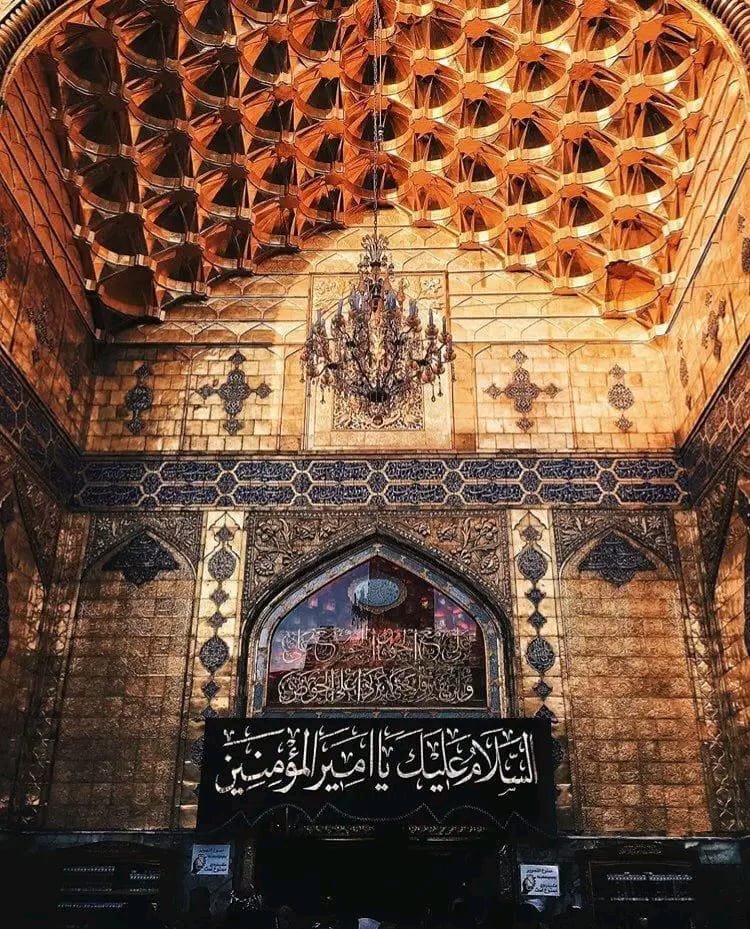
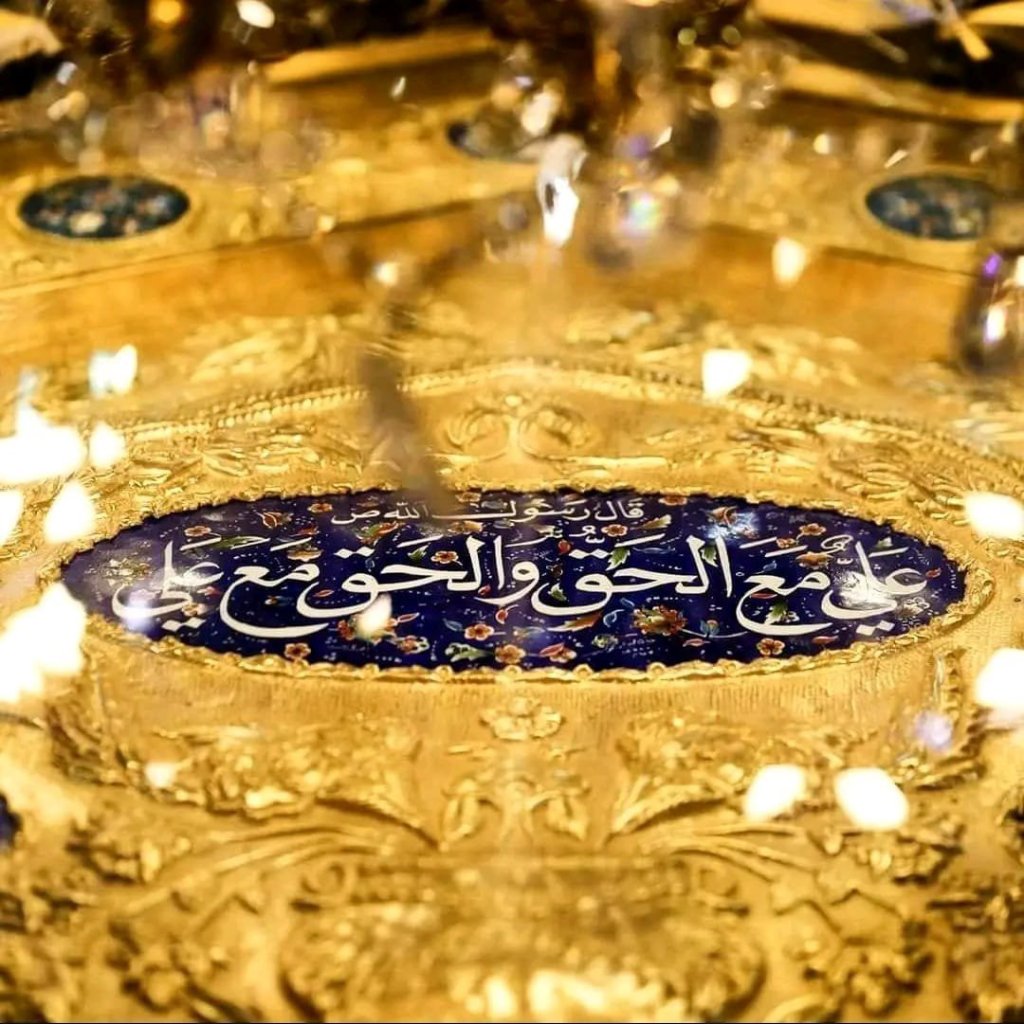
*Huzoor Nabi e Akram ﷺ Ne Farmaya :- Aadam Alahis Salam Ki Takhleeq Se 14 Hazaar Saal Pehle Mein Aur Ali Allah Ki Bargah Mein Ek Noor The’n…*
📚 *Reference* 📚
*1.* Imaam Ahmad Ibn Hanbal, Fazaile Sahaba, Jild 2, Safa 663, Hadees No 1130.
*2.* Imaam Tabri, Ar Riyaz un Nazra, Jild 2, Safa 163-164.
*3.* Imaam Tabri, Ar Riyaz un Nazra, Jild 3, Safa 154.
*4.* Mustadrak, Al Hakim, Jild 2, Safa 609.
*5.* Musnad, Al Firdaus, Hadees No 4176.
*6.* Tarikh Damishq, Ibn Asakir, Jild 3, Safa 154.
*7.* Imaam Zahabi, Mizan Al Itidal, Jild 1, Safa 235.

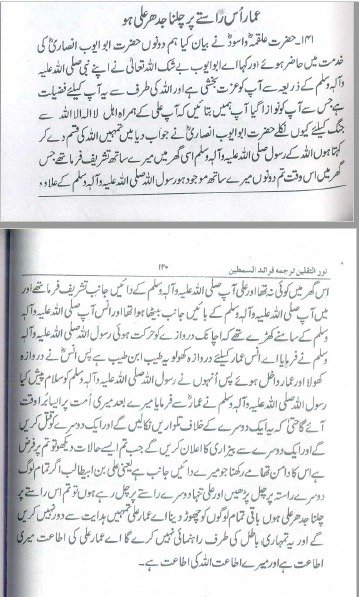
Ammar RA us Raaste par chalna Jidhar Ali AS ho
Hazrat Alqama RA va Aswad RA ne Bayan kiya, Ham dono Hazrat Abu Ayyub Ansari RA ki Khidmat main Hazir hue aur kaha, Aye Abu Ayyub RA Beshaq Allah Ta’ala ne apne Nabi SAWS ke Zariye se aapko Izzat Baqshi hai, Aur Allah ki taraf se ye Aapke liye Fazilat hai Jisse aapko Nawaza gaya, Aap hamain bataye ki aap Ali AS ke Hamraah Ahl e La’ailaaha Illallah ( Muslamano ) se Jung ke liye kyun nikle?
Hazrat Abu Ayyub Ansari RA ne Jawab diya, Main Tumhe Allah ki Qasam de kar kehta hu, Allah ke Rasul SAWS Us Ghar main mere saath Tashreef farma the Jis Ghar main is Waqt tum dono mere saath Moujood ho, Rasulullah SAWS ke Ilawa is Ghar main koi Naa tha, Aur Ali AS Aap SAWS ke Daaye ( Right ) Janib Tashreef Farma the, Aur main Aap SAWS ke Baaye ( left ) Janib baitha tha aur Anas RA Aap SAWS ke Saamne khade the ke Achanak Darwaze ko Harkat hui,
Rasulullah SAWS ne Farmaya:- Anas RA, Ammar RA ke liye Darwaza kholo, Ye Taiyyab ibne Taiyyab hai, Pas Anas RA ne Darwaza khola aur Amma RA Dakhil hue, Pas Unhone Rasulullah SAWS ko Salaam pesh kiya,
Rasulullah SAWS ne Ammar RA se Farmaya:- Mere baad meri Ummat par aisa Buraa Waqt aayega ke Ek Dusre ke Khilaaf Talwaare Nikalenge aur Ek Dusre ko qatl karenge aur Ek Dusre se Bezaari ka Aelaan karenge, Jab Tum aise Haalat dekho to tum par Farz hai Uska Daaman thaame rakhna jo mere Daayi ( Right ) Jaanib hai, Ya’ani Ali AS ibne Abi Talib AS,
Agar Tamaam Log Dusre Raaste par chal pade aur Ali AS Tanha Dusre Raaste par chal rahe ho to Tum us Raaste par chalna Jidhar Ali AS ho, Baaki Tamaam Logo ko Chhod dena,
Aye Ammar RA, Ali AS Tumhe Hidayat se Door nahin karenge, Aur ye Tumhari Baatil ki taraf Rehnumaayi nahin karega, Aye Ammar RA, Ali AS ki Ita’at meri Ita’at hai aur meri Ita’at Allah ki Ita’at hai.
Page no:- 119
Topic – 141
Fraid ul Simtain fi Fazayil al Murtaza wal Batool wal Sibtain by Imam ibrahim bin muhammad al jwaini r.a ( Arabi )
Writer :- Shaikh e Khurasan, Mohaddis e Kabeer, Ibrahim bin Muhammad bin Al Maveed Abi Bakr Jovaini 822 Hijri
Noor us Saqalain ( Urdu Translation )
Translator:- Allama Safdar Raza Qadri


His Generosity
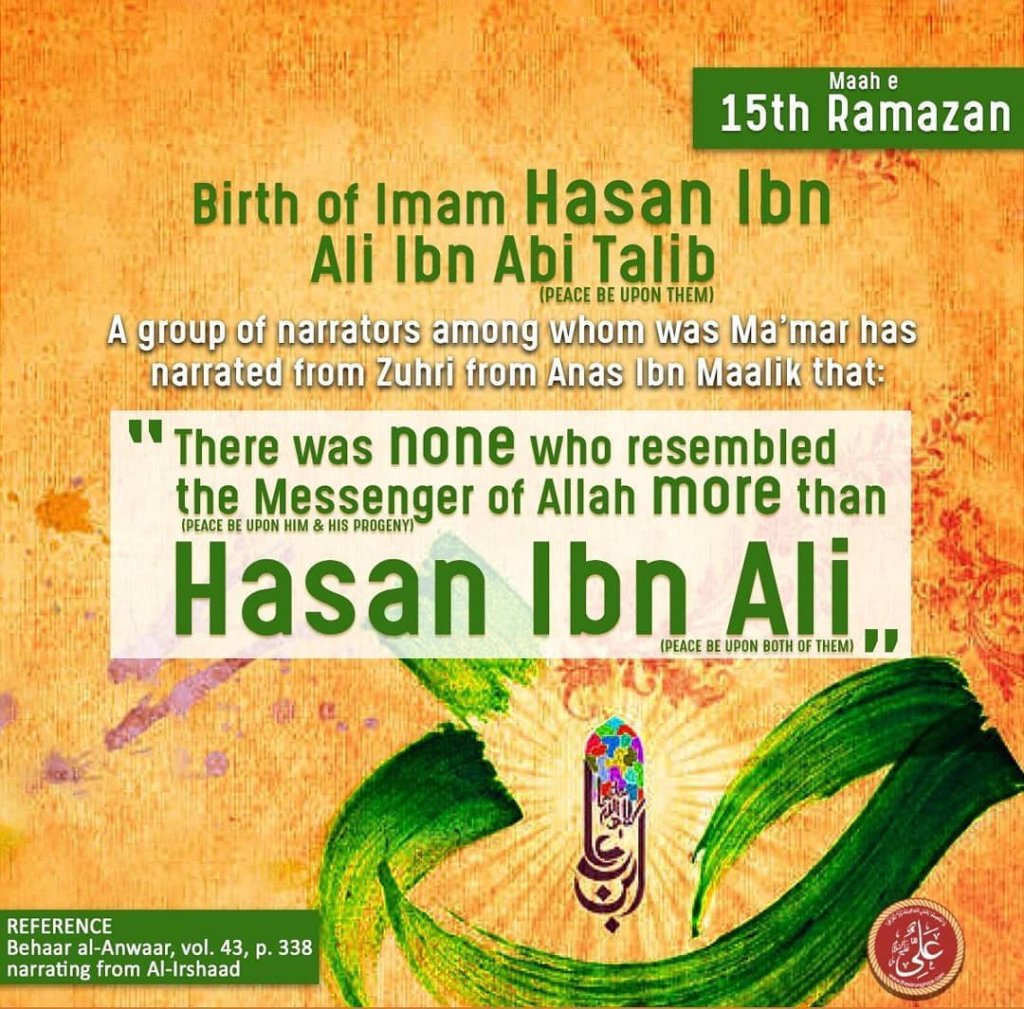
Maybe the most eminent of Imam Hasan’s [a] attributes is his generosity. He believed that money was only a means to clothe the naked, help the destitute, pay the debts of the indebted, or satisfy the hungry. Once, he was asked: “We do not see you disappoint a beggar. Why?”
He replied:
“I am asking Allah for His favours, and I love to be near Him. I am ashamed, as I am myself in need of Allah, to repulse a beggar. Allah got me used to a habit; to shower me with His bounties, and I get Him used to me showering His bounties on the people. I fear that should I stop my habit, He may stop His habit.”
Following are examples of his unlimited generosity:
An Arab desert-dweller once asked for help. In response Imam said: “Give him what is in the safe.” In it there was ten thousand Dirhams.
“Sir,” the Bedouin said, “won’t you allow me to reveal my need and praise you?”
Imam’s reply was something like this:
“We are people whose bounties are flowing. In them hopes and wishes dwell. Our souls givebefore we are asked in fear of the disgrace of the one who asks. Should the sea know how much we give who asks us, it will shrink, after its flooding, in shame.”
The grandson of the Holy Prophet [s] bought an orchard from the Ansars (the supporters of the Holy Prophet [s] in Madina), at the price of 400,000 Dirhams. Then he got word that they lost their wealth. He gave them the orchard back with no charge.
These are only a few insights into Imam Hasan’s [a] generous acts. Such good deeds had the greatest effect in personifying his high Islamic ethics.[15]
Now we are able to form a clear idea of the ingredients of the character of Imam Hasan [a]. It was the top example of the Muslim character ever witnessed by this planet after the prophets [a]. This was the character of the Ahlul Bayt [a] generally and all of them shared the same character and personality.
[15] For details see: Tawfeeq Abu-Alam, Ahlul Bayt, and other books on the life of the Prophet [s].


FATIMA BINTE ASAD
Fatima binte Asad was the mother of Hazrat Ali (a.s). Asad was the son of Hazrat Hashim born to Qeela binte Aamir. Because of this relationship she was a grand daughter of Hazrat Hashim and an aunt of The Prophet (s.a.). When the Prophet (s.a.) came under the guardianship of Abu Talib it was Fatima binte Asad who was providing to him the maternal care and love that is very essential for the upbringing of any child. If Abu Talib gave to Mohammed (s.a.) the paternal affection, she was deputizing as the foster mother. She used to care for him more than she did for her own children and at times she would not bother about her own children if Mohammed (s.a.) required attention. She loved him so much that during the season of the ripening of the dates, she would get up early in the morning, pick the choicest fruits and reserve them for Mohammed (s.a.). Before serving the food, she would reserve small quantities for him just in case he felt hungry before the next meal.
The Prophet (s.a.) loved her as he would his own mother. Acknowledging her love and affection he once said:
“After Abu Talib, there was none more affectionate
and kind to me than her.
Ref: Iste-aab Vol 2, Page 774
The Prophet (s.a.) was so much influenced by her love and affection that he invariably took out time from his busy schedule to call on her and pay his respects. Ibn e Saad writes:
“The Prophet (s.a) used to visit her and generally
had his siesta at her place.”
Ref: Tabaqaat, Vol 8, Page 222
Fatima Binte Asad mothered seven children of Abu Talib. She had three daughters (Rita, Jamana and Faqta who was known as Umm Hani) and four sons (Talib, Aqeel, Jafar and Ali). Talib was ten years older than Aqeel, Aqeel was ten years older than Jafar, Jafar was ten years senior to Hazrat Ali (a.s.). These children had the unique privilege that both their parents were of Hashemite Descent. They were the first to have such a distinction. Ibne Qatiba writes:
“Fatima binte Asad was the first Hashemite lady
who gave birth to Hashemite offspring!”
Ref: Al Ma-arif, Page 88
Fatima binte Asad was from the Hashemite clan that was known for its high character, life style, culture and was different from the other rustic tribes of Arabia. She was perfect in the manners and etiquette for which her family was well known. She was a follower of the Faith of Ibrahim (a.s.) like her ancestors did and was free from the aberration of idolatory and polytheism. Therefore the Prophet (s.a.) has talked about his relation of descent and ancestry with Hazrat Ali (a.s.):
“Allah has created us from the seed of Hazrat Adam (a.s.transfered through pure loins (salb) and pure wombs. Ali had his descent from the same loins as did I, till Allah gave me birth through Amina’s womb
and Ali through Fatima binte Asad.”
Ref: Kifayat al Matalib, Page 26
Fatima binte Asad not only was privileged in her descent, but she was among the first ladies to embrace Islam and also to migrate to Madina when writes:
the Prophet (s.a.) decided to migrate.Ibne Sabag Maliki “Fatima binte Asad embraced Islam, migrated with the Prophet (s.a.) and was one of the earliest converts to Islam.” Ref: Fusool al Mahimma, Page 13. Abul Faraj Isfahani writes: “Zubair ibne Awam says that when the Verse ‘Ya ayyuhan Nabi iza ja-ak al mominaat’ Was revealed, I heard the Prophet (s.a.) inviting The women to join the Fold and Fatima binte Asad Was the first lady who responded to the call and swore allegiance to the Prophet (s.a.)” Ref: Maqatil al Talebeen, Page 4
She was one of the ladies in the Battle of Badr who were serving water to the troops and taking care of the injured. She was an organized housekeeper as should be a lady with Islamic spirit and took care of all the household affairs efficiently. But when Fatimat az Zehra came to her home as a bride, the duties of the household were divided. All the tasks indoors were assigned to Fatima Zehra and the outdoor tasks connected with the home were done by Fatima binte Asad. Therefore Hazrat Ali (a.s.) told her:
“Fatima bint e Rasool will relieve you of
grinding and kneading and going
Out to fetch water and other outdoor
Tasks will remain with you.’
Ref: Asaba, Vol 4, Page 399
They also had a slave girl to assist in the indoor and outdoor tasks of the home. But Fatima binte Asad wished to relieve her of the chains of slavery. Therefore she told to the Prophet (s.a.) one day that she wanted to free the girl. The Prophet (s.a.) said, “If you free her, Allah will protect every part of your body from the Hellfire!” When she was about to declare the girl free, she fell seriously ill. She wanted to make a will to the Prophet (s.a.) about freeing of the girl, but was unable to modulate the words on account of the effect of the illness. She made gestures to the Prophet (s.a.) about it and he affirmed that he would comply with her wish.
She was a person of high piety. Whenever she heard of Fishaar e Qabr (the Pressure in the Grave) and the Day of Reckoning, she used to shake wit fear of Allah. Once she heard from the Prophet (s.a.) that people will be raised on the Day of Judgement in naked state. She expressed that it would be a matter to be ashamed of. The Prophet (s.a.) said that he would pray to Allah that she was not raised naked. Once when she heard about the Fishaar e Qabr she expressed how she would be able to bear that pressure when her body was so weak. The Prophet (s.a.) said, “I shall plead with Allah that He relieved you of the Fishaar e Qabr!” When Fatima bint e Asad expired, Hazrat Ali (a.s) went crying to the Prophet (s.a.) and gave him the sad tiding. Te Prophet (s.a.), seeing tears in the eyes of Ali (a.s.), asked, “Why
are you crying?” He replied, “Just now my mother passed away!” The Prophet’s eyes watered and he said, “By Allah! She was my mother too!” He got up immediately and all the companions too rose to follow him. When he reached her house, the Prophet (s.a.) removed his cloak and said, “It should be used as the shroud for her interment!” When the bier emerged out after the last bath and shrouding of the body, he gave his shoulder for carrying it to the graveside.. Sometimes he was carrying the bier from the front and at others he would move to the back. He thus walked barefoot to, Jannat al Baqih, the graveyard. He had briefed some men for the digging of the grave. When digging was done, he entered the pit. He widened its sides with his own hands and removed the excess soil that fell into it from the sides. He lay down in the grave for a while and glanced to the right and the left. Then he came out of the pit, and said crying:
“O revered mother! May Allah bless you..
You were the best of mothers!”
Ref: Tareeq e Qamees, Vol 2, Page 526
Noticing this preferential treatment, some of the companions asked the Prophet (s.a.) that they had never seen him give such importance to any other person. He replied that, after his uncle, Abu Talib, she was the kindest person to him. She used to remain hungry and feed him properly. She used old clothes and always provided him good raiment. She took more care of him than of her own children. He had given his cloak as a shroud so that she was raised clad in it on the Day of Reckoning. He said that he lay down in her grave for a while that she didn’t experience the Fishaar e Qabr..A scholar of Ahl al Sunnat, Sheik Ali al Marzooqi writes:
“The Prophet (s.a.) himself interred Fatima bint e Asad and gave his own dress as a shroud. At the moment
He was heard saying,
‘Your son!’
When she was asked about her God, she said:
‘Allah!’
When asked about her Prophet
she replied correctly.
When asked about her Imam, words
Failed her.
At this moment the Prophet
Prompted her:
‘Your son!””
Ref: Kitab al azman wa amkanat, vol 2, Page 280 She died in 4 H and has been buried at Jannat al Baqih. But the compound wall of Jannat al Baqih has been raised and the grave is now in a neglected passage out side the wall. When the Hajis pass that way, they offer Fateha there.
 Aal-e-Qutub Aal-e-Syed Abdullah Shah Ghazi