नासिर इस्लाम हज़रत ख़्वाजा नसिरुद्दीन उबैदुल्लाह एहरारनक्शबंदी कुद्दस सिर्रहू ( 895 हि.) एक रोज़ सादाते किराम की तौकीर व ताज़ीम के बारे में फरमा रहे थे कि जिस बस्ती (गोठ) सादात किराम रहते हों मैं उसमें रहना नहीं चाहता क्योंकि उनकी बुजुर्गी और शर्फ ज्यादा है। मैं उनकी ताज़ीम का हक़ बजा नहीं ला सकता । ( तज़किरा मशाईख नक्शबंदिया) (ज़ैनुल बरकात )
सादात की ताज़ीम के लिए क्याम
ख़्वाजा एहरार कुद्दस सिर्रहू रिवायत फ़रमाते हैं कि एक रोज़ इमाम आज़म सिराज उम्मत सैयदना इमाम अबू हनीफ़ा की अपनी मजलिस में कई बार उठे किसी को इसका सबब मालूम न हुआ। आखिरकार हज़रत इमाम से एक शागिर्द ने मालूम किया।
हज़रत इमाम आज़म ने फ़रमायाः सादाते किराम का एक साहबज़ादा लड़कों के साथ मदरसा के सहन में खेल रहे हैं। वह साहबज़ादा जब इस दर्स के करीब आता है और उस पर मेरी नज़र पड़ती है तो मैं उसकी ताज़ीम के लिए उठता हूँ।” (ज़ैनुल बरकात)
सय्यदों का एहतरामः
(1) सय्यदी अब्दुल वहाब शोरानी में फ़रमाते हैं: “मुझ पर अल्लाह तआला के एहसानात में से एक यह है कि मैं सादाते किराम की बेहद ताज़ीम करता हूँ अगर्चे उनके नसब में तअन करते हों।
मैं इस ताज़ीम को अपने ऊपर उनका हक तसव्वुर करता हूँ, इसी तरह उलमा व औलिया की औलाद की ताज़ीम शरई तरीके से करता हूँ, अगर्चे मुत्तकी न हों, फिर मैं सादात की कम अज़ कम इतनी ताज़ीम व तकरीम करता हूँ जितनी मिस्र के किसी भी नाइब या लश्कर के काजी की हो सकती है। ” (अल् शरफुल मोबिद )
(2) हज़रत अबु राफेअ बयान करते हैं कि हुज़ूर नबी अकरम ने हज़रत अली से फ़रमाया: बेशक पहले चार अशख़ास जो जन्नत में दाखिल होंगे वह मैं, तुम, हसन और हुसैन होंगे और हमारी औलाद हमारे पीछे होगी (यानी हमारे बाद वह दाखिल होगी) और हमारी बीवियाँ हमारी औलाद के पीछे होंगी (यानी उनके बाद जन्नत में दाखिल होंगी) और हमारे चाहने वाले (हमारे मददगार ) हमारी दाऐं जानिब और बाऐं जानिब होंगे।” इस हदीस को इमाम तिबरानी ने रिवायत किया है।
Joseph (Yusuf) was one of the twelve sons of Jacob. His mother’s name was Raheel. He had a younger sister and a brother named Benjamin n (Binyamin) from the same mother. Joseph was exceptionally handsome and was very dear to his parents.
The dream of Joseph and its interpretation by his father
One day Joseph told his father about a dream he had the previous night. He saw that the sun, the moon and eleven stars bowed down before him. His father was the prophet of the time and knew the meaning of the dream. He told him that he would be a prophet of God and will be a powerful king over everybody including his parents and his brother.
Ill-treatment of Joseph by his brothers
Interpretation of the dream by Jacob did not go well with his sons who were already distraught due to their father’s special affections for Joseph. They decided to get rid of their brother Joseph. They threw him in a well and brought his shirt. smothered in sheep’s blood. They put up scene upon entering their home, wailing and crying They told their parents that a wolf had devourer their young brother and that they were unable to save him from the terrible fate.
Jacob was so grieved at the story and was so saddened by the apparent loss of his son that he wept profusely all day and all night. It is said that he lost his eyesight due to excessive crying.
Joseph retrieved from the well and sold as a slave
Having thrown their younger brother in the well, the older brothers stayed around to see what might happen. A caravan headed for Egypt stopped at the well for water and for
rest. Seeing a handsome youth in the well they pulled him out and wondered at his beauty and youth. The brothers showed up in front of the leader of the caravan and said that the youth was their slave who had escaped from them and had hidden himself in the well. The leader of the caravan saw the potential of higher sale value for Joseph in the slave market of Egypt and he paid a low price to his brothers for legitimising his ownership.
Upon arriving in Egypt, the caravan leader placed Joseph on the market. His price increased every day. The ruler of Egypt heard about the sale of an exceptionally handsome youth in his city and he came down to see him. He was stunned by the beauty of the lad and paid the highest price at the bidding. He took him to his palace to serve his beautiful wife. Zulaikhah, who had no child.
Joseph in servitude of the Pharaoh of Egypt
Joseph served the king and his wife with such honesty and efficiency that he was made incharge of the ruler’s household. It so happened that Zulaikhah developed infatuation for Joseph and started to love him with increasing passion.
The story of Zulaikhah’s love for Joseph
ashe Zulaikhah fell madly in love with Joseph, but he took every opportunity to avoid her advances. On one occasion was successful in trapping him into her chamber so that she could be alone with him. No sooner did he realize the wicked designs of the queen than he made for the door of the chamber. She lunged after him and was able to grab his shirt from behind. In the short scuffle that followed, Joseph’s shirt was torn from behind. Just as he escaped through the chamber door, he bumped into the king himself. Realizing the acuteness of her situation, the queen yelled for help. The ruler was greatly angered by the rather strange circumstances and looked at Joseph demanding an explanation. Joseph said that he was innocent and that Zulaikhah was the guilty one. One of Zulaikhah’s own relatives from the household came forward to clear the matter. He said that if Joseph’s shirt was torn from front, then he was the aggressor and culpable for his actions but if it was torn from behind, then Zulaikhah was guilty. As Joseph’s shirt was torn from behind, the ruler found his wife to be culpable for the embarrassing event.
He told Joseph to forget the event and told his wife to refrain from seeing Joseph when alone. However, the story of the scandal got out of the palace and spread far and wide. Women of other nobles maliciously gossiped about this happening.
Zulaikhah arranged a party and invited the women of nobility to her palace. As they were busy cutting and eating fruits, she summoned Joseph into her audience. As he arrived in their presence, the women got totally stunned by his beauty and many cut their fingers instead of the fruits in their hands. They were now convinced about what they had heard about Joseph and his beauty.
Joseph prayed to God to save him from the wickedness of the queen and other women of Egypt.
The imprisonment of Joseph
When the king learnt about the scandalous involvement of the wives of other nobles in his kingdom over Joseph, he considered it best to take Joseph away from his palace and threw him into the prison. However the supervisor of the prisons noted the purity of character and conduct of Joseph and started to treat him with respect. He made him’ his deputy in managing the affairs of the prison.
Interpretation of dreams by Joseph
It so happened that two other young men were thrown in the same prison. Each one of them saw a dream. One saw that he was extracting juice from ripe grapes and the other saw that he was carrying a basket of bread on his head and birds were eating freely from it. They asked Joseph if he could interpret their dreams. He gave them sermon on virtuous conduct and belief in the oneness of God. He then gave them the interpretation of their dreams. He told the one who saw himself extracting juice from.
Banu Zubuda was a clan living to the west of Medina. and had accepted Islam. Their leader was a warrior known as Omar bin Kurb. Omar had a feud with another warrior of the same clan named Ushus Khusee, who had killed his father. Anxious to avenge his father’s death. Omar took Ushus prisoner and desired to slay him. The matter went up to the Prophet for arbitration. The Holy Prophet decreed that after the acceptance of Islam, the seeking of revenge for the blood of relatives, which had become a system during the time before Islam, did not now arise. This decision upset Omar so much that he renounced Islam. Omar then killed Harrith Ibn Kaab, the chief of a tribe which had become a feudatory to Islam. This killing of an ally of the Muslims could not be tolerated by the Holy Prophet.
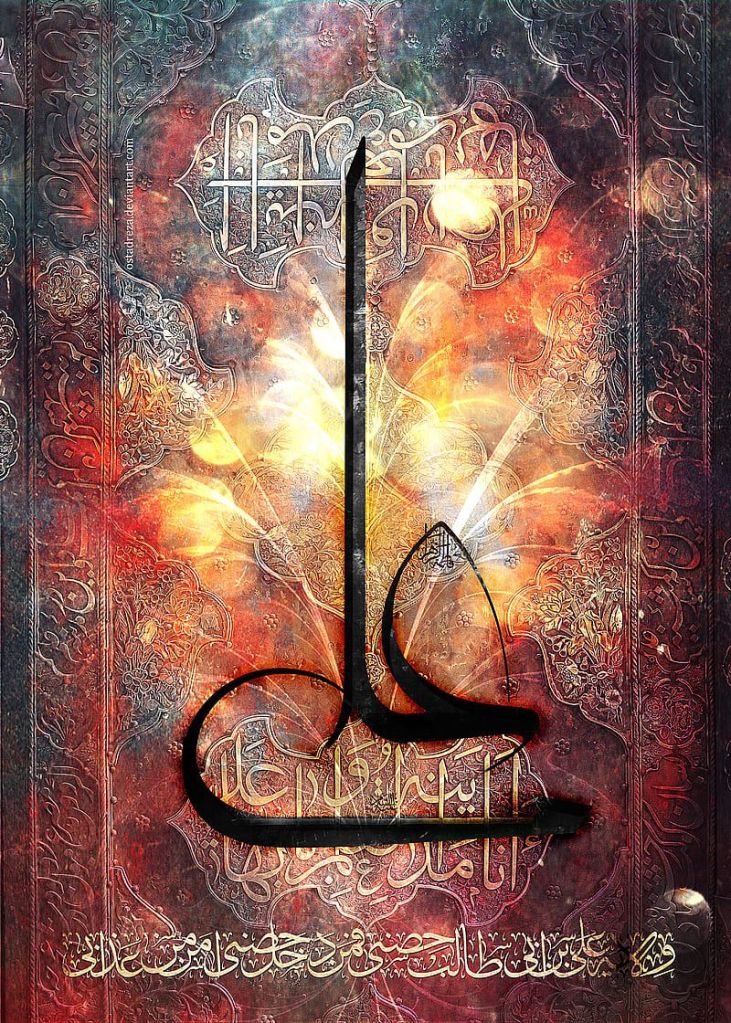
He deputed Ali to lead a force against the Banu Zubuda. Before the general battle began, Omar came out and challenged Ali to a single combat. At this Ali, The Lion
of God’, came thundering out of the ranks, and chanting verses in which he glorified the valour of the Muslim heroes. struck such awe in the heart of the adversary that he fled from the battlefield. This left the tribe of Banu Zubuda without a leader, and they promptly took to flight. Ali pursued them, took several of thein prisoners and returned to Medina in triumph.
The Tabuk expedition, and the appointment of All as Governor of Medina.
In the middle of 9 A.H. 631 A.D. news reached the Prophet that the Roman Emperor Heracles was mobilising a huge army to surprise the Muslims at Medina. Receiving this intelligence, the Prophet resolved to meet the enemy on their way, and issued explicit orders to his men to make preparations for the expedition. The Holy Prophet appointed Ali, his Vicegerent, as Governor of Medina. Besides commanding the Medina garrison, Ali was to officiate at prayers and to perform all those duties that had hitherto devolved on the Holy Prophet. In addition to maintaining law and order, he was also required to look after the Prophet’s household, a duty which more. than all others epitomised the love and trust in which he was held by his beloved Master. He accepted the trust with great reluctance, having been accustomed always to: accompany the Prophet and share all his perils.
After the departure of the Holy Prophet, rumours began to circulate to the effect that Ali had been deliberately left behind because the Prophet had been apprehensive about the dangers of the Tabuk expedition. These rumours were started by one of the leaders of the hypocrites, Abdullah ibn Ubay, an old enemy of Islam since the days of Badr.
To a man of Ali’s nature, accusations of cowardice were more than could be borne. Stung by this suggestion. Ali hastened after the Prophet, overtaking him on the road to Tabuk and informed him of the various rumours prevailing in Medina. The Holy Prophet managed to pacify Ali and spoke thus: “These men are liars. They are the party of the Hypocrites and Doubters, who would breed sedition in Medina. I left thee behind to keep watch over them, and to be a guardian to both our families. ‘I would have thee to be what Aaron was to Moses; excepting that thou canst not be like him, a Prophet; I being the last of the Prophets.” The Holy Prophet also explained to Ali that although Abu Sufyan had embraced Islam, the danger of an intrigue at Medina was still so great, that only Ali would be able to curb the mischievous designs of the enemies within the city.
Ali left post-haste for Medina where he sought out the house of Abdullah Ibn Ubay and dragging him outside proceeded to give him a bit of his mind. Though the Holy Prophet had been lenient in his dealings with the Hyprocrites, Ali made it very clear to them that he would not tolerate their double-dealings. He believed in harsher measures and he made it abundantly clear, that, as long as he was in charge of Medina, he would neither brook any insult nor endure any form of intimidation.






 Aal-e-Qutub Aal-e-Syed Abdullah Shah Ghazi