Zikr e Hazrat Ubayy Ibn Ka’b  (RA)


Ubayy ibn Ka‘b, the Scholarly Youth
Ubayy ibn Ka‘b belonged to the Khazraj tribe, that formerly inhabited the Caspian littoral. Before converting to Islam, he was one of the Jewish scholars and intellectuals. He converted to Islam at the age of thirty one. He had complete knowledge of the Tawrāt (the Old Testament) and knew about the glad tidings of the coming of the Noble Prophet (S).

When the first Muslim propagator by the name of Mus‘ab ibn ‘Umayr entered Medina and invited the people to convert to Islam, Ubayy ibn Ka‘b responded with clear foresight and complete awareness to the call before he had even met or seen the Noble Prophet (S). During the second allegiance ceremony at ‘Aqabah, Ubayy ibn Ka‘b was one of the seventy people of Medina who paid allegiance to the Noble Prophet (S).

Before converting to Islam, he was considered as one of the most learned people of Medina. For that reason, it did not take long before he achieved great success among the Muslims. When the Noble Prophet (S) entered Medina, Ubayy ibn Ka‘b was the first person among the Helpers [Ansār] of Medina to record the Divine Revelation, and, hence, become one of the most famous scribes of the Glorious Qur’an.1

Aided by his brilliant intellectual abilities, Ubayy soon became one of the most renowned personalities of the Muslim World. He acquired competence and proficiency in recitation of the Glorious Qur’an and made enormous progress in other fields of Islamic sciences.

It is important to note that this honorable position and status was bestowed upon him by Allah. The Noble Prophet (S) received orders from Allah to recite the Qur’an for Ubayy and teach him how to recite it in a correct manner.

Ubayy had never imagined that some day he could be favored to such a great extent by Allah. When the Noble Prophet (S) informed him about the good news, that Allah had selected him to take up this assignment (recitation of the Glorious Qur’an), he asked in a surprised and eager way, “Did Allah mention me by name?” The Noble Prophet (S) stated, “Yes, he mentioned you by name.” He was so overwhelmed with the honor that he could not restrain the tears from flowing down his cheeks.

In order to bless him with peace, the Noble Prophet (S) recited the following Qur’anic verse [āyah] for him, “Say: In the grace of Allah and in His mercy—it is that they should rejoice; for it is better than that which they gather.”2

Ubayy always acted in accordance with the instructions of his teacher, the Noble Prophet (S).

One day, while addressing the Noble Prophet (S), Ubayy said, “O Prophet of Allah! I believed in Allah, and I converted to Islam at your hands, and then learnt the Noble Qur’an from you.”3

Indeed, Ubayy was always thankful for the great eminence he was honored with, and ascended to great heights because of reciting the Noble Qur’an. Imām al-Sādiq (‘a) said this in his favor, “We (the Ahlul Bayt) recite the Noble Qur’an according to Ubayy’s way of recitation.”4

Ubayy ibn Ka‘b and Qur’anic studies
In addition to what has been mentioned, Ubayy ibn Ka‘b possessed many other special qualities. One of the special qualities which Ubayy possessed was comprehension of the deep and profound meanings of the Glorious Qur’an.

Ubayy ibn Ka‘b possessed an enquiring mind, an open attitude and positive thinking regarding Qur’anic studies. It is for this reason that he was always involved in academic research. He used to carefully examine the details expounded in the verses of the Glorious Qur’an. That is why the Noble Prophet (S) always used to encourage him to strive hard at acquiring divine knowledge.5

A person asked Ubayy ibn Ka‘b for advice. He said, “Your guide, example and judge should be the Glorious Qur’an, because it is a remembrance from Allah’s Prophet (S) and an interceder in the presence of Allah. It is a program for the daily activities of the Muslims and is far from accusation and incrimination. The lives of the past peoples have been narrated therein and the right way of life for the Muslims has been shown therein. News about the future of the present Muslims and the generations that will come after has been foretold in the Glorious Qur’an.”6

Ubayy and the events that occurred after the Noble Prophet (S)
After the sad demise of the Noble Prophet (S) of Islam, the managers of the Assembly of Saqīfah succeeded at executing their pre-planned conspiracy to usurp the caliphate and gain the reigns of power. As a result of this, they disregarded ‘Alī ibn Abī Tālib (‘a), the real Imām of the Islamic community unparalleled in every way from temporal or apparent leadership.7

Ubayy, who had painfully witnessed this chaotic state of affairs, used to say, “As long as the Noble Prophet (S) was alive, all eyes were fixed on one point. After his sad demise, however, eyes and faces started deviating from right to left.”8

In the afternoon of the day of the Saqīfah, Ubayy ibn Ka‘b was passing by a group of the Ansār. One of the Ansār asked him, “Where are you coming from, Ubayy?” He answered, “From the house of the Prophet’s family.” They asked him, “How are the Prophet’s family faring?” He responded, “How can one describe the state of those whose house is now devoid of the presence of one on whom Allah’s angels descended with His Messages?” While saying this he broke down, the tears choking his throat. On witnessing this, the people who had asked him this question started crying too.9

Ubayy never paid allegiance to the First Caliph, and believed that the Saqīfah was an illegitimate assembly which possessed no legality and no value at all.10

Ubayy was one of the first twelve people who raised their voices of protest against the First Caliph in the Prophet’s (S) Mosque, and openly declared their support of ‘Alī ibn Abī Tālib (‘a).11

He was constantly protesting against the rulers of his time, and during the rule of ‘Uthmān, said, “The rulers of this community have gone astray and destroyed their Hereafter. My heart does not feel pain for them, but breaks for those who have followed these lost leaders. If I stay alive till this Friday, I will reveal the truth as I know it even if I am killed.”12

But it is very sad that he died on Thursday, the day before Friday of that same week! He passed away in 30 or 32 AH at the age of fifty. Ubayy spent his life as a Muslim struggling to support and uphold the principles of Islam that he had learnt from the Holy Prophet (S) but died of a broken heart filled with sorrow for the direction it was moving in at the hands of the self-appointed rulers. May his soul rest in peace.13

1.Al-Asābah, vol. 1, p. 19; Al-Darajāt al-Rafī‘ah, p. 324; Zarkulī, Al-A‘lām, vol. 1, p. 82; Sifat al-Safwa, vol. 1, p. 188.
2.Sūrat Yūnus 10:57.
3.Hilyat al-‘Awliyā, vol. 1, p. 250.
4.Al-Darajāt al-Rafī‘ah, p. 324.
5.Hilyat al-Awliyā’, vol. 1, p. 250.
6.Hilyat al-Awliyā’, vol. 1, p. 253.
7.The usurpers of the caliphate could not dismiss ‘Alī ibn Abī Tālib (‘a) from divine guardianship because it was Allah the High who had appointed him. Therefore, they only managed to usurp the temporal or apparent leadership. [trans.]
8.Hilyat al-Awliyā’, vol. 1, p. 254.
9.Al-Darajāt al-Rafī‘ah, p. 325.
10.Al-Fusūl al-Muhimmah, p. 180.
11.Tabarsī, Al-Ihtijāj, p. 47; Tanqīh al-Maqāl, vol. 1, p. 198; Hilyat al-Awliyā’, vol. 1, p. 252.
12.Bihār al-Anwār, vol. 3, p. 270.
13.Ibn Sa‘d, Tabaqāt, vol. 3, p. 378; Qāmūs al-Rijāl, vol. 1, p. 50; Zarkulī, Al-A‘lām, vol. 1, p. 78.

चौदह सितारे अबु मोहम्मद हज़रत इमाम हसन असकरी पार्ट- 9

इमाम हसन असकरी (अ.स.) की दोबारा गिरफ़्तारी

यह एक मुसल्लेमा हक़ीक़त है कि ख़ुल्फ़ाए बनी अब्बासिया ख़ूब जानते थे कि सिलसिला ए आले मोहम्मद (स अ व व ) के वह अफ़राद जो रसूल अल्लाह (स अ व व ) की सही जा नशीनी के मिसदाक़ व हक़दार हो सकते हैं वह वही अफ़राद हैं जिनमें से ग्यारहवीं हस्ती इमाम हसन असकरी (अ.स.) की है। इस लिये उनका फ़रज़न्द वह हो सकता है जिसके बारे में रसूल अल्लाह (स अ व व ) की पेशीन गोई सही क़रार पा सके। लेहाज़ा कोशिश यह थी कि उनकी ज़िन्दगी का दुनिया से ख़ात्मा हो जाए। इस तरह की उनका जा नशीन दुनिया में मौजूद ने हो। यही सबब था कि इमाम हसन असकरी (अ.स.) के लिये नज़र बन्दी पर इक़तेफ़ा नहीं की गई। जो इमाम अली नक़ी (अ.स.) के लिये ज़रूरी समझी गई थी बल्कि आपके लिये अपने घर बार से अलग क़ैद तन्हाई को ज़रूरी समझा गया। यह और बात है कि क़ुदरती इन्तेज़ाम के मातहत दरमियान में इन्के़लाबाते सलतनत के वाक़ए आपकी क़ैदे मुसलसल के बीच में क़हरी रिहाई के सामान पैदा कर दिया करते थे , मगर फिर भी जो बादशाह तख़्त पर बैठता वह अपने पेश रौ के नज़रिये के मुताबिक़ आपको दोबारा मुक़य्यद करने पर तैयार हो जाता था। इस तरह आपकी मुख़्तसर ज़िन्दगी जो दौरे इमामत के बाद थी उसका बेशतर हिस्सा क़ैदो बन्द में ही गुज़रा। इस क़ैद की सख़्ती मोतमिद के ज़माने में बहुत बढ़ गई थी। अगरचे वह मिस्ल दीगर सलातीन के आपके मरतबे और हक़्क़ानियत से ख़ूब वाक़िफ़ था लेकिन फिर भी वह बुग़्ज़े लिल्लाही को छोड़ न सका और दस्तूरे साबिक़ के मुताबिक़ उन्होंने ज़िन्दगी की मंज़िले आखि़र तक पहुँचाने के दरपए रहा। यही वहज है कि वह नज़र बन्दियों से मुतमईन न हो सका और उसने 258 हिजरी में इमाम हसन असकरी (अ.स.) को फिर मुक़य्यद कर दिया।(आलामुल वुरा पृष्ठ 214 ) और अबकी मरतबा चूंकि नियत बिल्कुल ख़राब थी इस लिये क़ैद में भी पूरी सख़्ती की गई। हुक्म था कि आपके साथ किसी क़िस्म की कोई रियायत न की जाए। चुनान्चे यही कुछ होता रहा लेकिन उसे इससे तसल्ली न हुई और उसने अपने एक ज़ालिम खि़दमतगार जिसका नाम ‘‘ नख़रीर ’’ था को बुला कर कहा कि उन्हें तू अपनी निगरानी में ले ले और जिस दर्जा सता सके उन्हें परेशान कर। नख़रीर ने हुक्म पाते ही तशद्दुद शुरू कर दिया। इमाम (अ.स.) को दिन की रौशनी और पानी की फ़रावानी तक से महरूम कर दिया। आपको दिन और रात का पता सूरज की रौशनी से न चलता था सिर्फ़ तारीकी ही रहती थी। एक दिन उसकी बीवी ने उससे दरख़्वास्त की के फ़रज़न्दे रसूल (स अ व व ) है उसके साथ तुम्हारा यह बरताव अच्छा नहीं है। उसने कहा यह क्या है अभी तो उन्हें जानवरों से फड़वा डालना बाकी़ है।

हुज्जते ख़ुदा दरिन्दों में

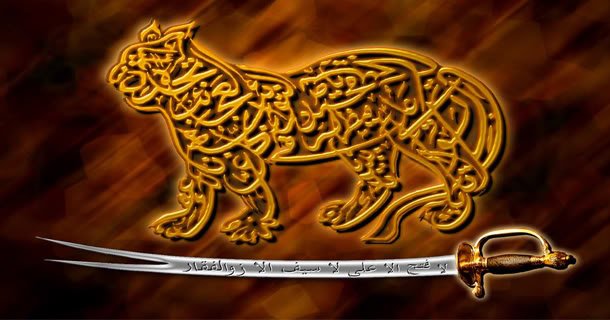
चुनान्दे उसने इजाज़त हासिल कर के इमाम हसन असकरी (अ.स.) को दरिन्दों मे डाल दिया। शेर और दीगर दरिन्दों की नज़र जब आप पर पड़ी तो उन्होंने हुज्जते ख़ुदा को पहचान लिया और उन्हें फाड़ खाने के बजाए उनके क़दमों पर सर रख दिया इमाम हसन असकरी (अ.स.) ने उनके दरमियान मुसल्ला बिछा कर नमाज़ पढ़ना शुरू कर दिया दुश्मनों ने एक बुलन्द मक़ाम से यह हाल देखा और सख़्त शर्मिन्दा हो कर इमाम (अ.स.) की फ़ज़ीलत का एतेराफ़ किया।(आलामुल वुरा पृष्ठ 218, कशफ़ुल ग़म्मा पृष्ठ 127, इरशाद मुफ़ीद पृष्ठ 514 )

इस वाक़िये ने आप की दबी हुई फ़ज़ीलत को उभार दिया लोगों में इस करामत का चरचा हो गया अब तो मुतामिद के लिये इस के सिवा कोई चारा न था कि उन्हें जल्द से जल्द इस दारे फ़ानी से रूख़सत कर दे चुनान्चे उसने एक ऐसे क़ैद ख़ाने में आपको मुक़य्यद कर दिया जिसमें रह कर ज़िन्दा रहने से मौत बेहतर है।

Jibreel in the presence of the Holy Prophet Hadhrat Muhammad (Sallallahu alaihi wa sallam) part 4

Jibreel (May peace be upon him) service in the presence of the Holy Prophet (Sallallahu alaihi wa sallam)

As Jibreel (May peace be upon him) is a special servant and doorkeeper of the Holy Prophet (Sallallahu alaihi wa sallam). He used to hold the reins of His mount as Imam Tabarani (May Allah shower His Mercy on him) relates in his Musnad e Shamiyyeen Vol. 1 Pg. No.. 603:

Translation of Hadith: It has been narrated on the authority of Hadhrat Anas (May Allah be well pleased with him): We were with the Holy Prophet (Sallallahu alaihi wa sallam) in a battle. We were going towards a valley. When we started climbing it, the Holy Prophet (Sallallahu alaihi wa sallam) gave the Takbeer (i.e. Allahu Akbar) and looked at us, smiled and continued. When we reached the middle of the valley, the Holy Prophet (Sallallahu alaihi wa sallam) said the Takbeer, looked at us, smiled and continued going. When we crossed the entire valley, the Holy Prophet (Sallallahu alaihi wa sallam) said the Takbeer, looked at us, smiled and stopped. When all of us gathered, He (Sallallahu alaihi wa sallam) asked us: Do you know why I said the Takbeer and why I looked at you and smiled? We entreated: Allah Ta’ala and His Prophet (Sallallahu alaihi wa sallam) know better than us.

The Holy Prophet (Sallallahu alaihi wa sallam) said: When we were climbing the valley, Jibreel (May peace be upon him) held the reins of my horse and said: O Muhammad, give this glad tiding to your Ummah that whoever dies in the state that he/she testifies, there is none worthy of worship except Allah Ta’ala and Hadhrat Muhammad (Sallallahu alaihi wa sallam) is His worshipper and Prophet, then Allah Ta’ala will certainly enter that person into Jannah. I said the Takbeer, turned towards you and smiled. Jibreel (May peace be upon him) held the reins and kept walking. After some time Jibreel (May peace be upon him) said: O Muhammad (Sallallahu alaihi wa sallam), please accept this glad tiding and convey it to your Ummah that whoever testifies that there is none worthy of worship except Allah Ta’ala and Hadhrat Muhammad (Sallallahu alaihi wa sallam) is His Prophet, Allaht will enter that into Jannah. I said the Takbeer, turned towards you and smiled. Jibreel (May peace be upon him) kept walking. We covered the entire valley and reached the plain. Then he said: O Muhammad (Sallallahu alaihi wa sallam), please accept this glad tiding and convey it to Your Ummah that whoever dies while testifying that there is none worthy of worship except Allah Ta’ala and Hadhrat Muhammad (Sallallahu alaihi wa sallam) is His Prophet, Allah Ta’ala forbids hell on that person.

Allah Ta’ala sent Jibreel (May peace be upon him) to the Holy Prophet (Sallallahu alaihi wa sallam) to respect and revere Him

Jibreel (May peace be upon him) came to the Holy Prophet (Sallallahu alaihi wa sallam) just before He (Sallallahu alaihi wa sallam) passed away into the presence of Allah Ta’ala. It is given in Tabarani and Mawahib-e-Ladunniya:

Translation of Hadith: It has been narrated on the authority of Hadhrat Ali bin Hussain (May Allah be well pleased with him), who in turn heard his father that 3 days before the

Holy Prophet (Sallallahu alaihi wa sallam) passed away into the presence of Allah, Jibreel (May peace be upon him) came to His presence and entreated: O Muhammad (Sallallahu alaihi wa sallam), Allah Ta’ala sent me especially to respect and revere You. Then Jibreel (May peace be upon him) asked the Holy Prophet (Sallallahu alaihi wa sallam) about His illness. The angel of death requested permission to enter the presence of the Holy Prophet (Sallallahu alaihi wa sallam), Jibreel (May peace be upon him) said: This is the angel of death. He requests permission to come into your presence. Before this, he had never requested permission from any Prophet and will never request permission from any human being after this. The Holy Prophet (Sallallahu alaihi wa sallam) said: Permit him.

The angel of death entered the presence of the Holy Prophet (Sallallahu alaihi wa sallam). He stood with utmost respect and said: Verily Allah Ta’ala has sent me to you and has commanded me to obey whatever you say. If you order that I should draw your blessed soul, I’ll do so. If you order me not to do so, I will refrain.

Jibreel (May peace be upon him) said: O Muhammad (Sallallahu alaihi wa sallam), verily Allah Ta’ala wants to meet You. Then the Holy Prophet (Sallallahu alaihi wa sallam) said: O angel of death, do what u have been commanded to do. Jibreel (May peace be upon him) said: O Prophet of Allah (Sallallahu alaihi wa sallam) this is my last coming to the earth with the Wahi (revelation). There is nothing else except that in this world my and is You only. (M’ojam Kabeer Tabarani, Hadith No. 2821; Al Matalib Ul A’aliyya Li Ibn Hajr ‘Asqalani, Hadith No. 4449;

Propher Jibreel (May peace be upon him) kissing the hands of the Holy Prophet (Sallallahu alaihi wa sallam)

Zubdatul Muhaddithin Hadhrat Abul Hasanaat Syed Abdullah Shah Sahab Naqshbandi Mujaddidi Qadri (May Allah shower His mercy on him)a Hadith in his Miladnama pg no. 162

Translation of Hadith: Once Jibreel (May peace be upon him) was very ecstatic. He would kiss the hands of the Holy Prophet (Sallallahu alaihi wa sallam). He would rub his face on the cloak of the Holy Prophet (Sallallahu alaihi wa sallam). The Holy Prophet (Sallallahu alaihi wa sallam) asked him: O Jibreel (May peace be upon him) what is this? Jibreel (May peace be upon him) said: O Prophet of Allah (Sallallahu alaihi wa sallam), please ask Mikail. Hadhrat Mikail (May peace be upon him) said: O Prophet of Allah (Sallallahu alaihi wa sallam), when we are not ordered to come to you, we become restless. Today we supplicated to Allah Ta’ala thousands of times. Seeing these humble prayers, other angels (May peace be upon them) asked us: O Jibreel and Mikail, what is this restlessness? We answered: We cannot be satisfied until we see the beauty of Hadhrat Muhammad (Sallallahu alaihi wa sallam). What can we do? Because we received permission to come to you after thousands of supplications, that’s why this is our condition.

ABRAHAM (IBRAHIM) Alahissalam part 1

ABRAHAM (IBRAHIM)

The Birth of Abraham

Abraham (Hazrat Ibrahim) was born in the fifth generation from A” abed and during the reign of a tyrant known as Nimrod (Namrood). Nimrod, a powerful king, made his subjects bow to him as a god. One night he dreamt that a star rose from the horizon and its brilliance eclipsed the moon and the sun. He woke up wondering about the interpretation of his dream. He summoned the astrologers and fortunetellers to come up with the most acceptable explanation of his dream. They conferred with one another and told him: ‘A person will be born in your kingdom who will wreck your power and destroy your influence. He asked if that person had actually been born or would be born in the near future. They told him that he was not yet born. Upon hearing that, Nimrod ordered a ban on all marriages, separating men from women and ordered the killing of all new borns.

God is All Powerful and All Knowing. His intentions come to be whenever Ile deems them to be. The mother of Abraham successfully concealed her pregnancy. She went out of the city limits and gave birth to her child in a cave. She stayed in that cave with her child until the senseless slaughter of the new borns had come to an end and the king’s own fear of his destruction had abated. By this time Abraham had grown up to be a tall and handsome lad. They returned to their ancestral home in the city of Ur.

His Intelligence, Cognition and Rejection of Idolatry:

In those days people believed in the celestial bodies as their deities. One night. Abraham also selected the brightest of all the stars for his observation. By the morning its light faded and it disappeared. He thought that the most brilliant of the stars could not be the creator as it faded away in the brightness of another celestial body. Similarly he noted that the moon changed phases and was but a shadow in front of the brightness of the sun. He concluded that the moon could not be the creator either. He pondered if the sun was the ultimate god, as he had also noted people bowing in subjugation to the sun. But the sun was out only for the duration of the day and gave way to the stars and the moon at night. He reflected upon this phenomenon and concluded that the one who put these celestial bodies in their respective places has the supreme power over them and must be the God Almighty, even though He was not visible or physically tangible. He was pleased with this conclusion and enthusiastically began to tell people how wrong they all had been to ignore the obvious power behind their daily lives, the Supreme power of God. He invited them to give up their false gods and return to the truth.

Some laughed at his idea, some ignored him as he was only a youth “with little knowledge of life,” while others got offended and admonished him for his lack of respect for their gods.

They invited him to come to the annual festival and see for himself how they had decorated their gods along with fabulous offerings brought over from far and wide. Abraham excused himself and did not go to the festival. As the town people had all gone to the fair grounds to indulge in their festivities, Abraham went to their temple, broke all their idols and left his axe hanging on the shoulder of the biggest of them all in the center of the temple.

Next day when people went to the temple and saw what had happened to their gods, they knew that Abraham had done it since he had made no secret of his dislike of those idols. The village chief asked Abraham if he knew who had broken their idols. Abraham, pointing towards the big idol said, “Why don’t you ask him?” The chief said, “How could a stone idol do such a deed?” Thereupon Abraham said, “If the stone idol was incapable of doing it. or protect itself and the other idols, how could it be a God, the provider and the protector?” They obviously had no answer to the logic of Abraham. However, they were not prepared to follow his path. They wanted him punished
for being disrespectful to their gods. They sent a deputation to Nimrod, their god-king for a judgement against Abraham. Abraham was summoned to the court of Nimrod to answer his charges and

face the punishment. When all the people had gathered in the court, Nimrod arrived. All subjects bowed down to the ground for their total submission except Abraham who remained upright and did not bow to the king-god. When asked why he refused to bow to him, Abraham replied that he submitted only to his God, The Creator, The Sustainer. This was an open insult to the king who commanded an absolute power over his subjects and claimed himself to be a god. By his act. Abraham provoked the king’s wrath. However, surprised at the courage of Abraham, the king decided to question him.

Debate in the Court of Nimrod on the existence of God

The king asked Abraham to explain to the entire audience who his God was. Abraham said that his God was one who gave life and who took it away. The king said that he did. that every day!

Abraham said that his God brought forth the sun from the cast. He asked the king that if he had the power, could he cause the sun to rise from the west! Clearly the king was unable to carry out such a feat.

The king then turned around and asked Abraham why he had broken all the idols in the temple. He gave the same reply to the king as he had given to the chief of the village before. The king said to Abraham that he knew that the idols did not talk and yet he kept on referring to the biggest of them to answer the question that actually pertained to him. Abraham said that since the king and all his subjects knew that idols did not talk, why then they worshiped them as gods.

As there were no answers to the logic of Abraham, the king ordered his courtiers to dig a large pit, light a wood fire and throw Abraham in it alive, to make an example so that nobody would again disobey or ridicule their god-king.