


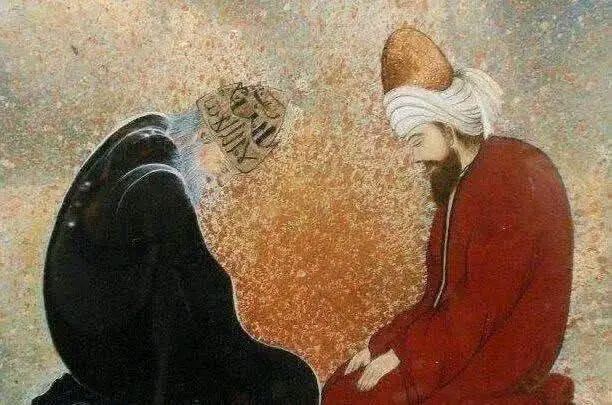
Wilayah (وِلایَت) is not merely a title or a rank—it is an ocean of divine authority and spiritual inheritance that flows through the hearts of those chosen by Allah. It is the sacred trust of Faiz (spiritual grace), passed down through the luminous path of the Ahl al-Bayt and the awliya (friends of God), manifesting as both guidance and protection for humanity. At its core, Wilayah is the bond between the Creator and His chosen ones, those who have transcended the veil of self and become reflections of divine light. It is the reality of spiritual leadership, guardianship, and sainthood, rooted in the Quranic essence and perfected through the eternal Prophetic reality.
Wilayah is not a single thread; it is a vast, interconnected web of divine transmission. At the heart of this transmission are two primary spiritual circles. The Circle of Mawla Ali (علیہ السلام) represents the Wilayah of Qutb (The Spiritual Pole), embodying Ma’rifah (Inner Knowledge), direct recognition of Divine Reality, Jihad al-Nafs (Struggle against the Lower Self), the path of purification and mastery over the ego, and Wilayah al-Kubra (The Supreme Authority), spiritual governance over creation, guiding seekers toward Truth. The Circle of Sayyida Fatima al-Zahra (سلام اللہ علیھا) represents the Wilayah of Faqr (Spiritual Poverty), embodying Noor (Divine Light), the hidden essence, manifesting the highest station of purity, Jamal (Beauty & Subtlety), the delicate yet powerful force of divine manifestation, and the feminine secret of creation, where divine wisdom is nurtured. These two streams of Wilayah flow directly from RasulAllah ﷺ, the ultimate source of divine guidance. Through them, the Faiz spreads from heart to heart, illuminating seekers with the radiance of divine love.
Wilayah is not just an earthly responsibility; it is an ancient trust given to the souls before time itself. When Allah gathered all souls and asked: “Alastu bi-Rabbikum?” (Am I not your Lord?) – (Surah Al-A’raf 7:172), every soul bore witness, acknowledging Allah as their Wali. From that moment, the essence of Wilayah was established. A Wali is someone who has not forgotten this pact—they carry divine authority as a Khalifah (Caliph) on Earth, bridging transcendence (Lahut, Hahut), the unseen divine reality, and manifestation (Nasūt, Mulk), the physical world we experience. Thus, Wilayah is not just political rule; it is spiritual stewardship—a sacred charge to uphold the balance between heaven and earth.
The Quran speaks of Wilayah in various forms. “Allah is the Wali of those who believe…” (Surah Al-Baqarah 2:257). “Indeed, your Wali is only Allah, His Messenger, and those who establish prayer and give Zakat while in Ruku’.” (Surah Al-Ma’idah 5:55). One of the most significant verses is 33:33 (Ayat al-Tathir): “Indeed, Allah only desires to remove impurity from you, O People of the House, and to purify you completely.” This verse confirms the Ahl al-Bayt’s spiritual purity and divine authority. A true Wali is purified of self, an empty vessel filled only with divine Noor.
A Wali is a prism—one who refracts divine light into the world. They do not hold the light for themselves; they channel it outward, illuminating those around them. Their presence acts as a spiritual bridge, connecting the Infinite (Lahut) to the Finite (Nasūt), the Hidden (Batin) to the Seen (Zahir), the Transcendent (Haqq) to the Manifested (Khalq). This aligns with Ibn Arabi’s concept of the “Perfect Man” (Insan al-Kamil)—the one who embodies divine attributes and serves as a conduit of Haqq.
Wilayah is not confined to human hearts—it resonates through the entire cosmos. Just as the planets orbit a central sun, all creation moves within the spiritual hierarchy of Wilayah. The Qutb (Pole) is the axis of divine authority, holding the universe in balance. The Awtad (Pillars) are spiritual guardians anchoring divine order. The Abdal (Substitutes) are hidden saints whose presence ensures the continuity of grace. This structure mirrors the movement of celestial bodies, influencing both earthly events and spiritual ascension. The universe itself follows the rhythm of Wilayah, and those attuned to it can align their souls with the cosmic dance of divine will.
Wilayah is more than a title—it is a state of being. To walk this path means to remember the primordial pact and live in divine presence, to become a bridge between essence and manifestation, to carry the light of Faiz and illuminate others. A Wali is not self-appointed; they are chosen by Allah, purified by divine will, and guided by the eternal Prophetic reality. Whether as a spiritual guide, a saint, or an unseen guardian, the Wali exists to uphold divine harmony—in hearts, in the cosmos, and in the unfolding destiny of the universe. The question remains: do we recognize this Wilayah within ourselves?
Realization is very important aspect of the waliya and the authority is given by the one who are in the authority may Allah allows us to walk on this path and allow us to carry these secrets inside ourselves in our core ,,
Sufi shah .
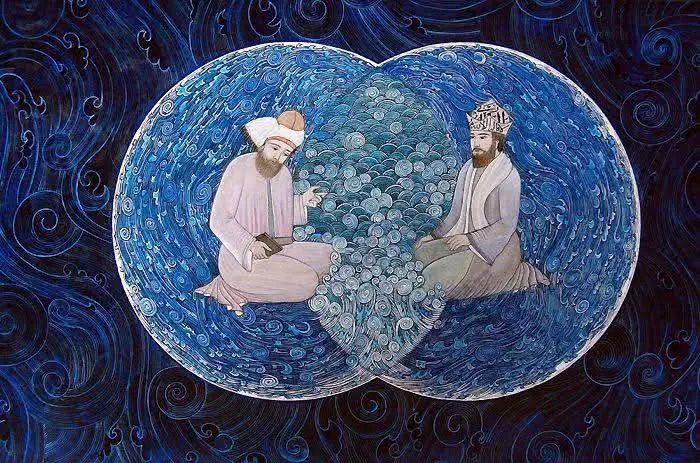

 Aal-e-Qutub Aal-e-Syed Abdullah Shah Ghazi