


KYA GHURBAT KE KHOUF SE HAML KO ROKNA JAIZ HAI




*Shaban Ki 15wi Raat Ya’ani Shab e Bara’at Ko Qabarustan Jana*
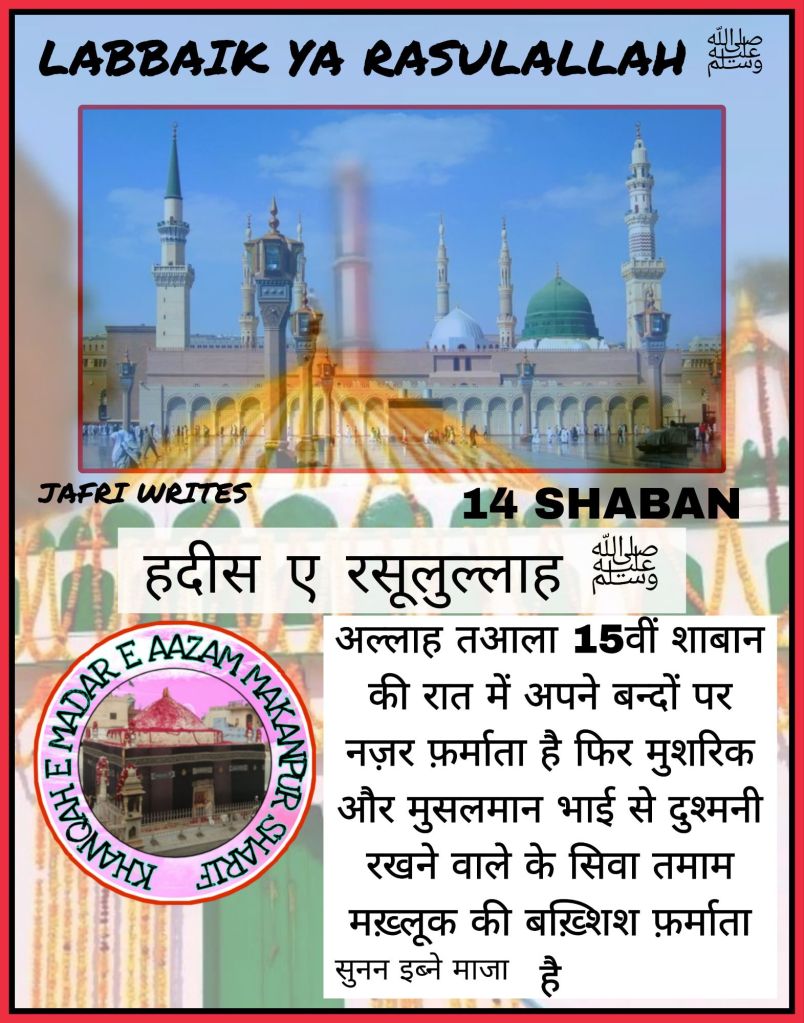
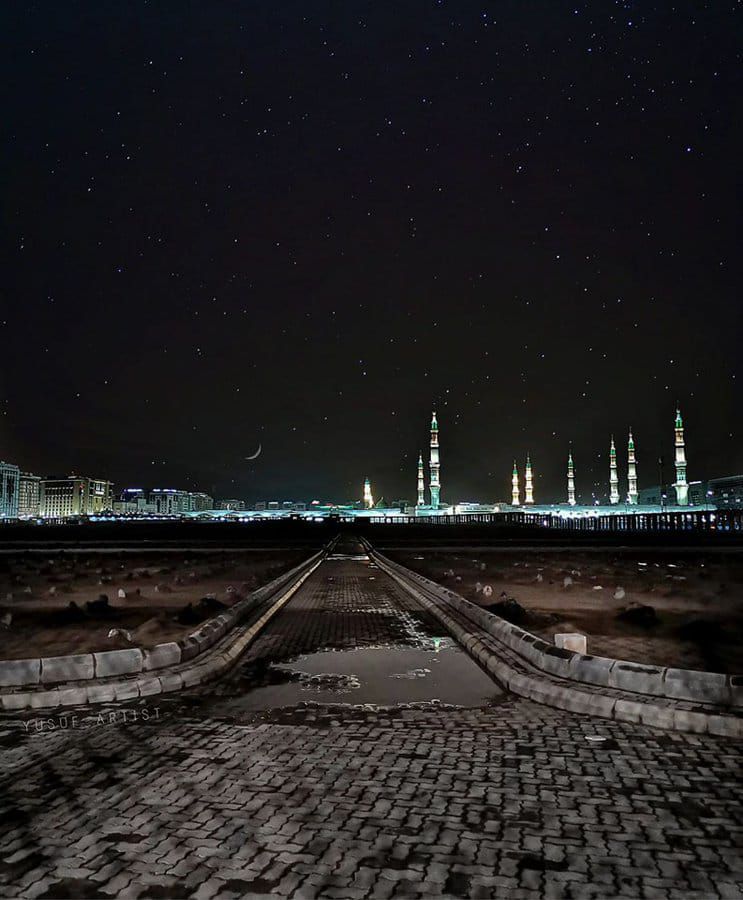
Ummul Momineen Hazrat Aaisha Siddeeqa Salamullah Alaiha Farmati Hain :- Ek Raat Mene Huzoor Nabi e Kareem ﷺ Ko Apne Paas Na Paya To Me Aapko Dhunde Nikli To Jab Me Baqi (Jannat ul Baqi) Pouchi To Aap ﷺ Baqi Ke Qabarustan Me Aasman Ki Taraf Sar Uthaye Hue The To Aap ﷺ Ne Farmaya :- Beshak 15 Shaban (Shab e Bara’at) Ki Raat Allah Azzawajal Duniya Ke Aasman Par Khas Rehmat Ka Nuzool Farmata Hain Aur Banu Kalb (Ek Qabila) Ki Bakriyo Ke Baalo Ke Barabar Bhut Logo Ki Maghfirat Farma Deta Hain.
📚 *References* 📚
*1.* Sunan Ibne Majah, Hadees No 1389.
*2.* Sunan Tirmizi, Hadees No 739.
*3.* Shoibul Imaan, Hadees No 3545.
*4.* Sharah us Sunnah, Hadees No 992, 1299.
*5.* Al Jamius Sageer, Hadees 1667.
*6.* Kanzul Ummal, 35176.

Shab-e-Barat is the night on which Allah (SWT) grants repenting Muslims forgiveness for their sins and answers their duas. Muslims believe that on this night, Allah (SWT) decides the fate of every creature on earth for the next year. This encourages Muslims to pray and ask for forgiveness on this night.
Some Muslims also choose to fast and increase prayers on this day and during the night to reap the rewards.
When is Shab-e-Barat?
Shab-e-Barat falls on the 15th night of Sha’ban based on moon sightings. In 2025, Shab-e-Barat will fall on 14th February, depending on moon sightings.
Sha’ban – The Eighth Month in the Islamic Calendar
In Sha’ban, Allah (SWT) descends to the lowest heaven for one night (Shab-e-Barat), answers duas, and grants forgiveness to those repenting. Sha’ban falls in between Rajab and Ramadan, two important months, and it is good to continue good deeds during this month as well. Sha’ban translates to ‘scattered’ or ‘dispersed’.
Our deeds, which are written by angels on our shoulders, are presented to Allah (SWT) daily after Fajr and Asr Salah, weekly on Mondays and Thursdays, but also annually in Sha’ban. This should be an incentive to do all we can to worship Allah (SWT) to please Him when our deeds are presented to Him.
One way of worshipping Allah (SWT) in this month is by fasting. The Prophet Muhammad (PBUH) used to fast during this month: “I never saw the Messenger of Allah fasting for an entire month except in Ramadan, and I never saw him fast more than he did in Sha’ban.” (Al-Bukhari)
Shab-e-Barat or “The Night of Forgiveness” is one of the most sacred nights in Islamic tradition, celebrated by millions of Muslims worldwide. It has various names worldwide, such as Cheragh-e-Barat, Berat Kandili or Nisfu Syaaban.
Shab-e-Barat is believed to be the night in which Allah (SWT) grants forgiveness and mercy to all his believers who repent for their sins and wrongdoings.
This holy night occurs on the 15th of Shaban, the eighth month of the lunar calendar in Islam. The Persian word “Shab” means “night” while “Barat” is an Arabic word meaning “forgiveness” or “salvation.” The term together represents the night in which Muslims turn to Allah (SWT) for salvation, mercy, and forgiveness.
It is a period of spiritual reflection, praying, and remembrance and is regarded as a chance for everyone to call for redemption from their past sins and start a new reformed life. It is one of the most sacred nights in Islam, similar to the nights of Laylat al-Qadr.
Superb Umrah Blog
Shab-e-Barat: Night of Forgiveness
A guide to umrah pilgrimage
Umrah
Shab-e-Barat: Night of Forgiveness
Shab-e-Barat or “The Night of Forgiveness” is one of the most sacred nights in Islamic tradition, celebrated by millions of Muslims worldwide. It has various names worldwide, such as Cheragh-e-Barat, Berat Kandili or Nisfu Syaaban.
Shab-e-Barat is believed to be the night in which Allah (SWT) grants forgiveness and mercy to all his believers who repent for their sins and wrongdoings.
This holy night occurs on the 15th of Shaban, the eighth month of the lunar calendar in Islam. The Persian word “Shab” means “night” while “Barat” is an Arabic word meaning “forgiveness” or “salvation.” The term together represents the night in which Muslims turn to Allah (SWT) for salvation, mercy, and forgiveness.
It is a period of spiritual reflection, praying, and remembrance and is regarded as a chance for everyone to call for redemption from their past sins and start a new reformed life. It is one of the most sacred nights in Islam, similar to the nights of Laylat al-Qadr.
Also Read:- Facts about Riazul Jannah
Table of Contents
What is Shab-e-Barat?
15th of Shaban: What Does it Mean?
Importance of Shab-e-Barat (15th Shaban)
Shab-e-Barat Hadith
What to do on Shab-e-Barat?
Offer Extra Prayers –
Quran Recitation –
Making Dua (Supplication) –
Seek Forgiveness –
Charity –
Different Prayers for Shab-e-Barat
Salat al-Tasbih –
Nafil (Voluntary Prayers) –
Tahajjud –
Conclusion
Frequently Asked Questions
What is Shab-e-Barat?
Shab-e-Barat is the night before the 15th of Shaban, when Allah (SWT), according to Muslim belief, descends to the lowest heaven, forgives all repentants, and asks Him to forgive them.
Shab-e-Barat signifies the cleansing of one’s soul through repentance and seeking God’s help for a better future. During this night, most believers indulge in individual acts of devotion which, at times, assume the form of performing extra prayers, recitation of the Quran, and various supplications known as duas.
The month of Shaban holds great importance for several reasons, primarily for being a month in which Muslims globally spiritually prepare themselves for the sacred upcoming month of Ramadan.
It is also believed that on the 15th of Shaban, which is Shab-e-Barat, Allah (SWT) grants forgiveness for all previous sins to those who repent. Thus, many Muslims hold this month in high regard and are exhorted to increase their acts of heartfelt worship on the night of forgiveness.
This night is embedded deeply in the Muslim faith. It highlights the merciful character of Allah (SWT) who always awaits the repentance of his followers and will guide them on the straight path.
Although Shab-e-Barat being mentioned in the Quran directly is a topic of debate amongst various scholars, its importance is implied from several Hadiths (sayings of the Prophet Muhammad, PBUH) and the customs of early Muslims.
“Is there no one who will ask Me for forgiveness, that I may forgive him? Is there no one who will ask Me for provision so that I may provide for him? Is there no one who is afflicted by trouble, that I may relieve him?’ And so on, until dawn comes.”
[Ibn Majah]
15th of Shaban: What Does it Mean?
It is the mid-point of the Islamic month and is considered a prelude to the holy month of Ramadan. In Shaban, one holds spiritual preparation where Muslims try to go up spiritually and find closeness with Allah before the fasting month starts.
One of the very important dates in the Islamic calendar is the 15th of Shaban because it marks the night when a person’s destiny for the next year is determined.
According to all the Islamic traditions, on this night, people’s deeds will be presented before Allah. and their fates will be decided for the next year including the issues of life, death, happiness, etc.
The 15th Shaban is a time when a person reflects on all the actions taken during the last year and, meanwhile, asks for mercy and kindness from Allah (SWT).
Also Read:- A Guide to Ziyarat in Mecca & Medina
Importance of Shab-e-Barat (15th Shaban)
Shab-e-Barat has a deep spiritual and moral element to it. On one night of the year, for Muslims, the door of mercy and forgiveness opens wide so Allah graciously forgives those who sincerely repent. It is an opportunity to cleanse one’s heart and seek forgiveness for all the sins while renewing one’s relationship with the Almighty Allah (SWT).
This night can also symbolise the temporary nature of human life and the need to be humble, and responsible and submit oneself to the will of Allah (SWT).
Above all, Shab-e-Barat is a time of personal reflection and repentance. Mosques are crowded by believers who gather to pray and participate in collective acts of devotion. Families visit the tombs of their kith and kin, praying for them and reflecting on their own time on earth.
The act of visiting graves reminds one of the Islamic teachings concerning life after death and the eternal journey of the soul.
It should be mentioned that while Shab-e-Barat holds great importance for most Muslims, the way it is celebrated and observed differs from one culture to another.
Some aspects emphasise collective prayer and celebrations, whereas others focus on personal religious activities.
Also Read:- Nabeez Drink Health Benefits
Shab-e-Barat Hadith
Although the holy Quran does not directly refer to Shab-e-Barat, there are still several Hadiths which strongly highlight the importance given to the 15th of Shaban.
One beautiful and very famous narration has been reported by Aisha (RA), who is indeed the wife of Prophet Muhammad (PBUH). According to Aisa (RA), the Prophet (PBUH) would spend the night of Shaban in prayer and worship.
The Prophet (PBUH) said:
“On the middle night of Shaban, Allah looks down upon His creation and forgives all His creation except for those who attribute partners to Allah and those who harbour enmity in their hearts.”
Another Hadith, recorded in Ibn Majah, quotes the Prophet Muhammad (PBUH) as saying: “When it is the fifteenth night of Shaban, Allah (SWT) looks upon His creation and forgives all His creation, except for two: those who harbour hatred and the one who kills unjustly.”
These Hadiths make it clear that it is the night for seeking forgiveness and abstention from hatred. Purification of the heart is also done on this night.
The prayers performed by Prophet Muhammad (PBUH) during this night are the perfect example for Muslims to follow in his footsteps.
Also Read:- How to Prepare for Umrah
What to do on Shab-e-Barat?
On the night of Shab-e-Barat, Muslims are encouraged to engage in acts of worship that bring them closer to Allah and enhance their spiritual growth. Some of the recommended acts of worship for this night include:
Offer Extra Prayers –
Extra voluntary prayers can be offered to seek Allah’s mercy. Salat al-Tawbah, also known as the prayer of repentance, is quite common on this night.
Quran Recitation –
Among all acts of Shab-e-Barat worship, recitation of the holy Quran is of utmost importance. According to Muslim belief, the Quran contains the words of God, and its recitation on this night is considered to bring abundant blessings.
Making Dua (Supplication) –
Supplicating to Allah for forgiveness, guidance, and protection is the most important item of the agenda on Shab-e-Barat. This night forms the best time to make personal duas for oneself, family, friends, and the entire Muslim community.
Also Read:- How to Get Umrah Package from Delhi
Seek Forgiveness –
The primary intention of Shab-e-Barat is to seek forgiveness from Allah for what has been committed during the last year. Muslims are asked to repent in their hearts and to turn their hearts toward Allah in a humble attitude.
Charity –
On this very night, engaging in acts of charity and good deeds are sure to bring you reward. Give charity, perform good deeds that cleanse your soul, and do what will help cleanse your soul. Helping the needy is one of the important acts of worship to be performed on this blessed night of forgiveness.
Also Read:- Ziyarat Places in Medina
Different Prayers for Shab-e-Barat
Shab-e-Barat is the night when Muslims are supposed to seek forgiveness and get closer to the Almighty through several forms of prayers.
How to pray and what to recite on shab-e-barat is a common question that comes to mind. Although there is no special obligatory prayer for the night, the most common ones include:
Salat al-Tasbih –
It is a special form of prayer where specifically defined tasbih is recited in every posture of the prayer. It is a very spiritually rewarding prayer, usually observed during Shab-e-Barat.
Nafil (Voluntary Prayers) –
Muslims usually offer extra units of prayer (Shab-e-barat Nafil) to ask for forgiveness and blessings. These prayers can be offered individually and there are no set number of units to be performed.
Also Read:- History of Kabba
Tahajjud –
A night prayer that is highly recommended all year round but, more importantly, on Shab-e-Barat night. It is performed in the last third of the night. This has an immense spiritual reward and helps the person seeking Allah’s forgiveness and guidance.
Conclusion
Shab-e-Baraat, observed on the 15th of Shaban is the night that Muslims believe will protect them from sins on judgment day as it gives a chance for spiritual repentance, forgiveness, and renewal of faith.
The believers have the chance to cleanse their hearts by seeking the mercy and forgiveness of the Almighty Allah (SWT) and prepare to enter into Ramadan with eager hearts. Through prayers, supplications, and deeds of charity, Muslims can truly use the night to breed closer contact with one’s faith and larger community.
As we embrace Shab-e-Baraat, let us remember the essence of forgiveness, compassion, and humility. May this night illuminate our paths, guide our actions, and help fill our hearts with peace and gratitude as we set off on our journey of righteousness and spiritual growth.

*15 Shaban ul Muazzam*
*Shab e Bara’at Mubarak*
*Huzoor Nabi e Kareem ﷺ Ne Irshad Farmaya Jab Nisf Shaban Ki Ya’ani (15 Shaban) Ki Raat Aaye To Raat Ko Qayaam Ya’ani Ibadat Karo Aur Din Ko Roza Rakho, Beshak Ghuroob e Aaftab Se Subah Sadiq Tak Allah Ta’ala Ki Rehmat Ka Khaas Nuzool Aasman o Duniya Par Hota Hain, Allah Ta’ala Ki Taraf Se Aawaz Di Jaati Hai :- Khabardar! Hai Koi Mujhse Bakhshish Talab Kare Me Use Baksh Du, Hain Koi Rizq Ka Talib Ke Use Rizq Ata Karu, Hain Koi Musibat Zada Ke Me Use Aafiyat Ata Karu, Khabardar, Koi Is Tarah Hai ? Khabardar Koi Is Tarah Hai ? Isi Tarha Ek Aur Hadees Hain Huzoor Nabi e Kareem ﷺ Ne Irshad Farmaya :- Beshak Nisf Shaban Ki Raat Me Allah Ki Rahmat Ka Khaas Zahoor Hota Hai, Allah Apni Tamaam Makhlooq Ko Maaf Farma Deta Hain Siwa e Mushrik, Logo Se Bughz Rakhne Wala Aur Dushmani Karne Wale Ke, Huzoor Nabi e Kareem ﷺ Ne Irshad Farmaya Ki Allah Ta’ala Shaban Ki 15wi Raat Ko Apni Tamaam Makhlooq Ki Taraf Mutawajjeh Hota Hain Aur Tamaam Makhlooq Ki Maghfirat Farma Deta Hain Lekin Mushrik Aur Bughz (Keena) Rakhne Wala Nahi Baksha Jata, Huzoor e Akram ﷺ Ne Irshad Farmaya :- Nisf Shaban Ki Raat Me Saal Bhar Me Paida Hone Wale Aur Faut (Intaqal) Hone Wale Baa’is e Rif’at Naik Aamal Aur Rizq Ke Asbaab Likh Diye Jate Hain, Ek Aur Hadees Hain Huzoor Nabi e Kareem ﷺ Ne Farmaya Jab 15 Shaban Ki Shab Aaye To Usme Ibadat Karo Din Me Roza Rakho, Allah Paak Shaban Ki 15wi Shab Me Tajalli Farmata Hai Istagfar (Tauba) Karne Wale Ko Baksh Deta Hai, Huzoor Nabi e Kareem ﷺ Shaban Ki 15wi Raat Me Aadhi Raat Ko Qabarustan Tashreef Le Jate The, Huzoor ﷺ Ne Irshad Farmaya Jisne 15wi Shaban Ko Roza Rakha Usko Meri Shafa’at Halaal Ho Gayi, Jo Shaks 15wi Shaban Ko Roza Rakhe Use Jahannum Ki Aag Na Chuegi.*

THE FIRST DECLARATION Nabi Pak Proclaiming Ali His Successor
Nabi Pak, who had delivered the speech with full religious fervour, was disappointed to find the whole assembly silent, some wondering, others smiling with incredulity and derision.
No one was forthcoming to accept him as spiritual guide. Nabi Pak seemed to feel sorry for them. At this juncture Ali, the favourite cousin of the Prophet, stepped forward, but Muhammad bade him wait till one of his elders came forward. The Prophet vainly tried thrice. At last Ali, disliking the ridiculing attitude which the assembly was now adopting, impatiently came forward for the third time and enthusiastically declared that not only did he believe in Nabi Pak to be the Apostle of God, but that he offered himself, body and soul, to the good pleasure of the Prophet. “O Prophet!” said he, “I am the man; whosoever rises against thee, I will dash out his teeth, tear out his eyes, break his legs, rip up his belly. O Prophet, I shall assist thee, and I will be thy vizir over them.” Thereupon Nabi Pak, throwing his arms round the brave and courageous youth and pressing him to his bosom exclaimed “Behold, my brother, my vicegerent and my successor (or Caliph). Let all listen to his words. and obey.” Hearing this, the whole assembly, with loud contemptuous laughter, ironically exhorted Abu Talib to. bow down before his son Ali, and yield him -obedience. Thus dispersed Nabi Pak guests with hatred in their hearts and derision on their faces.
Thomas Carlyle in his ‘Heroes and Hero-worship’ says: “The assembly broke up in laughter. Nevertheless it proved not a laughable thing; it was a very serious thing. As for this young Ali, one cannot but like him. A noble minded creature, as he shows himself now, and always afterwards; full of affection, of fiery daring. Something chivalrous in him; brave as a lion, yet with a grace, a truth and affection worthy of Christian Knighthood.”
“Ali started acting as the bodyguard of the Holy Prophet even when he was just a lad of thirteen or fourteen years.
 Aal-e-Qutub Aal-e-Syed Abdullah Shah Ghazi