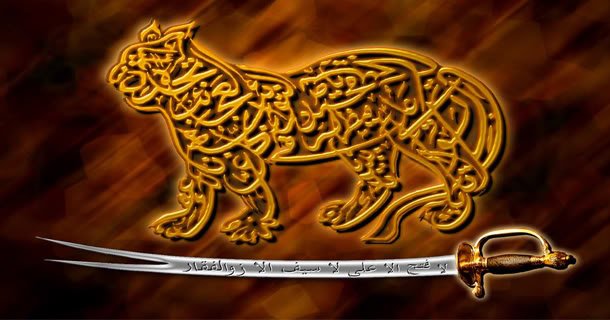
Section 17 The humility of the Prophet


Section 17 The humility of the Prophet

Although Allah raised the Prophet, praise and peace be upon him, to the highest rank and position he remained extremely humble; no trace of pride was ever observed in him.

We recall the event when he was offered a choice between being a king- prophet or a worshipper-prophet and he chose the latter. Having made his choice the Angel Israfil told him, “Allah has been generous to you on account of your humility toward Him. On the Day of Resurrection you will be the master of the children of Adam, and the first for whom the earth will open and the first to intercede.”

His humility is further demonstrated as the father of Umamah tells us, “The Messenger of Allah, praise and peace be upon him, came out to us leaning on his walking stick, and we got up for him but he in all humility said, ‘Do not get up as it is the way of the Persians to show their regard for one another.”

Of himself, he said, “I am a servant. I eat as a servant eats and I sit as a servant sits.’

He was never too proud to visit and sit with the poorest of people and never declined an invitation of a servant. He would sit with his Companions and mingle with them and was not choosey where he sat. As for riding, he would ride a donkey and share the ride with another who would mount behind him.

He disliked excessive praise for himself and Omar tells us that the Prophet, praise and peace be upon him, said, “Do not lavish praise on me (by associating me in a trinity) as the Christians do on the son of Mary. I am a worshiper, so say the worshiper of Allah and His Messenger.”

He never shunned people and Anas relates the story of a woman, whose mental capacity was below normal, met him and said, “I need something from you.” Rather than turning her away he told her “Come, sit down, mother of so- and-so, I will sit with you in any of the roads in Medina until you get what you need.” Anas went on to say that it was only after the woman sat down that the Prophet, praise and peace be upon him, sat and he stayed with her until her need was met.

Anas further sheds light on the humility of the Prophet, praise and peace be upon him, and recorded that during the conflict with the children of Koraysh he rode a donkey with a saddle-cloth tied with a rope made from palm-fiber. Even when the Prophet, praise and peace be upon him, was invited to eat bread

made from coarse barley and rancid butter he never declined the invitation. He further tells us that after the Opening of Mecca, the Prophet, praise and peace be upon him, went on pilgrimage riding a mount with a well worn saddle over which was placed a worn cloth that could only have been worth four dirhams. And he supplicated saying, “O Allah, make it an accepted pilgrimage without ostentation or desire of earning a reputation.” During this pilgrimage he sacrificed one hundred camels to feed everyone in the City.

His humility is highlighted again upon the opening of Mecca when he entered the City with his band of followers. Rather than making a triumphant entry he rode humbled to Allah, bowing his head so low that it very nearly touched the saddle.

Among the many signs of his humility is that he said, “Do not prefer me over Prophet Jonah, Matta’s son, neither generate rivalry between the prophets, nor prefer me over Moses…. Had I remained in prison like Joseph, I would have answered the summons.” Someone once said to him, “O best of creation!” in humility he replied (as Allah raised Prophet Muhammad in rank above all the prophets) “That was Abraham”. The greatness of his rank will become evident to the masses and their prophets on the Day of Resurrection when there is a dire need for the unparalleled intercession granted alone to Prophet Muhammad, praise and peace be upon him, by Allah.

The Prophet’s granddaughter, Lady Ayesha who was the daughter of Al Hasan, Imam Ali’s son as well as others said that he would do the housework like the other members of his family, rid his clothes from barbs, repair his sandals, serve himself, sweep the floors and hobble a camel. They also said that he would take his camels out to graze and eat with those in servitude and kneed bread with them. When he went to the market he would carry his own goods.

Anas tells us that a female who served in his household could take hold of his hand and take him wherever she wished to go until she achieved her need.

A man came to the Prophet, praise and peace be upon him, and when he saw him began to tremble on account of timidity, but the Prophet, praise and peace be upon him, put him at ease straight away saying, “Be calm, I am not a king, I am the son of a woman from the Koraysh who eats dried meat.”

On another occasion, the Prophet, praise and peace be upon him, and Abu Hurayrah went to the market where he purchased a loin cloth. He told the merchant, “Weigh and then add some more.” The man jumped up to kiss the hand of the Prophet, praise and peace be upon him, but he immediately pulled his hand back saying, “This is what the Persians do with their kings. I am not a king, I am one of your men.” Then he took his loin cloth and carried it saying, “The owner is more entitled to carry his property.

Miracle of the Saints: Muhammad Ibn Ali Ibn Muhammad Sahib Murbath


Muhammad Ibn Ali Ibn Muhammad Sahib Murbath had a servant in Africa; he had gone on a long journey. During his separation from his family they were informed that he had died. Upset and worried the family approached the saint who for a short while lowered his head upon hearing the news, then said, “He is not dead”. The family again said, “But we have been informed of his death”. Muhammad replied, “I have been and had a look in Paradise and did not find him residing there, and my disciples do not enter hell”. After this news came of the servant being alive and later he returned to his family.

On a separate occasion he gave the news that Baghdad would be flooded. Hence the River Dajla rose to terrifying heights and the water entered the city. The homes of the governors, khalifa, the treasury and 330 houses were destroyed, and much of the population were also crushed or drowned. (Jame’ Karamaatul Auliya)

ALI Alahissalam LITERARY ACHIEVEMENTS 4


5. Contentment and Greed

48. Wealth and greed are the roots of all evils and diseases.

49. As long as we do not hope we do not fret.

50. Disappointment goes hand in glove with avarice. 51. Greed mars justice.

52. Contentment is an invaluable treasure.

53. Contentment is a perpetual honour.

54. The contented alone live in peace.

55. Avarice diminishes one’s dignity without augument- ing one’s fortune.

56. The golden and glittering ornaments of the world. spoil understanding.

57. Money does not benefit its owner except when he parts with it.

58. Innocence is incompatible with greed.

59. Riches without (the knowledge of) God are the greatest poverty and misery.

6. Aspirations

60. A man’s worth depends upon the nobility of his aspirations.

61. Love of wealth promotes the growth of ambition and
kills virtue.

62. The highest aspiration of animals is to fill the
belly.

63. The highest aspiration of wild beasts is to tyrannise others.

64. The highest aspiration of woman is to give charm to life in this world and to create mischief in it.

65. The highest aspiration of an Imam (leader of men) is to guide the world.

66. Aspire for the next world and reformation will follow at your heels.

7. Knowledge

67. The principal aim of knowledge is the inculcation of

virtue.

68. Knowledge enlivens the soul.

69. Knowledge kills ignorance.

70. Knowledge is health and life..

71. The learned lives although he dies.

72. Who teaches me a letter binds me with a fetter (of gratitude).

73. The sum total of excellence is knowledge. 74. The learned are the living ones in the dead mass of ignorance.

75. To respect the learned is to respect God.

76. There is no generosity of spirit with bad knowledge.

77. The pursuit of knowledge is better than the pursuit of riches..

78. Knowledge is the ornament of the rich and the riches of the poor.

79. Knowledge is better than wealth, for you have to protect your wealth whereas knowledge protects you. 80. A learned conversation is the garden of Paradise.

8. Charity and Avarice

81. None is more solitary than a miser. 82. Miserliness kills friendship. 83. Generosity hides shortcomings. 84. Let a fortification of alms protect your property. 85. Charity earns applause. 86. The empty coffers of the generous are preferable to the abundant treasures of the miser. 87. The wealth of a miser is as useless as a pebble. 88. Heinous sins are atoned for by helping the poor,
the destitute and the distressed.

9. Death and Desire

89. Desire is one’s most inveterate enemy.

90. Do before you die.

91. Death mocks ambition

. 92. Frequent remembrance of death mitigates one’s base desires. 93. Those who walk on the surface of the earth shall one day be interred in it. 94. Forgetfulness of death is the rust of the heart. 95. Death is the segregation of the perishable and the

mergence into the imperishable.

96. People are asleep when alive, they are only awakened when they die.

97. To loosen the rein of one’s desires is to extend an invitation to Death. 98. Every breath of man brings him nearer to death.

10. Patience

99. Patience is the fruit of faith.

100. Patience is courage. 101. Patience, belief, justice, and Jihad (holy War) are the four (great) pillars of faith; desire, fear and piety are the offshoots of patience.

102. There are two kinds of patience: the one by the help of which we put up with adversity, which is fine and beautiful; but the other kind, by which we withstand temptation is. still better.

103. Impatience is more irksome than patience. 104. Perfection consists in three things, patience in affliction; moderation in our pursuits, and the offer of assistance to a supplicant.

11. Virtue

105. Virtue never dies. 106. Prosperity consists, not in the multiplication wealth and children, but in the enhancement virtue and patience. 107. A man’s glory from his virtue is greater than t glory of his pedigree.

108. Fall in with virtues and fall out with desires. 109. To be good to the good is virtue in its highest sense. 110. It is easier to be virtuous than to be vicious. 111. No shelter is safer than piety.

12. Courtesy and clemency

112. A man’s behaviour is the index of his mind. 113. Courtesy costs nothing but buys everything. 114. Courtesy is the best inheritance. 115. Nothing is more ornamental than courtesy. 116. Courtesy creates love. sure defence against the 117. Clemency is power and is a su vengeance of God. 118. Gentle behaviour and courtesy arouse sympathy enemies.

even in one’s

119. Clemency graces power.

13. Laughter

120. A modest smile is the best laughter. 121. Excessive laughter ruins the sobriety of an individual.

14. Jealousy

122. Jealousy devours virtue as fire devours fuel. 123. Jealousy robs a man of happiness. 124 There is no peace where there is jealousy.

15. Backbiting

125. He that lends a listening ear to reproach is one of those that deserves reproach. 126. He who bears tales to you certainly bears tales about you.

16. Mercy and Forgiveness

127. What surpreme excellence, when mercy is joined with power!

128. How mean is punishment in spite of apologies.

129. Forgiveness is the crown of greatness.

LIGHTNING BETWEEN SCIENCE AND FAITH

LIGHTNING BETWEEN SCIENCE AND FAITH

Written by: Abduldaem Al-Kaheel

Abstract

New studies confirmed that the seenLightning flash is not a continuous action but it consists of many phases, the most important phase is when the beam moves from the cloud toward earth and the return phase as the beam return back to the cloud.

Itmeans that the Lightning flash goes and returns in a fraction of time which is can’t be seen by the naked eye.

Prophet Mohamed peace be upon him says about this phenomenon: “don’t you see that lightning passes and returns in a blink of an eye”. These words are considered to be a clear scientific miracle especially when we find thattoday’s scientists are using the same words as the words of the prophet peace be upon him.

In this research we will see that the prophet not only talked about phases of the lightning or its speed but he told us about a recent scientific discovery that the needed time for a lightning stroke is the same needed time for an eye glance!!Taking into consideration that the needed time for each phase of these two phases is measured by a fraction of a second which is impossible for an eye to catch

This proves that the prophet told us about things which areclearly identified only by the recent photographing advanced machines.

Also, we will see a prophetic miracle as the prophet told us that the lightning flash goes from and returns to the cloud in a time equals to the time of eye’s glance as that is against the old beliefs which consider the lightning flash happens in no time.

This is an indication that the prophet didn’t agree on wrong beliefs of people at that time but he corrected these beliefs, simply because His teacher is Allah Almighty Who taught the whole humanity.

When we contemplate in the lightning phenomenon we should conclude that what the prophet told us concerningthis phenomenon is identical with all recent researches and studies in the twenty one century.

Also, there is a miracle in the Hadith of the prophet peace be upon him as he used this scientific miracle during his talking about the day of resurrection which is denied by atheists. As if the prophet is talking to them by using their language which is science by telling them that as you see the lightning phenomenon happens as a certainfact, you will also see day of resurrection as a certain fact.

Definitely,this miraculous hadith increase the belief of the believer and opens a path for the atheist to believe in Allah Almighty because the only wayto persuade atheists to believe is the materialistic scientific proofs.

At the end we have to mention that this prophetic hadithprove that every single word mentioned by the prophet peace be upon him is an inspiration from Allah Almighty who created lightning and that the prophet is sincere. Also it is a proof that Islam is the religion of science and that hadith is one of many clear evidences that Mohamed is Allah’s prophet as He Almighty described prophet Mohamed by saying: (By the star when it goes down, (or vanishes)*Your companion (Muhammad) has neither gone astray nor has erred*Nor does he speak of (his own) desire*It is only an Inspiration that is inspired.){Sûrat An-Najm-The Star-verse1-4}

We ask Allah Almighty to make this research a guide for skeptical and atheists to believe in the religion of Islam and to be sure that Mohamed is the last prophet by Allah Almighty.