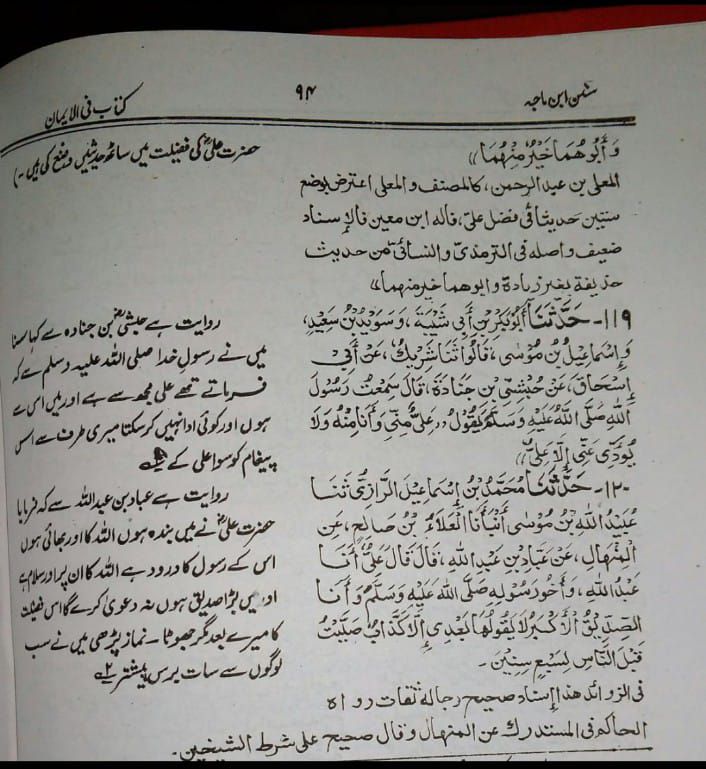
حَدَّثَنَا مُحَمَّدُ بْنُ إِسْمَاعِيلَ الرَّازِيُّ قَالَ : حَدَّثَنَا عُبَيْدُ اللَّهِ بْنُ مُوسَى قَالَ : أَنْبَأَنَا الْعَلَاءُ بْنُ صَالِحٍ ، عَنِ الْمِنْهَالِ ، عَنْ عَبَّادِ بْنِ عَبْدِ اللَّهِ ، قَالَ : قَالَ عَلِيٌّ : «أَنَا عَبْدُ اللَّهِ وَأَخُو رَسُولِهِ صَلَّى اللهُ عَلَيْهِ وَسَلَّمَ ، وَأَنَا الصِّدِّيقُ الْأَكْبَرُ ، لَا يَقُولُهَا بَعْدِي إِلَّا كَذَّابٌ ، صَلَّيْتُ قَبْلَ النَّاسِ لِسَبْعِ سِنِينَ» *हज़रत इबाद-बिन-अब्दुल्लाह (रह०) से रिवायत है कि हज़रत अली (रज़ि०) ने फ़रमाया : में अल्लाह का बन्दा हूँ और उसके रसूल का भाई हूँ, मैं सबसे बढ़कर सच्चा हूँ, मेरे बाद ये बात वही कहेगा जो बहुत ज़्यादा झूटा है। मैंने दूसरों से सात साल पहले नमाज़ पढ़ी है।*
📚📚📚 Sunan Ibn e Majah#120 सुन्नत की अहमियत और फ़ज़ीलत
Section 6 – The mentioning of Allah of the Prophet’s compassionate and generous disposition
Allah says, “TaHa. We have not sent down the Koran to you for you to be tired.” 20:1-2. There are various opinions regarding the meaning to “TaHa” one of which is that it is a name given to the Prophet, praise and peace be upon him, whereas others say it is amongst the Names of Allah. It has also been said that it refers
separate letters having different meanings. Al Wasiti explained that it means “O Pure, O Guide” derived from the Arabic words “Tahir” and “Hadi” respectively.
to
Ar-Rabi, Anas’ son tells us that the Prophet, praise and peace be upon him, prayed diligently throughout most of the night and that on occasions he saw him
standing first on one foot and then upon the other to stay awake. It has been said that the word “Taha” consists of two parts, “ta” and “ha”. As for “ta” it is from the verb “to tread” and “ha” refers to the earth, which implies stand on both feet so as not to tire yourself, and it was on this account that Allah out of compassion for His Prophet, praise and peace be upon him, revealed this verse. All the explanations clearly point to his honor and we have a glimpse into his excellent manners, and whether it is said that “Taha” is one of his names or an oath, it remains a demonstration of both compassion and care.
In other chapters Allah says of His Prophet, praise and peace be upon him, “Yet perchance, if they do not believe in this tiding, you will consume yourself with grief and follow after them.” 18:6. “Perhaps you consume yourself that they are
not believers, if We will, We can send down on them a sign from heaven before which their necks will remain humbled.” 26:3-4.
Allah also says, “Proclaim then what you are commanded and turn away from the unbelievers. We suffice you against those who mock and those who set up other gods with Allah, indeed, they will soon know. Indeed, We know your chest is straitened by that they say.” 15:94-97. And, “Other Messengers were mocked before you but I respited the unbelievers, then I seized them. And how was My retribution! 13:32
Makki explained, “The Prophet, praise and peace be upon him, suffered on account of the unbelievers so Allah sent down verses to console him thereby making it easy for him and at the same time informed him of the outcome of those who persisted.”
Our attention is drawn again in the following verses that say, “If they belie you, other Messengers have been belied before you. To Allah all matters return.” 35:4 and, “Similarly, no Messenger came to those before them but they said, ‘Sorcerer, or mad!’ 51:54
The preceding verses were sent to the Prophet, praise and peace be upon him, as a means of solace and to inform him that his predecessors also endured similar sayings. As for those who persisted Allah made it easy for His Prophet, praise and peace be upon him, and told him, “So turn away from them, you shall not be blamed.” 51:54. In other words Prophet Muhammad, praise and peace be upon him, had conveyed the message and therefore was not subject to blame.
The compassion of Allah is further expressed in the following verse as well as many other verses, “And be patient under the Judgement of your Lord, surely, you are before Our Eyes.” 52:48. This is yet a further demonstration that he is constantly under the sight and protection of Allah, and that he should remain patient with their harm-doing.
Abdullah Ibn Mubarak had a slave who he had promised liberty to if he earned and then paid him one hundred dinars. Due to this
request the slave began making daily payments. One day a friend of Mubarak told him, “Your slave passes the graveyard everyday, steals the coffins of the dead and pays you what he gets after selling them in the market”. Irritated at this Mubarak followed his slave one night into the graveyard to find out the truth.
There he saw the slave wearing a sack cloth and an iron ring around his neck descending into a grave lamenting and praying till morning.
Then he retired to a mosque, Mubarak followed him. There he continued praying, “Oh Allah shortly I shall have to pay the day’s wages to the master of my physical body”. Immediately a light appeared before him. It fell into the palm of his hands and was converted into dinars. As he rose to go home and deliver the money, Abdullah Ibn Mubarak came out from his hiding place and addressing his slave said “From today let us change places, you be the master and I your slave.” (Tadhkeratul Auliya)








 Aal-e-Qutub Aal-e-Syed Abdullah Shah Ghazi