
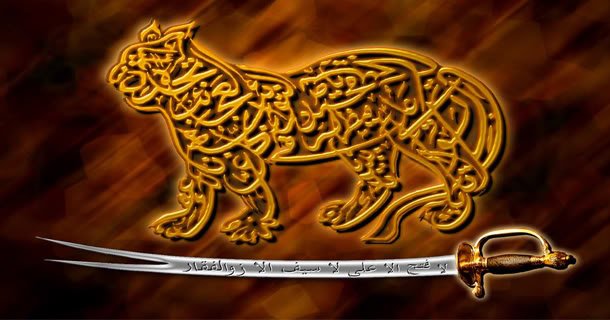


Ali’s Role in the Caliphate of Uthman
Ali with the same selfless devotion which had characterised him to render valuable service to the cause of Islam under Abu Bakr and Umar, gave in his adhesion to Uthman, when he was elected Caliph. Ali had held the dual charge of Chief Justice and the Secretary General of the State under Abu Bakr and Umar but Uthman conferred upon Ali the appointment of Chief Justice and bestowed the office of the Secretary General on his cousin Merwan. As a Chief Judge Ali worked zealously day and night for Uthman’s government and the fame of his judgments spread far and wide. With the growing discontent that began to prevail in the later part of Uthman’s reign, Ali began to retire from the political arena and concentrate on the preaching of the Qur’an. At no time would he associate himself with the rebels and is said to have preserved the same impartial devotion that he had previously shown to the predecessors of Uthman. It is true that he looked at Uthman’s favouritism, but never would he lend an ear to the rebels. To Ali the person of the Caliph was sacred because he was God’s Pontiff on earth. When the rebels besieged Uthman’s house, Ali sent his sons to guard the Caliph’s person and property. Being the most influential man in Medina, Ali tried, though in vain, to intervene and advise the rebels to leave the Caliph alone and to return to their homes.
Von Kremer’s remark that Ali had associated himself with the rebels is not warranted by facts. To an over- conscientious man like Ali, it was nothing short of sacrilege and profanity to see eye to eye with the rebels or with their cause. It is probable the rebels in order to champion their cause as a means of gaining their own ends might have used Ali’s name but it is certain that neither did he identify with them nor with their activities.
Summary of the Outstanding Events of the Reign of Uthman
Our chroniclers artificially divide the reign of Uthman into two distinct parts-the first half, from 644-50 A.D. being a time of good government, and the second half from 650-56 A.D. being a period of confusion and anarchy. In the first half of his reign, Uthman fortified his frontiers and followed the ambitious designs of expansion. He restored peace on the north eastern frontier, added Khurasan, Nishapur, Merv, Tus and Tabristan, and won the homage of the chiefs of Turkistan, Afghanis- tan, Herat, Kabul and Ghizni. On the Syrian front he inflicted a crushing defeat on the Romans and added Armenia, Azerbijan, and Asia Minor to the Caliphate. He is said to have pushed the Islamic forces as far as Tiflis and the Black Sea. As a father of the Muslim navy, Uthman built ships and captured the Island of Cyprus. The Románs who had invaded and conquered Alexandria were driven back with heavy losses and the Caliph’s army re-entered Alexandria and Egypt. The Muslim forces then penetrated into Tripoli and Barqa.
By inflicting a crushing defeat on the Roman commander, Gregory, in Africa, the Caliph’s forces consolidated his
African possessions. By the second half of Uthman’s reign, the Caliph had attained the advanced age of eighty. Meek, conciliatory and mild by nature, the Caliph was by this time spending most of his days in the performance of religious duties, in reading the Qur’an, in solitary meditation, fasting and prayers. By favouring his kinsfolk, who were notoriously irreligious he had, however, alienated the sympathies of the masses. While the new, standardised version of the Holy Qur’an that he had authorised led to schisms in the clerical parties sporadic risings began to take place in various parts of the country and a class of conspirators arose who, posing as the avengers of an outraged religion organised large-scale rebellions in Iraq, Kufa, Basra, and Egypt. By the year 656 Muslims all over the Islamic Commonwealth-in Arabia, Syria, Iraq, Persia and Egypt-were seething with unrest. The struggle for the change of Caliphate had begun.

 Aal-e-Qutub Aal-e-Syed Abdullah Shah Ghazi