

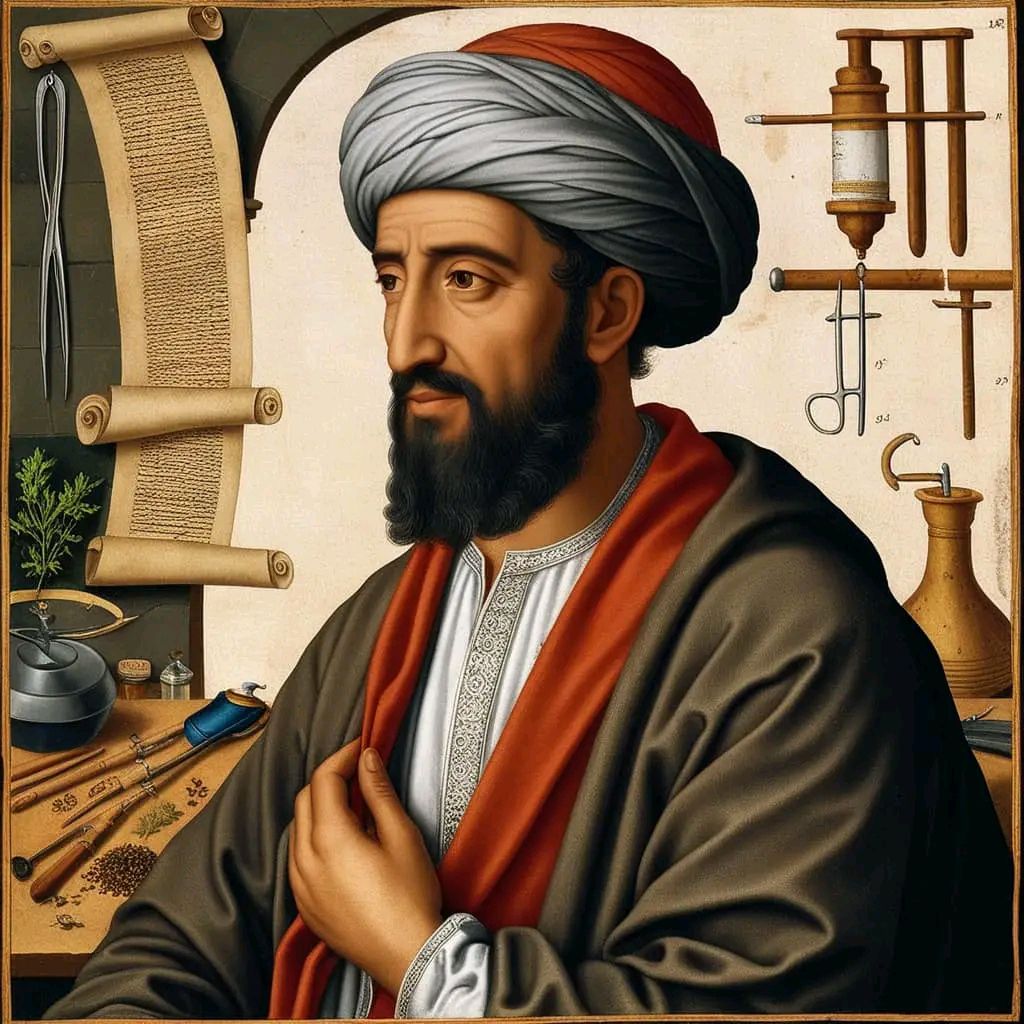
Abu al-Qasim al-Zahrawi (also known as Abulcasis) was a pioneering Andalusian physician, surgeon, and medical scholar of the Islamic Golden Age, often called “the father of modern surgery.” Born in the 10th century in Al-Andalus (modern-day Spain), he was a prominent figure in the development of medicine, especially known for his work in surgery.
Al-Zahrawi’s most famous work, Al-Tasrif li-man ’ajaza ’an al-ta’lif (The Method of Medicine), was a 30-volume encyclopedia covering various aspects of medicine, surgery, and pharmacology. It became one of the most influential texts in medical history, studied and used by physicians in both the Islamic world and Europe for centuries.
Some key contributions of al-Zahrawi include:
1. Surgical Instruments: Al-Zahrawi designed and documented over 200 surgical tools, many of which formed the basis for modern surgical instruments.
2. Surgical Techniques: He innovated several surgical techniques, including pioneering work in obstetrics, neurosurgery, and treating fractures. He was among the first to describe techniques for removing cataracts and using cauterization for wound healing.
3. Cosmetic Surgery: Al-Zahrawi’s Al-Tasrif includes early descriptions of what we would now call cosmetic surgery. He described procedures to improve the appearance of scars, remove unwanted hair, and repair dental issues.
4. Medical Ethics: His writings also emphasize ethics in medical practice, especially around the responsibilities of doctors and their conduct with patients.
Al-Zahrawi’s work influenced European medicine during the Renaissance, thanks to translations of his encyclopedia into Latin.

 Aal-e-Qutub Aal-e-Syed Abdullah Shah Ghazi