चौदह सितारे पार्ट 34

हज़रत फातेमा (स.अ) रब्बुल इज़्ज़त की निगाह मे

मोहसीन (हदीसों के ज्ञाता) का बयान है कि हज़रत फातेमा ( स.अ) को परवर दीगारे आलम अपनी कनीज़े ख़ास जानता था और उनकी बेहद इज़्ज़त करता था । देखा गया है कि हज़रत सैय्यदा नमाज़ में मशगूल होती थीं और फ़रिश्ते इनके बच्चों को झूला झुलाते थे और जब वह क़ुरआन पढ़ने बैठती थीं तो फ़रिश्ते उनकी चक्की पीसा करते थे। हज़रत रसूले करीम (स.व.व.अ.) ने झूला झुलाने वाले फ़रिश्ते का नाम जिब्राईल और चक्की पीसने वाले का नाम औकाबील बताया है। (मनाक़िब इब्ने शहरे आशोब, जिल्द 2 पृष्ठ 28, मुल्तान में छपी )

फातेमा (स.अ) अहदे रिसालत (स.अ.व.व.) मे

पैग़म्बरे इस्लाम (स.व.व.अ.) की हयात में फातेमा ( स. अ) की क़दरो मंज़िलत, इज़्ज़त व तौक़ीर की कोई हद न थी । इन्सान तो दर किनार मलाएका का यह हाल था कि आसमानों में उतर ज़मीन पर आते और फातेमा (स. अ) की ख़िदमत करते। कभी जन्नत के तबक़ लाये, कभी हसनैन (अ.स.) का झूला झुला कर फातेमा की मदद की। अगर उनके मुंह से ईद के मौक़े पर निकल गया कि बच्चों तुम्हारे कपड़े दरज़ी लायेगा तो जन्नत के ख़ज़ानची को दरज़ी बन कर आना पड़ा। हद है कि मलकुल मौत भी आपकी इजाज़त के बग़ैर घर में दाख़िल न हुये । अल्लामा अबदुल मोमिन हन्फ़ी लिखते हैं कि सरवरे कायनात ( स.व.व.अ.) के वक़्ते आख़िर फातेमा के जानू पर सरे रिसालत माआब था, मलकुल मौत ने आवाज़ दी और घर में आने की इजाज़त चाही, फातेमा (स.अ) ने इन्कार कर दिया, मलकुल मौत दरवाज़े पर रुक गये लेकिन मकान में दाख़िल होने की ज़िद करते रहे। फातेमा ( स.अ) के बराबर इन्कार पर मलकुल मौत ने कुछ आवाज़ बदल कर आवाज़ दी। फातेमा स. रो पड़ीं, आपके आंसू रूखसारे रिसालत पर गिरे। पैग़म्बर ( स.व.व.अ.) ने पूछा क्या

बात है? आप ने वाक़िया बताया । हुक्म हुआ? ! इजाज़त दो यो मलकुल मौत हैं। (अजायब अल क़स्स, पृष्ठ 282)

फातेमा ज़हरा रसूले इस्लाम के बाद

28 सफ़र 11 हिजरी को रसूले इस्लाम का इन्तेक़ाल हुआ। आपके इन्तेक़ाल के बाद आपके घर वालों पर ज़ुल्म व अत्याचार के पहाड़ टूट पड़े और आप इतना दुखी हुईं कि अपनी कश्तीए हयात 75 दिन से अधिक न खेंच सकीं। आपके सर पर पट्टी बंधी रहा करती थी और रात दिन अपने बाबा को रोया करती थीं। आपके लिये सरवरे कायनात का सदमा ही क्या कम था के उस पर आफ़त यह कि दुनियादारों ने रसूल (स.व.व.अ.) के घर को ग़मों का अड्डा बना दिया । होना यह चाहिये था कि बाप के इन्तेक़ाल के बाद कफ़न दफ़न की मुसिबत से दुख दर्द मारी बेटी को बे नियाज़ कर दिया जाता और हुज़ूर की तदफ़ीन, तकफ़ीन को बहुत अच्छी तरह अंजाम दिया जाता, लेकिन अफ़सोस इसके विपरीत दुनिया वालों ने रसूले इस्लाम (स.व.व.अ.) की मय्यत को यूं ही घर में छोड़ दिया और ख़ुदा और रसूल की मंशे के ख़िलाफ़ अपनी हुकूमत की बुनियाद क़ायम करने के लिये सक़ीफ़ा बनी साएदा चले गये। रसूले इस्लाम (स.व.व.अ.) की मय्यत पड़ी रही, बिल आख़िर आले मोहम्मद ( स.व.व.अ.) और दीगर चन्द मानने वालों ने इस फ़रीज़े को अदा किया। यह वाकेया भुलाने के क़ाबिल नहीं जब की हज़रत अबू बक्रख़लीफ़ा बन कर और हज़रत उमर ख़लीफ़ा बना कर वापस लौटे तो सरवरे कायनात (स.व.व.अ.) की लाशे मुतहर सुपुर्दे ख़ाक की जा चुकी थी । इन हज़रात ने इस तरफ़ ध्यान न दिया और किसी ग़म व अफ़सोस का इज़हार न किया और सब से पहले जिस चीज़ की कोशिश शुरू की वह हज़रत अली अ0 से बैअत लेने की थी। हज़रत अली (अ.स.) और कुछ महत्वपूर्ण एंव आदरणीय सहाबा जिन में कुल बनी हाशिम, जुबैरस अतबआ बिन अबी लहब, ख़ालिद बिन सईद, मिक़दाद बिन उमर, सलमाने फ़ारसी, अबू ज़रे ग़फ़्फ़ारी, अम्मारे यासिर, बरा बिन आज़िब, इब्ने अबी क़अब, और अबू सुफ़ियान क़ाबिले ज़िक्र हैं।

(तारिखे अबुल फ़िदा, जिल्द 1 पृष्ठ 375)

यह लोग चूकिं ख़िलाफ़ते मन्सूसा के मुक़ाबले में सक़ीफ़ाई ख़िलाफ़त को तसलीम न करते थे लेहाज़ा लिहाज़ा जनाबे फातेमा (स.अ ) के घर में गोशा नशीन हो गये। इस पर हज़रत उमर आग और लकड़ियां लेकर आये और कहा घर से निकलों वरना हम घर में आग लगा दें गे। यह सुन कर हज़रत फातेमा ज़हरा (स.अ) दरवाज़े के क़रीब आईं और फ़रमाया कि इस घर में रसूल (स.अ) के नवासे हसनैन भी मौजूद हैं। कहा होने होने दीजिये ।

(तारिख़ तबरी, वल इमामत वल सियासत, जिल्द 1 पृष्ठ 12)

इसके बाद बराबर शोर गुल होता रहा और अली (अ.स) को घर से बाहर निकालने की बात होती रही। मगर अली (अ.स) न निकले, फातेमा ( स.अ) के घरको आग लगा दी गई । ( 1 ) जब शोले बलन्द होने लगे तो फातेमा ( स.अ) दौड़ कर दरवाज़े के क़रीब आईं और फ़रमाया, अरे अभी मेरे बाप का कफ़न भी मैला न होने पाया कि यह तुम क्या कर रहे हो? यह सुन कर फातेमा (स.अ) के उपर दरवाज़ा गिरा दिया गया जिसकी वजह से फातेमा ( स.अ) के पेट पर चोट लगी और फातेमा (स.अ) के पेट में मोहसिन नाम का बच्चा शहीद हो गया ।

(किताब अल मिलल वन्नहल शहरिस्तानी, मिस्र में छपी पृष्ठ 202)

अल्लामा मुल्ला मूईन काशफ़ी लिखतें हैं कि फातेमा इसी ज़रबे उमर से रेहलत कर गईं।

(मुलाज़ा हो मआरिजुन नुबूवा, पैरा 4, भाग 3 पृष्ठ 42 )

इसके बाद यह लोग हज़रत फातेमा (स.अ) के घर में बेधड़क घुस आये और अली (अ.स) को गिरफ़तार कर के उनके गले में रस्सी बांधी इब्ने अबील हदीद, 3, और लेकर दरबारे खिलाफ़त में पहुंचे और कहा बैअत करो, वरना ख़ुदा की क़सम तुम्हारी गरदन मार देंगे। रौज़तुल अहबाब हज़रत अली (अ.स) ने कहा, तुम क्या कर रहे हो और किस क़ायदे और किस बुनियाद पर मुझ से बैअत ले रहे हो। यह कभी नहीं हो सकता। अल इमामत वल सियासत, जिल्द 1 पृष्ठ 13 बाज़ इतिहास कारों का बयान है कि उन लोंगो ने सैय्यदा के घर में घुस कर धमा चौकड़ी मचा दी बिल आखिर इबने वाज़े के अनुसार “फ़ख़जत फ़ात्मतः फ़ाक़ालत वल्लाहुल तजज़ जिन औला कशफ़न शआरी वल अजजन इल्ललाह फातेमा बिन्ते रसूल ” (स.अ) सहने ख़ाना में निकल आईं और कहने लगीं ख़ुदा की क़सम घर से निकल जाओ वरना मैं अपने सर के बाल खोल दूंगी और ख़ुदा की बारगाह में सख़्त फ़रियाद करूगीं।

तारीख़ अल याक़ूबी जिल्द 2 पृष्ठ 116 एक रवायत में है कि जब हज़रत अली (अ.स) को गिरफ़तार कर के ले जाया जा रहा था तो हज़रत फातेमा बिन्ते रसूल (स.अ) ने फ़रियाद करते हुए कहा था कि अबुल हसन को छोड़ दो वरना अपने सर के बाल खोल दूंगी। तबरी कहते हैं कि इस कहने पर मस्जिदे नबवी की दीवार कट्टे आदम बुलन्द हो गई थी । ( 2 ) इसके बाद हज़रत फातेमा को सूचना मिली के आपकी वह जायदाद जिसका नाम फ़दक़ था जो बहुक्मे ख़ुदा रसूल (स.व.व.अ.) के हाथों आई थी और जिसकी आमदनी फ़क़ीरों, अनाथों पर हमेशा से ख़र्च होती आई जिसका महले वक़ू मदीना मुनव्वरा से शुमाल की तरफ़ सौ मील है पर ख़लीफ़ा ए वक़्त ने क़ब्ज़ा कर लिया है। मोअज्जम अलबदान सही बुख़ारी अल फ़ारूख़ जिल्द 2 पृष्ठ 288, यह मालूम कर के आप हद् दर्जा ग़ज़ब नाक हुईं बुख़ारी और यह मालूम कर के और ज़्यादा दुखी हुईं कि एक फ़रज़ी हदीस ग़सबे फिदक के जवाज़ में गढ़ ली है। अल ग़रज़ आप ने दरबारे खिलाफ़त में अपना मुतालबा पेश किया और इनकारे सुबह पर बतौरे सबूत हज़रत अली (अ.स), हज़रत हमामे हसन (अ.स), इमामे हुसैन (अ.स), उम्मे ऐमन और रबाह को गवाही में पेश कियालेकिन सब की गवाहियां रद्द कर दी गईं और कहा गया अली शहर हैं हसनैन बेटे हैं उम्मे ऐमन वग़ैरा कनीज़ व गुलाम हैं, इनकी गवाही नहीं मानी जा सकती । किताब अल कशफ़ा, इन्सान अल उयून व सवाएक पृष्ठ 32, एक रवायत की बिना पर हज़रत अबू बकर ने हेबा का तस्दीक़ नामा लिख कर फातेमा ( स.अ) को दे दिया था वह ले कर जाने ही वाली थीं कि अचानक हज़रत उमर आये, पूछा क्या है ? कहा तसदीके हेबा नामा, आप ने वह ख़त हाथ से ले कर चाक कर डाला और बा रवायत ज़मीन पर फेक कर उस पर थूक दिया और पांव से रगड़ डाला। (सीरते हलबिया पृष्ठ 185, और मुक़दमा ख़ारिज करा दिया, इनसान अल उयून जिल्द 3 पृष्ठ 400 सबा मिस्त्र), इसी सिलसिले में आपका ख़ुतबा लम्मा ख़ास अहमियत रखता है। इसके थोड़े दिन बाद हज़रत अबू बक्र और हज़रत उमर, अमीरुल मोमिनीन हज़रत अली (अ.स) की खिदमत मे हाजिर हुए और अजर् की कि हम ने फातेमा को नाराज़ किया है, हमारे साथ चलिए हम उन से माफ़ी मांग लें। हज़रत अली (अ.स) उनको हमराह ले कर आए और फ़रमाया ऐ फातेमा यह दोनों पहले आए थे और तुमने उन्हें अपने मकान में घुसने नहीं दिया अब मुझे ले कर आएं हैं इजाज़त दो कि दाखिले खाना हो जाऐं । हुक्मे अली (अ.स) से इजाज़त तो दे दी लेकिन जब यह दाखिले खाना हुए तो फातेमा ने दीवार की तरफ़ मुंह फेर लिया और सलाम का जवाब तक न दिया और फ़रमाया ख़ुदा की क़सम ता जिन्दगी नमाज़ के बाद तुम दोनों पर बद दुआ करती रहूंगी। ग़रज़ की फातेमा ने माफ़ न किया और यह लोग मायूस वापिस हो गये। अल इमामत वल सियासत मुअल्लेफ़ा इब्ने अबी क़तीबा मतूफ़ी 276 हिजरी जिल्द 1 पृष्ठ 14 इमाम बुख़ारी कहते हैं कि फातेमा नेता हयात उन लोगों से बात नहीं की और ग़ज़ब नाक ही दुनिया से उठ गईं।

1 रौज़ातुल अल मनाज़िर हासिया कामिल 11 पृष्ठ 113 32 व एहतिजाज तबरी 2 मुआक़ी अल अख़बार पृष्ठ 206 4, एतिजाज 1 पृष्ठ 112.

Ali AlaihisSalam the Super man part 15 Ali AlaihisSalam and The Ghazawats

The Conquest of Khyber 628. A.D.

This time it was the Jews of Khyber who constituted a serious threat to the power of the Muslims. The name “Khyber”, literally meaning “a fortified place”, was given to one of the most fertile of the desert oases and its great gardens of date palms were most jealously
it was. guarded by the various Jewish tribes whose territory To Khyber had also come Jews from the van- quished Banu Mustalik, Banu Nadir, Banu Qainuqu and Banu Qureiza, who had decided to settle in this lovely spot after their expulsion by Muhammad ﷺ (may peace be upon him). These “Refugees” had imme- diately begun to incite their brother Jews to rise against the Holy Prophet and a coalition had been formed with the neighbouring Arab tribes of the Banu Ghatafan, Banu Fizara and the Bedouines of the desert.

These Arabs were the flower of the men of Judea, warriors who had made a great name for themselves in the annals of the Arabian peninsula for their prowess and leadership in war. They represented a most powerful challenge to the supremacy of Islam. As it happened, nothing much came of the alliance for, at the approach of the Muslim forces, the Banu Ghatafan and Banu Fizara, fearing a flanking movement by the Muslims, decided to remove their flocks and herds to the safety of their own settlements. They went back to their homes and left the Jews alone to bear the brunt of the war that they themselves had instigated.

The Khyber, which was situated at a distance four or five day’s journey, (about a hundred miles) to the North East of Medina was defended by a series of fortresses of which the chief, al-Qamus, was con- sidered to be impregnable. Not only was al-Qamus situated on an inaccessible rock, but its walls were built from the rock itself.

Using battering rams made of palm trees, the Muslims quickly subdued the smaller forts or starved their inhabitants into surrender. Finally only al- Qamus remained. Abu Bakr led a heroic attack on it, only to be repulsed. The fiery Umar also tried to capture it, but he too was driven back, losing most of his men. One after another the boldest warriors of Islam tried to breach the mighty walls but.none seemed able to make the slightest impression on them. Muhammad ﷺ (may peace be upon him) became greatly
perturbed at the effect these continued rebuffs might have on the morale of his soldiers.

Realising that a prolonged siege resulting in a still uncaptured fort would also lower the prestige and the glory of Muslim arms throughout Arabia the Holy Prophet resolved on a last desperate attack. To his the following announcement:
‘forces he made “Tomorrow will I entrust the flag of Islam to a warrior whose tried valour has repeatedly proved that he never quits the field unsuccessfully, and who un- doubtedly is a personality who loves God and His This an- Apostle, and in return is loved by them.” nouncement caused a great deal of excited expectation in the Muslim ranks, every warrior in faith being curious to know who that person was, and praying that the honour might fall to him. Each hoped fervently that, at dawn next day, fortune would fall upon, him, that it was he who would turn out to be the person hailed as the friend ofGod and of his Apostle. The bitterness of past defeats was forgotten in a fever of hope and expectation. The whole army was keyed up to battle pitch and had never been more anxious to fight. Morale was completely restored.

Ali is Chosen to head the Assault against al- Qamus.

Daybreak saw the Muslim forces drawn up and in full battle array. A great hush fell over the warriors as Muhammad made ready to deliver the pronouncement. Into a pin-drop silence was announced the name of Ali, but Ali did not come forward. Heads turned to look for him but the “Lion of God” was lying sick in his tent. Illness, however, could not prevent Ali from obeying the summons of his beloved Master. As soon as the news of the Prophet’s choice was brought to him, he rose, put on his armour and presented himself to the Holy Prophet. “What ails thee?” asked the Holy neither
Prophet. “I cannot look directly to the right
nor to the left” was the answer, “because of the sickness of my eyes.”

Tradition has it that the Holy Prophet applied some saliva from his mouth to the affected eyes and that Ali, instantly cured, became fit to fight again. The Apostle of God then presented Ali with the banner of Islam and ordered him to lead the assault. When the Jewish leaders received intelligence that Ali was to command the Muslim forces, they consulted their astrologers, one of whom predicted,” Veril y Moses is coming to cross arms with Pharaoh”. The following graphic descrip- tion by Col. Bodley’ of the part played by Ali in the ensuing battle shows how well-founded the Jewish fears were:

“Finally Ali went up against the wall, bearing the black standard. As he charged, he chanted:

“I am Ali the lion, and like a lion howling in the
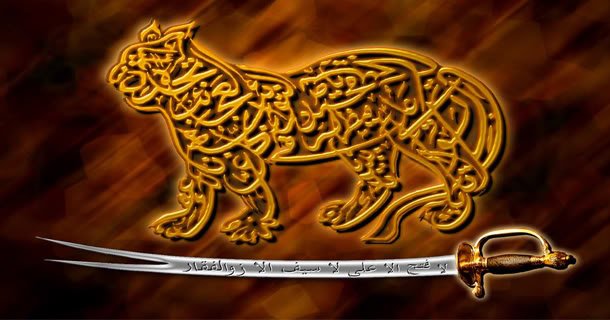
wilderness I weigh my foes in the giant’s balance.” Ali was no giant, but he made up for his lack of height by his great breadth and prodigious strength. Today he was formidable in a scarlet tunic over which he wore his shining breastplate and backplate. On his head gleamed a spiked helmet encrusted with silver. In his right hand he brandished Muhammad’s own scimitar, “Dhulfikar” which had been entrusted to him with the black banner.

Again and again Jewish veterans rushed at Ali. Again and again they staggered away with limbs or heads severed. Ali is said to have killed six renowned heroes of the Jews in single combat namely (1) Harrith the younger brother of Marhab, (2) Dauod ibn Qabus of the Banu Bakr tribe, (3) Rabi bin Abi-ul-Haqiq, Aunter the brave, (4) Murrah ibn Merwan, (5) Yasir Khaybree and (6) Duhajeej Khybree. Finally the champion of all the Hebrews, a man called Marhab, who towered above the other warriors, planted himself before Ali. He wore a double cuirass, and round his

1 Col. R.V.C. Bodley-The Messenger. P. 231. Publishers Orientalia, Lahore. Ed. 1954.

helmet was a thick turban held in place by an enormous diamond. He was girt with a golden belt from which swung two swords. He did not use these, however, and killed right and left with a long three-pronged spear. For a moment the battle paused and the combatants rested on their arms to watch the duel.

Marhab, like Goliath of Goath, had never been defeated. His size alone frightened opponents before they came close to him. His barbed fork disheartened the most skilled swordsmen.

Marhab attacked first, driving at Ali with his trident. For a moment Ali, unaccustomed to this form of weapon, gave ground. Then he steadied himself and fenced with the Hebrew. A feint and a parry sent the spear flying. Before Marhab could draw one of his swords, Ali’s scimitar had cloven his head through his helmet and turban so that it fell on either side of his shoulders. The Jews, seeing their champion dead, retreated into the city. The Prophet gave the signal for a general assault. The Muslims surged forward. Ali led the onslaught. He had lost his shield during the duel and, to replace it, had torn a door from its hinges, which he now carried before him. But he had little need for it now. With the Muslims pouring through the breach like a torrent in flood, the inhabitants took refuge in their homes. Those who did not surrender were massacred.”

The Results of the Victory

The victory at al-Qamus was complete and Ali emerging as the conqueror of Khyber, was a hero with- out parallel in Islam. The carnage had established. such awe in the hearts of the enemy that people trembled at the very mention of his name. The Muslims cele- brated the victory by putting flaming lamps on the roofs of their houses. In the Holy Qur’an the following revelation refers thus to the occasion:-

“18. But Certainly God was well pleased with the believers when they swore allegiance to thee under the tree, and He knew what was in their hearts, so He sent down tranquility on them and rewarded them with a near victory.” (Qur’an 48:18) 19