


The eighth year after the Migration 1
The delegation of ‘Abd al-Qays arrived [in Medina]. The Messenger ﷺ said to them, ‘Welcome to a group of people, who are without disgrace and regret.’ He, furthermore, said to Ashajj, their chief, ‘You have two qualities that Allah and His Messenger ﷺ love: forbearance and deliberation.’ Amongst their merits was that when
the Arabs apostatised, there was not a place left on earth wherein anyone was prostrating to Allah except three mosques: the mosque in Mecca, the mosque in Medina and the mosque of ‘Abd al-Qays. ‘Amr ibn al-‘As, Khālid ibn al-Walid and ‘Uthman ibn Talḥah accepted Islam.
The Prophet’s ﷺ oldest daughter Zaynab, the wife of Abū al-‘Āṣ ibn al-Rabi’, passed away; he placed his garment over her after she was washed and before being shrouded so as to grant her the blessings from his relic.
There was inflation in Medina, so they [the Companions] said, ‘O Messenger of Allah, fix the prices for us,’ to which he ﷺ replied, ‘Verily, Allah is the one Who determines the prices, the one Who withholds, gives generously and provides sustenance.’
The expedition (sariyyah) of Ghālib in Ṣafar to Banī al-Mulawwiḥ in al-Kadid took place; he seized considerable amount of spoils.
The expedition (sariyyah) of Ghālib [also took place] in Şafar, to the place in Fadak where the companions of Bashir were killed; the group consisted of two hundred men; they [the Muslims] them and captured some livestock. massacred them
The expedition (sariyyah) of Shuja’ ibn Wahb al-Asadi to Banim ‘Amir in al-Si’ a stream from Dhāt ‘Irq to Wajrah – took place. The location is approximately eighty-four miles from Mecca on the route to Basra and five marḥalahs [approximately one hundred and thirty-eight miles] from Medina. The group consisted of twenty-four men, and was to confront a group from Hawāzin. They managed to seize considerable spoils.
The expedition (sariyyah) of Ka’b ibn ‘Umayr al-Ghifārī, together with fifteen men, to Dhāt Aṭlāh — beyond Dhāt al-Qurā – in Rabī‘ al-Awwal. The disbelievers killed them all except for one man.
Then there was the Expedition (Ghazwah) of Mu’tah. The Prophet did not take part in it himself. The reason behind
sent al- this expedition was that when Allah’s Messenger ﷺ Harith ibn ‘Umayr al-Azdi, from Bani Lahab, with his letter to the Roman King in Shām – and it has been said that it was the King of Buṣrā – Shuraḥbīl ibn ‘Amr al-Ghassānī stopped him and tied him with a rope; he then had him brought forth and smote his neck. He was the only envoy of Allah’s Messenger ﷺ to be killed; therefore, when news of his death reached him, he was distressed by it. So he dispatched an army and appointed Zayd ibn Harithah as the commander in charge and said, ‘If Zayd is martyr, then Ja’far [is to succeed him], and if Ja’far is Martyr, then ‘Abd-Allāh ibn al- Rawāḥah.’ So Zayd, with the flag [in his hand], fought until he was martyred; then Ja’far took it [the flag] and fought ferociously until his right forearm was severed, so he took the flag with his left hand and it also got severed [from an enemy blow], so he embraced it [the flag] with his upper arms; so Allah compensated him for that with two wings to fly with in Paradise. He then fought until he was martyred. Then ‘Abd-Allāh ibn al-Rawāḥah took the flag and fought until he was martyred. Thereafter, the people chose Khalid ibn al-Walid [to lead them], so he took the flag and fought and saved
all the Muslims [from further major loss].
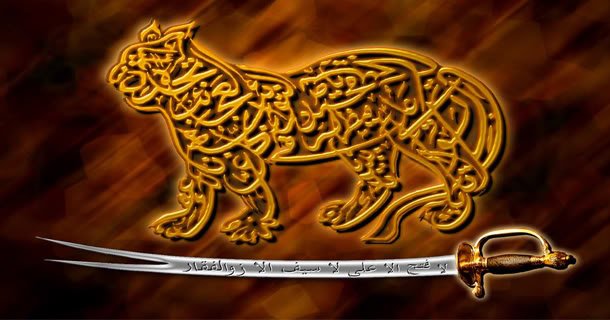
The Messenger announced the martyr of Zayd, Ja’far and Ibn Rawāḥah to the people [of Medina] before the news of their deaths reached them. He informed them, as tears flowed from his eyes, “Zayd took the flag and was struck dead; then Ja’far took it and was struck dead; then Ibn Rawāḥah took it and was struck dead’; then he said, ‘One of the swords of Allah – [i.e. Khālid] – took the flag until Allah granted victory at his hands.’
When the army returned to Medina, some people started saying, ‘O fleers (farrar), you fled from Allah’s cause.’ However, the Prophet ﷺ received them himself and said about them, ‘They are not fleers; rather, they are karrār [those who retreat to re- launch an offensive], if Allah wills.’
The Expedition of Chains (Dhāt al-Salāsil) took place; it was called that because the polytheists chained one another out of fear that some might flee, and it has been said that it was named after a well at which the expedition ended. The reason behind it was that he ﷺ dispatched a group of his Companions, appointing ‘Amr ibn al-‘As as a commander over them, to invite the Arabs to Islam. The enemies, however, stopped them in their tracks, so ‘Amr sent a message back [to Medina], seeking reinforcements from the Messenger of Allah, ﷺ who sent Abu Bakr, ‘Umar and Abū ‘Ubaydah ibn al-Jarrāḥ [and two hundred fighters from the Supporters and Migrants] as reinforcement, and thus they triumphed by Allah’s grace.

 Aal-e-Qutub Aal-e-Syed Abdullah Shah Ghazi