
The Best of Creation part 14

The sixth year after the Migration

The pilgrimage (hajj) was made obligatory according to the sound opinion amongst many of the Shāfi’īs; some of them have said that was in the ninth year, while others have said the fifth year. Its obligation was with His Most High’s words: ‘People owe it Allah to make the pilgrimage to His house’ [Qur’an 3: 97].

People suffered a drought, so he ﷺ performed the rain prayer for them and thus they were given rain in Ramadan.

The sun eclipsed, so the Prophet ﷺ prayer. performed the solar eclipse
The  ruling pertaining to zihar was revealed ” The masonom behind it was that Aws ibn Ṣāmit said to his wife Khawlah bint Mālik, ‘You are to me like my mother’s back,’ so the veresrevealed (from the beginning of Surah al-Mujādalah).

The Expedition of al-Hudaybiyah took place. 1The reason behind it was that the Prophet ﷺ saw in a dream that he had safely entered the House [Kaaba] together with his Companions, with their heads shaved or hair cut, so he left al-Madīnah al- Munawwarah to perform umrah; however, since he was unable to enter Mecca, he released himself from the iḥrām [of umrah] at the Sacred Precinct border.

During this expedition, the Pledge of Riḍwān was sworn. The reason behind it was that the Prophet ﷺ sent ‘Uthman to Mecca, whereupon a rumour spread of his murder, so he took a pledge of allegiance from the people [to fight] till death; regarding that, the following Divine words were revealed: ‘Allah was definitely pleased with the believers when they gave their pledge of allegiance to you [the Prophet] under the tree’ [Qur’an 48: 18].

The conclusion of the expedition was that he ﷺ agreed to a peace treaty (sulḥ) with the Quraysh, which had the appearance of being damaging to the Muslims but, in fact, it empowered them. all Stipulated therein was that anyone who came to the Prophet ﷺ from the side of Quraysh would be returned to them, and whoever amongst his followers came to Quraysh was not to be allowed to return to him. The truce was to run for ten years, during which the people would live in security. Moreover, in conclusion to the treaty, the Messenger agreed to not enter Mecca that year but rather to return the coming year, as the Quraysh wanted.

Amongst the benefits of this truce were:
1. the protection of the downtrodden and oppressed Muslims in Mecca;
Wa,
2. many of the disbelievers from the Quraysh accepting Islam through their interaction with the Muslims and their coming to Medina and listening to the speech of Allah and witnessing the Messenger’s ﷺ miracles;

3. and the Messenger  ﷺ finding more time to teach the Muslims and to send letters and delegations [to the
emperors of the major powers]. The believers, afterwards, realised that although their being barred initially from entering the [Sacred] House, and having to return, was apparently humiliating, in reality it was a source of honour and strength for them.

Tremendous merits were conferred upon those who were present during the Pledge of Riḍwān; among them are His Most High’s words: ‘Allah was pleased with the believers when they were pledging their allegiance to you under the tree,’ [Qur’an 48: 18] and His words: ‘And the first Migrants and the Supporters’ [Qur’an 9: 100]. The scholars have said, ‘They are those who were present at the Pledge of Riḍwān.’

Part of this story the incident of Abū Jandal ibn Suhayl: he had taken refuge with the Muslims during the negotiations over the conditions of the treaty. His father, Suhayl, who was the representative for the Quraysh during the discussions, said, ‘This is the first thing I demand from you, O Muhammad: that you return him to me.’ Abū Jandal was amongst those who were tortured in Mecca. So he returned him and said, ‘Be patient and anticipate your reward from Allah, for we do not betray, and verily Allah will grant you relief and an escape.’ albia torture Hom

After the conclusion of the treaty, Abū Başir fled from Mecca to Medina. The Quraysh sought to enforce the agreement of al- Hudaybiyah and sent an envoy to demand him back. So he ﷺ returned him with the envoy that had come to demand him. However, on the way [back to Mecca], Abū Baṣīr tricked the envoy and killed him; thereafter, he came to Medina and said, ‘O Prophet of Allah, Allah has fulfilled your obligation: you returned me to them, and then Allah rescued me from them,’ whereupon he ﷺ replied, ‘Woe to his mother! He has ignited a war.’ Abū Başīr then left [Medina] until he alighted towards the seashore on Quraysh’s route to Shām. A group of oppressed Muslims in Mecca heard about it and so joined him and began harassing Quraysh: they would not capture anyone of them except they would kill him, and no caravan would pass by them except they would seize it, until eventually Quraysh wrote to the Messenger of Allah, ﷺ asking him by their relatives that he accommodate Abū Başīr
and his companions because they had no need for them; so he accommodated them, and they came to him in Medina; thus it was a miracle.

On the tenth of Muharram, there was the expedition (sariyyah) of Muḥammad ibn Maslamah, among a group of thirty cavalrymen, to al-Qurață, a sub-group of Bani Abi Bakr ibn Kilāb, towards Dariyyah¹¹ in al-Bakrāt [name of a mountain] at a distance of seven nights from Medina. When he raided them, they all fled, and he seized from them spoils. He arrived in Medina, together with Thumāmah ibn Uthäl al-Hanafi, who was a war prisoner, one night before the end of Muharram. He had been absent for nineteen nights.

In Rabi’ al-Awwal, his ﷺ military expedition (ghazwah), among one hundred men, against Banī Liḥyān took place; they marched forth until they reached Ghurān a valley between Amaj and – ‘Usfän – and it was there that the people [his Companions] at al-Raji’ were killed, and so he invoked Allah’s mercy upon them. Banī Liḥyān heard that he was approaching, so they all fled and alb none of them were captured. He ﷺ stayed a day or two s or two searching g for.com the troops in every corner and eventually reached ‘Usfān; he ﷺ then sent Abu Bakr to Kurā’ al-Ghamīm.  He  did not encounter anyone and therefore left for Medina. He ﷺ was absent for nineteen nights and, as he was returning, he recited, ‘Returning, repenting to our Lord, praising…”

The Expedition (Ghazwah) of Dhi Qarad which is a place near Medina 124 en route to Shām – took place. It is also called ‘the Expedition of the Jungle’ (Ghazwah al-Ghābah). The reason behind it was that the Prophet ﷺ had milch camels that would graze over there, and ‘Uyaynah ibn Ḥiṣn al-Fazārī, among forty cavalrymen from Ghaṭafān, came and raided it, and then drove them away and killed Dharr ibn Abi Dharr, who was their shepherd, and took captive the wife of Abū Dharr. So he ﷺ set out [after them], and Allah utterly defeated them.

In Rabi’ al-Awwal, the expedition (sariyyah) of ‘Ukāshah ibn Miḥṣan, together with forty men, to Ghamr Marzuq 125 – a well in the territory of Bani Asad – took place. He managed to seize spoils without any fighting.

Also in Rabi’ al-Awwal, there was the expedition (sariyyah) of Muḥammad ibn Maslamah, with ten other warriors, to Dhī al- Qaşşaha place that is twenty-four miles from Medina – against Bani Tha’labah. There were a hundred of them [Bani Thalabah], and therefore they managed to kill all of them [the Muslims] with the exception of Ibn Maslamah. So, in Rabī˚ al-Ākhir, the Prophet ﷺ sent Abū ‘Ubaydah ibn al-Jarrāḥ,together with forty men, to the place where the Muslims were killed, and there he found a man, who accepted Islam when he was captured, livestock and sheep, and so they gained a considerable amount of spoils.

Furthermore, there was the expedition (sariyyah) of Zayd ibn al-Harithah in Rabi’ al-Akhir to Bani Sulaym in al-Jamum, which is called al-Jamūḥ – towards the centre of Nakhl – four miles from  Sauna.They managed to seize livestock and sheep as spoils. He ﷺ then sent him, together with seventy cavalrymen, to al-‘Is, which is a distance of four nights from Medina, in Jumādā al-Ūlā, to intercept Şafwān ibn Umayyah’s caravan. He captured a number of the opposing forces; amongst them was Abū al-‘Ãṣ ibn al-Rabi’, whose wife Zaynab, the Prophet’s ﷺ daughter, gave sanctuary. He returned to Mecca and returned what he had of people’s wealth but later came back to Medina as a Muslim and told the people [there] that he did not wish to begin his Islam by committing treachery ﷺ

In Jumādah al-Akhirah, he ﷺsent Zayd ibn al-Ḥārithah, together with fifteen men, to al-Tarif, which is a spring thirty-six miles from Medina, to [engage] Bani Tha’labah, where he [Zayd] seized livestock and sheep.

He then sent him [Zayd] to Hismā – behind Wādi al-Qurā – again in Jumādah al-Akhīrah, together with five hundred men, to a group of Judhāmis who had intercepted Diḥyah ibn Khalifah; thus, Zayd slaughtered them and seized a great deal of spoils. Thereupon, Zayd ibn Rafā’ah al-Judhāmī travelled to the Prophet ﷺ and reminded him of the letter that he had written to his people, so the Prophet ﷺ returned to them everything that Zayd had taken.

Thereafter, he sent Zayd to Wādī al-Qurā [a place near to Medina] in Rajab, where some of the Muslims were killed and Zayd was carried from the battle alive but injured.

The expedition of ‘Abd al-Rahman ibn ‘Awf to Dūmah al- Jandal 127 to invite its people to Islam occurred in Sha’bān, and many people accepted Islam. Amongst them was al-Aṣbagh ibn ‘Amr al-Kalbī, who was a Christian; ‘Abd al-Raḥmān ibn ‘Awf married his daughter Tamāḍur, who later bore his son Abu Salamah. And those who did not accept Islam had the legal tax (jizyah) imposed upon them.

– There was the expedition of ‘Ali ibn Abi Talib in Sha’ban all together with one hundred men red men – to Bani Sa’d ibn Baker  Fadak because of their providing military support to the Jews [of Khaybar]. He seized possession of livestock and sheep as spoils. In Ramadan, there was the expedition of Zayd ibn Ḥārithah to Umm Qirfah Fatimah bint Rabi’ah ibn Badr al-Fazariyyah, on the outskirts of Wādī al-Qurā, at a distance of seven nights from
Medina; he captured her, and Allah destroyed her.

Then was the expedition of ‘Abd-Allāh ibn ‘Atīk, [also] in Ramadan, because of the murder of Abū Rāfi Abd-Allāh; and it has been narrated that the murdered person was Sallām ibn Abi al-Huqayq. So, during the night, they killed him in his house in Khaybar; and it has been said [that he was killed] in his fortress in Ḥijāz.

The expedition of ‘Abd-Allāh ibn Rawāḥah took place in Shawwäl, among a group of thirty men, to Usayr ibn Rizām, the Jew from Khaybar, because he had travelled to Ghaṭafan to mobilise them to wage war against the Prophet ﷺ; he [Usayr] was killed, alongside approximately thirty other men.

‘Aqil ibn Abi Talib, among many [others], accepted Islam. The Prophet ﷺ said [to ‘Aqil], ‘I love you twofold: a love that is because of your kinship to me and a love that is because of what I know of my uncle’s [your father’s] love for you.’ Narrated by Aḥmad and al-Bukhārī in al-Adab al-Mufrad and others.

The Prophet ﷺ made preparations to send letters to the kings of the various regions; so he sent Diḥyah al-Kalbi to Caesar, ‘Abd- Allāh ibn Hudhāfah al-Sahmi to Chosroes, ‘Amr ibn Umayyah al-Damrī to the Negus, Ḥāṭib ibn Abī Balta’ah to the Egyptian Emperor al-Muqawqis, Shujā’ ibn Wahb to al-Harith ibn Abi Shimr al-Ghasssānī and Salīṭ ibn ‘Amr al-‘Amirī to Hawdhah ibn ‘Ali al- Ḥanafi.
from The incident regarding the ‘Uraniyyin happened, when a albia group amongst ‘Ukal and ‘Uraynah had come to Allah’s a had come to Allah’Messenger  ﷺenger in Medina and accepted Islam [and pledged allegiance]; however, they [became sick and weak and] could not acclimatise to Medina, so he ﷺordered them leave the city with camels that were for charity and drink from their urine and milk; they did that and regained their health. They then apostatised and murdered their shepherd and stole the camels, so he ﷺ dispatched a group of his Companions to pursue them and take retribution against them.

Then there was the expedition of ‘Amr ibn Umayyah al-Damrī, together with Salamah ibn Aslam, to Abū Sufyān in order to kill him for his conspiring and plotting against the Prophet ﷺ and the Muslims; however, Abu Sufyan realised the plot, so he [‘Amr] fled and killed three men on the way.

Ali AlaihisSalam the Super man part 5 EARLY LIFE

Ali AlaihisSalam risks his life for the Holy Prophet ﷺ

In the Spring of 622 A.D. the confederacy of the
Meccan pagans, headed by Abu Jahl and Abu Sufyan, the two arch enemies of Islam, hatched a plot to assassi- nate the Holy Prophet ﷺ It was unanimously decided that the preachings of Muhammad  ﷺ (may peace be upon him) ran counter to the interests of the Quraish and that the Prophet’s ﷺ assassination had become necessary for the betterment of the Meccan state. Muhammad’s ﷺ house was to be surrounded at night and a member from each family of the Meccan City-State was to assist in the execution, so that the responsibility of the murder could not be laid at the door of any particular clan or tribe. Tradition says that the Holy Prophet ﷺ was forewarned by God of the impending danger and ordered to emigrate to Medina. When the Prophet ﷺ and Abu Bakr left Mecca for Medina Ali AlaihisSalam was ordered to go and sleep in Muhammad’s  ﷺhouse on Muhammad’s bed ﷺ

Ali AlaihisSalam your His heart swelling with love and gratitude at being selected and entrusted with such a dangerous asked his master, “If I sleep here in your bed stead, will you be safe?” “Yes”, said the Holy Prophet ﷺ. He, ﷺ then went calmly on to give Ali instructions about what still remained to be done at Mecca before Ali could leave to join Muhammad ﷺat Medina. Many articles that had been deposited with the Prophet ﷺfor safe-keeping were to be returned by Ali to their respective owners; Ali was also to look to the safety of all Muslim women and children.

The task that Muhammadﷺ entrusted to Ali was a no small undertaking for a young man of twenty-two or twenty-three years old, but in the way in which he carried it out, Ali showed an unflinching fidelity. He was called upon to deputise for Muhammadﷺ at the risk of his own life, for it was highly probable that the mob, furious at being foiled of their chief objective would kill Ali in his stead.

“In the midst of this terrible struggle” says a writer, “between life and death, with whatever tran- quility of mind Ali has presented himself, men of under- standing and intelligence will ever congratulate him
for it till the end. of this world. Too, they will marvel at the Prophet’s ﷺwise selection of Ali for this night’s
dramatic performance.” After the Prophet Muhammad ﷺ accompanied by Abu Bakr had left the house, Ali shut himself up in the Pro- phet’s bedroom,ﷺ barred its doors and locked them from inside. Covering himself with Muhammad’s ﷺfamiliar black cloak, he slept on Muhammad’s carpetﷺ. The assassins surrounded Muhammad’s ﷺhouse at night but finding the doors well closed did not break them. One. of them peeped through the shutters and seeing a figure wrapped in Muhammad’s ﷺwell known mantle took it to be Muhammad ﷺhimself. The assassins then decided. to keep watch over the house till the break of day and kill Muhammad ﷺwhen unsuspecting he came out at dawn for morning prayers. “The morning breeze” says Col Bodley, “whispered over the desert. The dawn came mauvely from the east and showed the as- sassins braced to strike. As the first white rays of the rising sun hit the flat roofs of Mecca, the door of Muhammad’sﷺ house opened. The men stood ready to spring. They then held back as their astonished eyes rested on the burly figure of Ali standing on the threshold carrying Muhammad’s ﷺcloak over his arms.”

Something in Ali’s bearing, some intensely personal quality of heroism, and some personal charm of his demeanour, must have been responsible for his survival on this occasion. The mob held back and we know that Ali stayed on in Mecca for some days returning the entrusted property as the Holy Prophetﷺ had directed. Ali then left to join the Holy Prophet ﷺin Medina where he became one of the first members of the Fraternity.

The Islamic Fraternity: Ali as Muhammad’sﷺ
had established a bond of fraternity through which every local Ansar (the Medinite helper) was united with a Muslim Meccan exile in formal brotherhood and shared his property and belongings with him. The Meccans were similarly ordered to reciprocate with a share of their earnings. At this juncture Muhammad ﷺ (may peace be upon him) is said to have selected Ali as his partner in the bond of the brotherhood. This fraternal bond was considered equivalent to blood kinship in matters of inheritance. Every Muslim at his death bequeathed his movable and immovable pro- perty proportionately to his collaterals and other rela- tives and to those whom he adopted in fraternity. Thus Ali became one of Muhammad’sﷺ heirs.

Ali a labourer of the first Mosque

In the Spring of 623 A.D., the first Spring after his emigration to Medina, the Holy Prophetﷺ decided to build the first Mosque, laying its foundation on the site which is today called “Masjid-i-Nabvi”. Ali was the first to offer his services as a labourer working alongside the other members of the Fraternity, shovelling the earth when the foundations were being laid and later carrying on his shoulders baskets of mortar and brick While thus labour- which he passed on to the masons. ing Ali recited the following verses:-

Whosoever builds a mosque And works whether sitting or standing Puts up with the pain of labour While others shirk work For fear of dust and pain Both of these verily Cannot equal each other.

It was in this fashion that the ‘First House of God’ was constructed of sun-dried bricks resting on stones and with a roof of palmbranches. It was simple in design and devoid of all decoration and when it was finished

Muhammad ﷺ and Ali  AlaihisSalam are said to have built their own residential quarters beside it. The other companions of the Holy Prophet ﷺ soon followed suit, building their own houses near them, a row of simple dwelling cottages separated from each other by palm branches cemented with mud. Thus the new Islamic community in Medina took on its outward and visible form, with Ali AlaihisSalam as the chosen companion of the Prophet ﷺ.

चौदह सितारे पार्ट 8

ख़ाना ए काबा में हजरे असवद को नब करने में आं हज़रत (.व.व.अ.स) की हिकमते अमली

मुवर्रेख़ीन का बयान है कि बेअसते पैग़म्बर से पहले क़ुरैश ने यह फ़ैसला किया था कि ख़ाना ए काबा को ढा कर फिर से इसकी तामीर की जाये और उसे बलन्द कर दिया जाये। चुनान्चे इसे गिरा कर उसकी तामीर शुरू कर दी गई फिर जब इमारते हजरे असवद के नस्ब करने की जगह तक पहुँची और उसके नम्ब करने का सवाल पैदा हुआ तो क़ुरैश में शदीद इख़्तेलाफ़ पैदा हो गया हर क़बीले का सरदार यह चाहता था कि इस शरफ़ को वह हासिल करें आखिरकार बहुत कोशिश के बाद यह तय पाया कि कल जो सब से पहले हरम में दाखिल हो उसे हकम (फैसला करने वाला) बना कर इस झगड़े को ख़त्म किया जाये, वह नस्बे हजर के बारे में जो फ़ैसला दे दे उसकी पाबन्दी हर एक को करना होगी। ग़रज़ कि जब सुबह हुई तो हज़रत रसूले करीम ( स.व.व.अ.) सब से पहले हरम में दाखिल हुए लिहाज़ा उन्हीं को हकम बना दिया गया। हज़रत ने फ़रमाया कि एक मज़बूत चादर लाई जाए और उसमें हजरे असवद को रखा जाए और चादर के गोशों को हर क़बीले का सरदार पकड़ कर उसे उठाए और मुक़ामे हजर तक लाए, चुनान्चे ऐसा ही किया गया।

फिर जब हजरे असवद बैतुल्लाह के क़रीब आ गया तो हज़रत मोहम्मद मुस्तफ़ा (स.व.व.अ.) ने अपने हाथों से उठा कर उसे नस्ब कर दिया । हुज़ूर (स.व.व.अ.) की इस हिकमते अमली से फ़ितनाए अज़ीम का सद्दे बाब हो गया। (तारीख़ अबुल फ़िदा, जिल्द 2 पृष्ठ 26 वा याक़ूबी जिल्द 2 पृष्ठ 14)

जनाबे ख़दीजा (.व.व.अ.स) के साथ आपकी शादी ख़ाना आबादी

जब आपकी उम्र 25 साल की हुई और आपके हुस्ने सीरत, आपकी रास्त बाज़ी (सत्यता) और दयानत की आम शोहरत हो गई और आपको सादिक़ और अमीन का खिताब दिया जा चुका तो जनाबे ख़दीजा ( स.व.व.अ.) बिन्ते ख़ुवेलद ने जो बहुत ही पाकीज़ा नफ़्स, ख़ुश इख़लाक़ और ख़ानदाने क़ुरैश में सब से ज़्यादा दौलत मन्द थीं ऐसे हाल में अपनी शादी का पैग़ाम पहुँचाया जब कि उनकी उम्र 40 साल की थी। शादी का पैग़ाम मंज़ूर हुआ और हज़रत अबू तालिब (अ.स.) ने पढ़ा। (तलख़ीस सीरतून नबी अल्लामा शिब्ली पृष्ठ 99 लाहौर 1965 ई0) मुवर्रेख़ीन इब्ने वाज़ेह अलमतूफ़ी 292 ई0 का बयान है कि हज़रत अबू तालिब ने जो ख़ुतबा ए निकाह पढ़ा था उसकी शुरूआत इस तरह थी ।

अलहम्दो लिल्लाहिल लज़ी जाअल्ना मिन ज़रा इब्राहीम व ज़ुर्रियते इस्माईल तमाम तारीफ़ें उस एक ख़ुदा के लिये हैं जिसने हमें नस्ले इब्राहीम और ज़ुर्रियते इस्माईल से क़रार दिया है। (अल याक़ूबी जिल्द दो पृष्ठ 16 मुद्रित नजफ़े अशरफ़ )

मुर्रेख़ीन का बयान है कि हज़रत ख़दीजा ( स.व.व.अ.) का महर 12 औंस सोना और 25 ऊँट मुक़र्रर हुआ जिसे हज़रत अबू तालिब ने उसे समय अदा कर दिया । ( मुसलमानाने आलम पृष्ठ 38 प्रकाशित लाहौर) तवारीख़ में है कि जनाबे ख़दीजा (स.व.व.अ.) की तरफ़ से अक़द पढ़ने वाले उनके चचा अम्र बिन असद और हज़रते रसूले ख़ुदा ( स.व.व.अ.) की तरफ़ से हज़रत अबू तालिब (अ. स.) थे। (तारीख़े इस्लाम जिल्द 2 पृष्ठ 87 मुद्रित लाहौर 1962 ई0)

एक रवायत में है कि शादी के समय जनाबे ख़दीजा बाकरा थीं, यह वाक़िया निकाह 595 ई0 का है। मुनाक़िब इब्ने शहरे आशोब में है कि रसूले ख़ुदा (स.व.व.अ.) के साथ ख़दीजा का यह पहला अक़द था। सीरते इब्ने हशशाम जिल्द 1 पृष्ठ 119 में है जब तक ख़दीजा ज़िन्दा रहीं रसूले करीम ( स.व.व.अ.) ने कोई अद नहीं किया ।
कोहे हिरा में आं हज़रत ( . व. व.अ.स) की इबादत गुज़ारी

तारीख़ में है कि आपने 38 साल की उम्र में (कोहे हिरा) जिसे जबले सौर भी कहते हैं को अपनी इबादत गुज़ारी की मंज़िल क़रार दिया और उसके एक ग़ार में बैठ कर जिसकी लम्बाई 4 हाथ और चौढ़ाई डेढ़ हाथ थी इबादत करते और ख़ाना ए काबा को देख कर लज़्ज़त महसूस करते थे। यू तो दो दो, चार चार शबाना रोज़ वहां रहा करते थे लेकिन माहे रमज़ान सारे का सारा वहीं गुज़ारते थे।

आपकी बेअसत

मुवर्रेख़ीन का बयान है कि आं हज़रत ( स.व.व.अ.) इसी आलमे तनहाई में मशगूले इबादत थे कि आपके कानों में आवाज़ आई या मोहम्मद (स.व.व.अ.) आपने इधर उधर देखा कोई दिखाई न दिया, फिर आवाज़ आई फिर आपने इधर उधर देखा, नागाह आपकी नज़र एक नूरानी मखलूक़ पर पड़ी वह जनाबे जिब्राईल थे उन्होंने कहा इक़रा पढ़ो, हुज़ूर ने इरशाद फ़रमाया माइक़रा क्या पढूं? उन्होनें अर्ज़ की इक़रा बइस्मे रब्बेकल लज़ी ख़लक़ फिर आपने सब कुछ पढ़ दिया क्यो कि आपको इल्में कुरआन पहले से हासिल था। जिब्राईल (अ.स.) के इस तहरीके इक़रा का मक़सद यह था कि नुज़ूले कुरआन की इब्तेदा हो जाए। उस वक़्त आपकी उम्र 40 साल 1 दिन की थी। उसके बाद जिब्राईल ने वज़ू और नमाज़ की
तरफ़ इशारा किया व अरकात की तादाद की तरफ़ भी हुज़ूर को मुतवज्जे किया चुनान्चे हुज़ूरे आला ने वज़ू किया और नमाज़ पढ़ी आपने सब से पहले जो नमाज़ पढ़ी वह जोहर की थी। फिर हज़रत वहां से अपने घर तशरीफ़ लाये और ख़दीजातुल कुबरा और अली बिन अबी तालिब से वाक़िया बयान फ़रमाया। इन दोनों ने इज़हारे ईमान किया और नमाज़े अस्र इन दोनों ने ब जमाअत अदा की। यह इस्लाम की पहली नमाज़े जमाअत थी जिसमें रसूले करीम (स.व.व.अ.) इमाम और ख़दीजा ( स.व.व.अ.) और अली (अ.स.) मासूम थे। आप दरजाए नबूवत पर बदोफ़ितरत ही से फ़ायज़ थे। 27 रजब को मबऊसे रिसालत हुए। (हयातूल कुलूब, किताब अलमुनतक़ा, मवाहिबुल दुनिया ) इसी तारीख़ के नुज़ूले कुरआन की इब्तेदा हुई। हाशिया हज़रत अली बिन अबी तालिब के साबेकुल इस्लाम होने के बारे में इतनी ज़्या रवायत व शवाहिद मौजूद है कि अगर उन्हें जमा किया जाय तो एक किताब बन सकती है। हज़रते रसूले करीम (स.व.व.अ.) ने खुद इसकी तसदीक फ़रमाई है चुनान्चे दार क़त्नी ने अबू सईद हजरी से इमाम अहमद ने हज़रत उमर से हाकिम ने माअज़ से अक़्ली ने हज़रत आयशा से रवायत की है कि हज़रत रसूले ख़ुदा (स.व.व.अ.) ने अपनी ज़बाने मुबारक से इरशाद फ़रमाया है कि मुझ पर ईमान लाने वालों में सब से पहले अली (अ.स.) हैं। हज़रत अली (अ.स.) खुद इरशाद फ़रमाते हैं :-
मैंने तुम सब से पहले इस्लाम की तरफ़ बढ़ कर उसका ख़ैर मक़दम किया है। यह वाक़िया है उस वक़्त का जब कि मैं बालिग़ भी न हुआ था। शैख़ अल इस्लाम हाफ़िज़ इब्ने हजर असकलानी, तकरीब अल तहज़ीब मुद्रित देहली के पृष्ठ 84 पर कुछ अक़वाल लिखने के बाद लिखते हैं अलमरजाअनहा अव्वलीन असलम तरजीह उसी को है कि आपने सब से पहले इस्लाम ज़ाहिर किया । अल्लामा अब्दुल रहमान इब्ने खल्दून लिखते हैं कि हज़रत ख़दीजा के बाद हज़रत अली इब्ने अबी तालिब ईमान लाये। (तारीख़ इब्ने खल्दून पृष्ठ 295 मुद्रित लाहौर) मुवर्रीख़ अबुल फ़िदा लिखते हैं कि जनाबे ख़दीजा के अव्वल ईमान लाने में और मुसलमान होने में किसी को इख़्तेलाफ़ नहीं, मगर इख़्तिलाफ़ उनके बाद में है कि बीबी ख़दीजा ( स.व.व.अ.) के बाद कौन पहले ईमान लाया। साहेबे सीरत और बहुत से अहले इल्म बयान करते हैं कि मर्दों मे सब से पहले हज़रत अली बिन अबी तालिब (अ. स.) 9, 10 या 11 बरस की उम्र में सब से पहले मुसलमान हुए। अफ़ीक़ कन्दी की रवायत से भी इसी की तस्दीक़ होती है जिसमें उन्होंने चश्मदीद गवाह की हैसियत से वज़ाहत की है कि मैंने रसूले ख़ुदा ( स.व.व.अ.) को नमाज़ पढ़ते हुए बेअसत के फ़ौरन बाद इस आलम में देखा कि उनके पीछे जनाबे ख़दीजा और हज़रत अली (अ.स.) खड़े थे उस वक़्त कोई ईमान न लाया था। इस रवायत को अल्लामा बिन अब्दुल जज़री क़रतबी ने इस्तेयाब जिल्द 2 पृष्ठ 225 मुद्रित हैदराबाद दकन में अल्लामा इब्ने असीर जरज़ी ने असद उलग़ाबा जिल्द 3 पृष्ठ 414 मुद्रित मिस्र में अल्लामा

इब्ने जरीर तबरी ने तारीख़े क़दीर जिल्द 2 पृष्ठ 212 मुद्रित मिस्र में अल्लामा इब्ने असीर ने तारीख़े कामिल जिल्द 2 पृष्ठ 20 में दर्ज किया है।

साहेबे तफ़रीह अल अज़किया ने सबीहतुल महफ़िल से नक़्ल किया है कि दोशम्बे को रसूले ख़ुदा (स.व.व.अ.) मबऊसे रिसालत हुए हैं और उसी दिन आखिरे वक़्त हज़रत अली (अ.स.) मुशर्रफ़ बा इस्लाम हुए हैं। यही कुछ रौज़तुल अहबाब जिल्द 1 पृष्ठ 83 में भी है। अल्लामा अब्दुल बर ने दावा किया है कि बिल इत्तेफ़ाक़ साबित है कि ख़दीजा के बाद सब से पहले हज़रत अली (अ.स.) मुशर्रफ़ ब इस्लाम हुए हैं। अल्लामा इक़बाल कहते है।

मुस्लिम अव्वल शहे मर्दाने अली — इश्क़ रा सरमायाए ईमाने अली वाज़े हो कि हज़रत अली (अ.स.) अज़ल से ही मुसलमान और मोमिन थे, उनके लिये इस्लाम लाने का जुम्ला मुनासिब नहीं है लेहाज़ा जहां कहीं भी तारीख़ में उनके बारे में इस्लाम या ईमान लाने का जुम्ला है इससे इज़हारे इस्लाम वा ईमान समझना चाहिए।


Fazail e Sayyeda e Kaynat Sayyeda Fatima Zahra Salamullah Alaiha

*Fazail e Sayyeda e Kaynat Sayyeda Fatima Zahra Salamullah Alaiha*

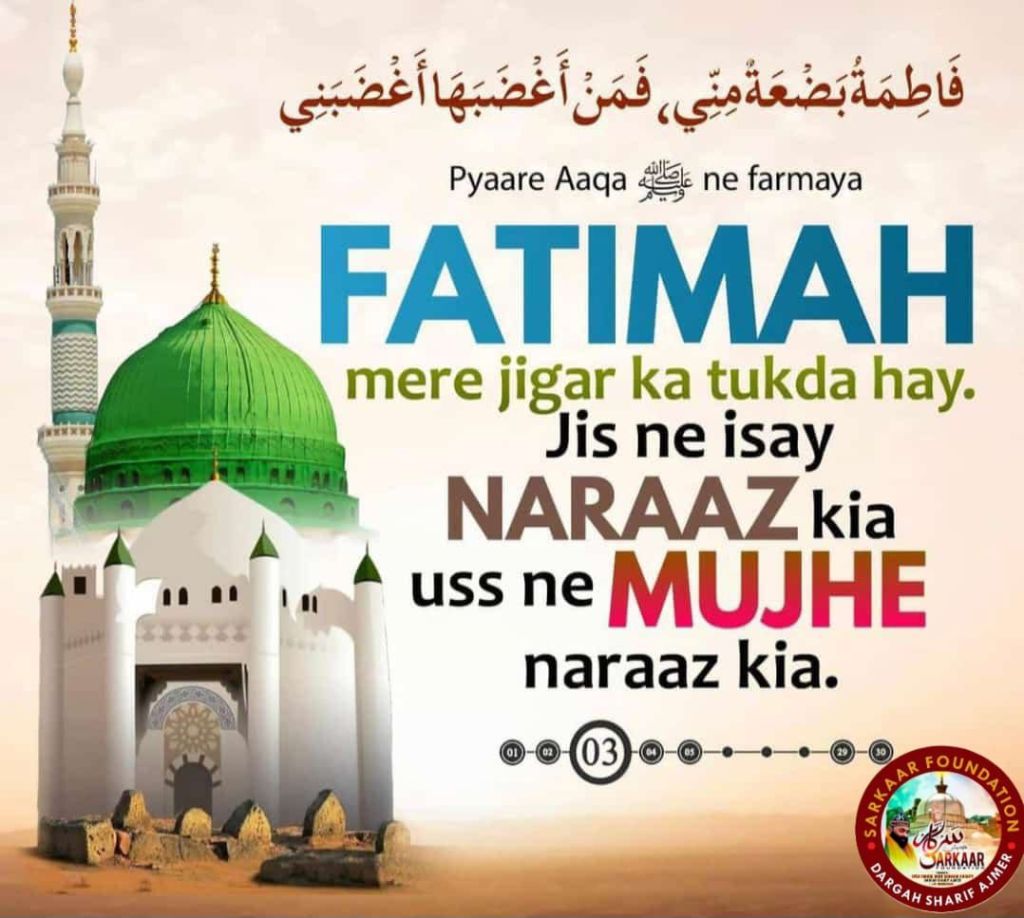
*Sarkar e Do Aalam Hazrat Muhammad Mustafa ﷺ Ne Farmaya :- Mene Apni Beti Ka Naam Fatima Isliye Rakha Hain Ki Allah Tala Ne Isko Aur Iske Chahne Walo ko Dozakh Se Aazad Kiya Hain.*

📚 *Reference* 📚

*1.* Kanzul Ummal, Jild 12, Safa 50, Kitabul Fazail, Hadees No 34222.

*2.* Imaam Daylami Musnad Al Firdaus, Jild 1, Safa 346, Hadees No 1385.

*3.* Imaam Haytami Al Sawaiq Al Muhriqah Safa 540.

*4.* Mulla Ali Qari Sharah Fiqh e Akbar, Safa 133.