
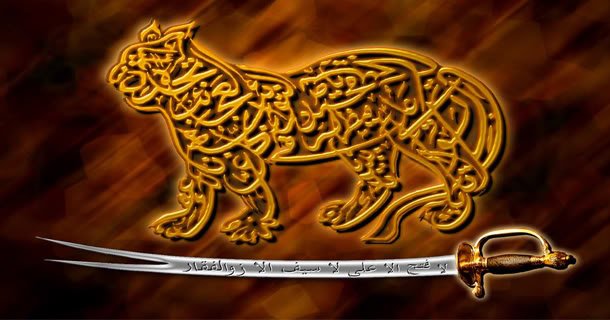


The Ahlul-Bayt of the Prophet (PBUH&HF)
the Ahlul-Bayt of the Prophet (PBUH&HF) consist of the following individuals ONLY:
Fatimah al-Zahra
Imam Ali
Imam al-Hasan
Imam al-Husain
Nine descendants of Imam al-Husain
and including the Prophet (PBUH&HF) himself, they will become fourteen individuals. The quran mentions Ahlul-Bayt and their exceptional virtue in the following verse which is known as “Purification Verse” (Ayah al-Tat’hir):
“Verily Allah intends to keep off from you every kind of uncleanness O’ People of the House (Ahlul-Bayt), and purify you with a perfect purification”. (Quran, the last sentence of Verse 33:33)
It is interesting to see that both Sahih Muslim and Sahih al-Tirmidhi as well as many others confirm the Shi’ite point of view explained above. In Sahih Muslim, there is a chapter named “Chapter of Virtues of the Companions”. Inside this chapter, there is a section called “Section of the Virtues of the Ahlul-Bayt of the Prophet”. There exists ONLY ONE tradition in this section, and this tradition has no reference to the wives of the Prophet (PBUH&HF). The tradition is known as “The Tradition of Cloak/Mantle” (Hadith alKisaa), and is as follows:
Narrated Aisha:
One day the Prophet (PBUH&HF) came out afternoon wearing a black cloak (upper garment or gown; long coat), then al-Hasan Ibn Ali came and the Prophet accommodated him under the cloak, then alHusain came and entered the cloak, then Fatimah came and the Prophet entered her under the cloak, then Ali came and the Prophet entered him to the cloak as well. Then the Prophet recited: “Verily Allah intends to keep off from you every kind of uncleanness O’ People of the House (Ahlul-Bayt), and purify you a perfect purification (the last sentence of Verse 33:33).” Sunni reference:
Sahih Muslim, Chapter of virtues of companions, section of the virtues of the Ahlul-Bayt of the Prophet (PBUH&HF), 1980 Edition Pub. in Saudi Arabia, Arabic version, v4, p1883, Tradition #61.
One can see that the author of Sahih Muslim confirms that:
Imam Ali, Fatimah, al-Hasan, and al-Husain are the Ahlul-Bayt,
The purification sentence in Quran (the last sentence of Verse 33:33) was revealed for the virtue of the
above-mentioned individuals, and NOT for the wives of the Prophet (PBUH&HF). Muslim (the Author) did not put any other tradition in this section (section of the virtues of Ahlul-Bayt). If the author of Sahih Muslim believed that the wives of the Prophet were included in Ahlul-Bayt, he would have quoted some traditions about them in this section.
Another version of the “Tradition of Cloak” is written in Sahih al-Tirmidhi, which is narrated in the authority of Umar Ibn Abi Salama, the son of Umm Salama (another wife of Prophet), which is as follows:
The verse “Verily Allah intends to … (33:33)” was revealed to the Prophet (PBUH&HF) in the house of Umm Salama. Upon that, the Prophet gathered Fatimah, al-Hasan, and al-Husain, and covered them with a cloak, and he also covered Ali who was behind him. Then the Prophet said: “O’ Allah! These are the Members of my House (Ahlul-Bayt). Keep them away from every impurity and purify them with a perfect purification.” Umm Salama (the wife of Prophet) asked: “Am I also included among them O Apostle of Allah?” the Prophet replied: “You remain in your position and you are toward a good ending.” Sunni reference: Sahih al-Tirmidhi, v5, pp 351,663
As we see, al-Tirmidhi also confirms that Imam Ali, Fatimah, al-Hasan, and al-Husain are the Ahlul-Bayt, and the purification sentence in Quran (the last sentence of Verse 33:33) was revealed for the virtue of the above-mentioned individuals, and NOT for the wives of the Prophet (PBUH&HF). Also it is apparent from above authentic tradition that the Prophet himself excluded his wives from Ahlul-Bayt. If Umm
Salama was among Ahlul-Bayt, why didn’t the Prophet answer her positively? Why didn’t he enter her into the cloak? Why did the Prophet tell her that she remains in her own position? If the Prophet (PBUH&HF) would consider Umm Salama among Ahlul-Bayt, he would surely have entered her to the cloak and would have prayed for her perfect purity as well.
Beside Sahih Muslim and Sahih al-Tirmidhi from which we quoted the Tradition of Cloak on the authority of Aisha and Umm Salama respectively, below are more Sunni references of the Tradition of Cloak who reported both versions of the traditions:
(3) Musnad Ahmad Ibn Hanbal, v6, pp 323,292,298; v1, pp 330-331; v3, p252; v4, p107 from Abu Sa’id al-Khudri
(4) Fadha’il al-Sahaba, by Ahmad Ibn Hanbal, v2, p578, Tradition #978
(5) al-Mustadrak, by al-Hakim, v2, p416 (two traditions) from Ibn Abi Salama, v3, pp 146-148 (five traditions), pp 158,172
(6) al-Khasa’is, by an-Nisa’i, pp 4,8
(7) al-Sunan, by al-Bayhaqi, narrated from Aisha and Umm Salama
(8) Tafsir al-Kabir, by al-Bukhari (the author of Sahih), v1, part 2, p69
(9) Tafsir al-Kabir, by Fakhr al-Razi, v2, p700 (Istanbul), from Aisha
(10) Tafsir al-Durr al-Manthoor, by al-Suyuti, v5, pp 198,605 from Aisha and Umm Salama
(11) Tafsir Ibn Jarir al-Tabari, v22, pp 5-8 (from Aisha and Abu Sa’id al-Khudri), pp 6,8 (from Ibn Abi Salama) (10 traditions)
(12) Tafsir al-Qurtubi, under the commentary of verse 33:33 from Umm Salama
(13) Tafsir Ibn Kathir, v3, p485 (Complete version) from Aisha and Umar Ibn Abi Salama
(14) Usdul Ghabah, by Ibn al-Athir, v2, p12; v4, p79 narrated from Ibn Abi Salama
(15) Sawa’iq al-Muhriqah, by Ibn Hajar al-Haythami, Ch. 11, sec. 1, p221 from Umm Salama
(16) Tarikh, by al-Khateeb Baghdadi, v10, narrated from Ibn Abi Salama (17) Tafsir al-Kashshaf, by al-Zamakhshari, v1, p193 narrated from Aisha (18) Mushkil al-Athar, by al-Tahawi, v1, pp 332-336 (seven traditions)
(19) Dhakha’ir al-Uqba, by Muhibb al-Tabari, pp21-26, from Abu Sa’id Khudri
(20) Majma’ al-Zawa’id, by al-Haythami, v9, p166 (by several transmitters)
So here you go dear reader(s), this was prove from authentic sunni books about who are the Ahlulbayt(as), i hope it will be helpfull

 Aal-e-Qutub Aal-e-Syed Abdullah Shah Ghazi