


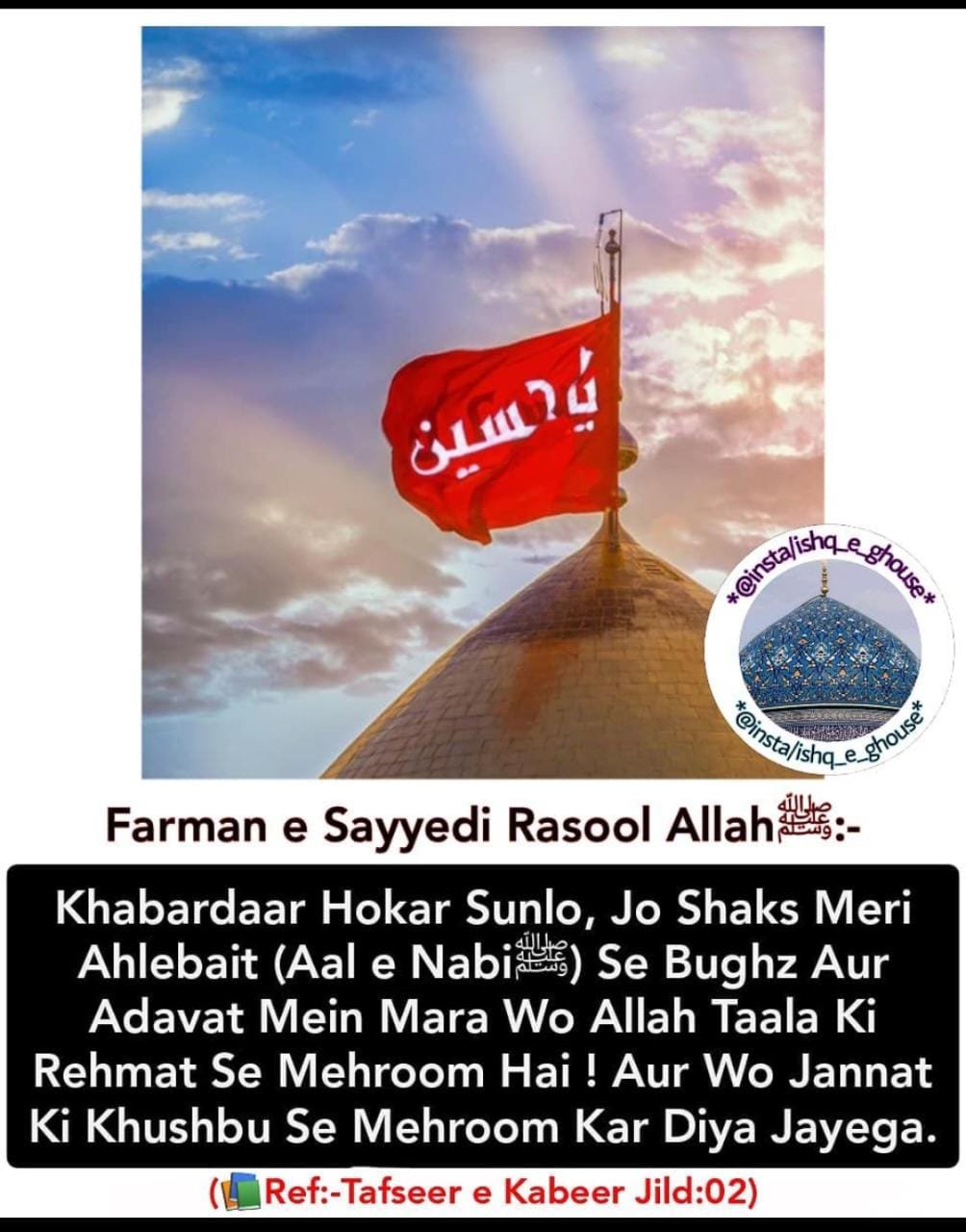




The prohibition of false affiliation (claiming to be related falsely) to Ahl Al-Bait
The most honorable descent is that of the Prophet Muhammad, and the most honorable kinship is to be related to the Prophet and to the people of his household, if that relationship is a true one. Many Arabs and non-Arabs claim to belong to this origin. Whoever is a part to Ahl Al-Bait and is a believer, Allâh has combined for him both the honor of the faith and the honor of being related to the Prophet; so he who claim to belong to this honorable origin and is not from its people has committed a forbidden thing, he is a pretender of what he has not been given, and the Prophet has said: “Whoever pretends to posess what he has not been given is like somebody wearing two garments of falsehood”. (This Hadith is narrated by Muslim in his Sahih (2129), on the authority of Aisha (RadiAllâhu Anha)).
The prohibition of one’s affiliation to another origin besides his is stated in authentic Hadiths, and among what is reported is the Hadith of Abu Dhar that he heard the Prophet saying: “None claims to be the son of any other than his real father knowingly, except that he has disbelieved in Allâh. And if somebody claims to belong to some folks to whom he does not belong, then let such a person take his place in the (Hell) fire” (narrated by Al Bukhari (3508) and Muslim (112); and the words belong to Al Bukhari.)
In Sahih Al Bukhari (3509) according to Wa’thilat bin Al-Asqa’a, “The Prophet said: ‘Surely one of the worst Fira (lies) is for a man to claim to be the son of a father other than his own real father, or claim to have seen with his eyes what he has not seen, or attribute to the Messenger of Allâh what he has not said”.
And the meaning of al-Fira: lies and his statement “or claim to have seen with his eyes what he has not seen” i.e. in dreams.
And it is stated in Majmu’u al-Fatawa of Shaikhul-Islam bin Taimiyah (Rahimahullah) that the endowment on Ahl Al-Bait or the “Ashraf” (those whose kinship ascends to the Prophet), no one deserves to have from it except the one whose relationship with them is an authentic one. He was asked about the endowment dedicated to the “Ashraf” (that they are relatives). Are the relatives Ashraf or not? Is it allowed for them to have from the endowment or not?
He answered by saying: “All praise belongs to Allâh, if the endowment is for the household of the Prophet or for some of them, like the Alawaites and the Fatimites (the descendants of Ali and Fatima) or the Talibites (the descendant of Abdul Muttalib) those who include: Banu Ja’afar and Banu Aqeel, or the descendants of Al-Abbas and others, surely no one deserves from the endowment except those whose Nasab is true and authentic. As for the one who claims to belong to them or is not known to belong to them, he does not deserve from this endowment, even if he claims to be one
of them, like the Banu Abdullah bin Maimun Al-Qaddah; the genealogists and other scholars know that they do not have true kinship (with Ahl Al-Bait). Scholars of Fiqh, Hadith, kalam and genealogist have proved it and lawful records have been noted, and it is mentioned in important books among the books of the Muslims; in fact, the people of knowledge popularly know that.
And also the one who dedicates his endowment for the “Ashraf” because the term: Ashraf conventionally does not incorporate except the one whose Nasab is authentic, from the family of the Prophet.
But if one dedicates his endowment for the children of an individual, or the relatives of an individual and those similar to that, and it is not stated in the endowment, what restricts it for the family of the Prophet, and the endower owns the endowment, it is correct to bequeath it for the children of a specific individual. And in this case, the Banu Hashim are not included in this endowment.
To this point ends the brief message in the virtue of Ahl Al-Bait and the high position they attained in the sight of Ahl AsSunnah Wal-Jama’ah. I hereby ask Allâh for His assistance in what pleases Him, and for the understanding of His religion and steadfastness on the truth, verily He is AllHearer, Responsive. May Allâh’s peace and blessing be upon our Prophet Muhammad upon his family and companions altogether!

Fadak is on the outskirts of Khaibar. It is a fertile and lush green settlement where Fadak ibne Haam was the first to pitch his tents. The place was therefore named after him. Like Khaibar, here too the Jews lived. They organized the irrigation facility and made the barren land bloom! Yaqoot Hamawi writes:
“This land had
bubbling ponds
and many oases.
–Maujim al Baladan, Vol 14, Page 338
After the conquest of Khaibar, the people living in the neighborhood owed allegiance to the Muslims without any conflict. The inhabitants of Fadak too surrendered the proprietary rights over the land and entered into an agreement to share the produce equally with the Muslims. Therefore they sent word to the Prophet (s.a.) that they had no intention of fighting and they were willing to accept the same conditions as were imposed on the people of Khaibar. The Prophet (s.a.) accepted their offer and sent Hazrat Ali (a.s.) to finalize the agreement with their chief, Yusha bin Naun. After the discussions it was agreed that the people of Fadak will forego the proprietary rights over the land, till it and share the crop equally with the Prophet (s.a.). By virtue of the agreement the Land of Fadak became the property of the Prophet (s.a.) because the land that was acquired without any fight or conflict, in terms of the Islamic Law, vested with the Prophet (s.a.). Therefore the Holy Quran says:
“Whatever (land) Allah gave to the Prophet (s.a.) from them,
you had not run your camels and horses on that.
Allah gives His Prophets (a.s.)
ascendance over whomsoever He wants.
And Allah has control over everything.”
The territories that are annexed through warfare are termed as Ghanimat or Booty. The land and property that is acquired without any war or conflict is called Fay or Anfaal. The land of Fadak too came in the category of Anfaal because it was acquired without any physical conflict. Therefore it was the personal property of the Prophet (s.a.) on which the other Muslims had no right. Allama Tabari writes:
“Fadak was the exclusive property of the Prophet (s.a.) because the Muslims, neither ran their camels over it nor the horses!” Ref: Tareeq e Tabari, Vol 2, Page 302
Bala Dari writes: “Fadak was an exclusive property of the Prophet (s.a.) because the Muslims neither ran their camels nor the horses over it,” Ref: Fatooh al Baladan, Page 27
Yaqoot Hamawi writes: “This village Allah gave to the Prophet (s.a.) in the Seventh Centuryas a consequence of the truce. –Maujam al Baladan, Vol 14, Page 238
After the clear Commandment of the Quran and the recorded history of the event by the reputed chronichlers, the fact is established that Fadak was the exclusive property of the Prophet (s.a.). Therefore, in exercise of this right, he had transferred this property to Hazrat Fatima Zehra (a.s.) during his lifetime through a written deed. Allama Jalal ud Din Siyuti writes about
it:
“Ibne Mardawia has quoted from Ibne Abbas that when the Verse,’ O Prophet! Give the right of your kin to them’ was revealed, he transferred the Fadak to Fatima (a.s.). ” Ref: Tafseer Durr e Manthur, Vol 4, Page 177. Qazi Sanaullah Panipati writes: “Tabarani and others have quoted from Abu Saeed Khudri that when the Verse, ‘O Prophet! Transfer the rights of your kin to them’ was revealed, the Prophet (s.a.) called Fatima Zehra (a.s.) and gave Fadak to her.” Ref: Tafseer e Mazhari, Vol 5, Page 432
Thereafer, till the Prophet (s.a.) lived, the land of Fadak was in the possession of Hazrat Fatima Zehra (a.s.). Therefore Hazrat Ameer al Momineen (a.s.), mentions about it in his letter:
“Under this sky we had only the land of Fadak in our possession.
Even on that
the mouths of some persons were watering!
The Best Judge is Allah!”
Ref: Nahj al Balagha
But after the demise of the Prophet (s.a.), for certain ‘reasons of State’ the Land of Fadak was taken away from Hazrat Fatima (a.s.). She went in appeal against this, but her claim was rejected! We shall deal with this matter in detail in a subsequent chapter. The pity is that the person against whom the appeal was prefferd, was also sitting in judgement!
This travesty of justice and fairplay resulted in Hazrat Fatima (a.s.) not being accepted as the owner of the Land of Fadak despite holding the transfer deed nor in terms of her being the rightful successor to the inheritance of her father, Hazrat Mohammed (s.a.)! She was so upset with this injustice that she boycotted the person responsible for the act and didn’t talk to him till her death!


विभिन्न कथन
हुजूर वारिस पाक की वाणी, कथन जहाँ तक प्राप्त हो सके हैं पाठकों के लिए अंकित किए जाते हैं:
१. अपनी वज़ा पर कायम रहो। २. ३. ४. ५. जो घर बैठे शिष्य होते हैं उसको बैय्युतुल वजह कहते हैं। अगर सात दिन का उपवास हो तो भी जबान पर न लावें और अल्लाह से भी न कहें, क्या वह नहीं जानते जो अपने पास है। अपनी बस्ती में रहकर लापरवाह रहना मुश्किल है। जब फाके हों तो सहन करे।
६. बात तो जब है कि साँस खाली न जाए। लोगों ने पूछा किससे साँस खाली न जाए तो वारिस पाक ने कहा अल्लाह से।
एक रंग रहे।
८. बड़ी फ़क़ीरी यह है कि हाथ कभी न फैले, निर्लोभी होकर रहें। ईश्वर की दी हुई दशाओं और उसकी मर्जी पर स्थिर रहें। गंडा-तावीज, दुआ- बद्दुआ
इत्यादि बिल्कुल न करें, यही फ़क़ीरी है।
९. हाजी अवघट शाह वारसी ने प्रार्थना किया कि हुजूर मशायख तवज्जह (ध्यान) देते हैं। यह तवज्जह क्या है? आप ने कहा गर्मी है, मुहब्बत है तो तवज्जह
काम देगी और जिसके हृदय में मुहब्बत न हो उस पर क्या प्रभाव होगा? १०. हाजी अवघट शाह ने हुज़ूर से कहा ‘सैय्यद की पहचान लोग ये बताते हैं अगर उनके हाथ पर आग रख दी जाए तो हाथ न जले।’ आप ने उत्तर दिया यह सच है किन्तु जो इम्तिहान लेगा वह क़ाफ़िर होगा। ११. यह जो पीर ( गुरू) की सूरत है यही सब कुछ है।
१२. जिसने यहां नहीं देखा वह अन्धा है। आदेशानुसार ‘मन काना फी हाजेही आमा फहोवा फिल आख़िरतिल आमा’ अर्थात् जिसने यहां नहीं देखा वह अन्धा रहेगा।
हर की इन्त्रा नदीद महरूमस्त दर कयामत जे लज्जते दीदार जिसने यहां ईश्वर का दर्शन नहीं किया वह महाप्रलय के पश्चात् भी ईश्वर दर्शन की अनुभूति नहीं कर सकेगा।
१३. फ़क़ीर को किसी से नाराज न होना चाहिए इसका अर्थ यह नहीं कि उससे कोई खुश हो या रूष्ट ।
१४. इस सृष्टि का नाम संसार नहीं है बल्कि भूल का नाम दुनिया है। १५. इस्लाम और चीज़ है ईमान और चीज़ है। १६. फ़क़ीर वह है जो किसी के समक्ष हाथ न पसारे। १७. फ़क़ीर को बेलाग होना चाहिए। (फ़क़ीर को सम्पूर्ण सृष्टि से बेगरज और
(७४)
निःस्वार्थ रहना चाहिए।)
१८. फ़क़ीर किसी का मोहताज नहीं होता।
१९. फ़कीर को सवाल हराम है।
(फ़क़ीर को किसी वस्तु को किसी से मांगना निषेध है) ।
२०. संसार फ़साद (झगड़े) का घर है और संसार वाले ईश्वर से दूर रहते हैं। २१. दुनिया की मुहब्बत बुरी चीज़ है।
२२. एक सूरत को पकड़ ले वही मरते वक्त, वही कब्र में, वही हस्र में काम आएगी।
२३. हसद (ईर्ष्या) बहुत बुरी चीज़ है। यहां तक कि शैतान पर भी लाहौल पढ़ने की ज़रूरत नहीं है। शैतान ख़ुदा का रक़ीब (
प्रतिद्वन्दी) नहीं है। ‘इन्नल्लाहा अला कुल्ले सय इन कदीर’ (बेशक प्रत्येक वस्तु ईश्वर के अधीन है)।
२४. चाहने वाले के लिए ‘नफ्रख्तों फी हे मिरूही’ पर्याप्त है। इसलिए ख़ुदा हमारी मिल्कियत है, हम ख़ुदा की मिल्कियत में हैं। किसी से कुछ माँगने की ज़रूरत नहीं है।
२५. जब इन्सान अपने दम पर काबू पा लेता है तो अठ्ठारह हज़ार आलम उसकी
ताबेदारी में आ जाता है। पशु-पक्षी सभी उसका हुक्म मानते हैं। ने २६. सैय्यद मुहम्मद इब्राहीम शाह रह० से हुजूर वारिस पाक ने पूछा ‘तुमने कन्ज पढ़ी है, सर्फ व नहो, मुन्तिक उन्होंने’ जी हाँ, कहा फिर सरकार वारिस पाक ने कहा यदि ईश्वर की तलब (चाह या इच्छा) है तो पगड़ी और मौलवीयत ताक पर रख दो तथा कुफ्र इस्लाम को एक समान देखो और समझो कि एक ही काव्यं की दो पुस्तकें हैं। काफिर, मोमिन के समान हैं। किन्तु वास्तविक उद्देश्य के प्राप्त करने के रास्ते में विभिन्नता पायी जाती है। किन्तु अहले बैत (मुहम्मद सल्ल० के खानदान वालों) की मुहब्बत शर्त है। २७. सैय्यदना (हमारे सैय्यद) मारूफ शाह साहब कहते हैं कि एक बार सरकार वारिस पाक काव्य ग्रन्थ ‘मसनवी मौलाना रूम’ का अध्ययन कर रहे थे। इसी बीच आप ने कहा प्रत्येक मनुष्य का कर्तव्य है कि अपने मन और अपनी इच्छा शक्ति को वश में रखे अन्ततः सफल होगा। यदि इच्छाओं की बागडोर हाथ से छूट जाएगी तो उसे फाँसी की सज़ा दी जाएगी। चूं कलम दर दस्ते गद्दारे बूबद। ला जुर्म मन्सूर बर दारे बूबद।
(७५)
जब कलम गद्दार के हाथ होगा तो शक नहीं है मन्सूर को फांसी पर लटकना होगा।
यह पद पढ़कर आपने कहा शब्द गद्दार से अर्थ है- इच्छा शक्ति । २८. मनुष्य को चाहिए कि ख़ुदा पर भरोसा रखे जब ख़ुदा ने उसकी आवश्यकताओं का उत्तरदायित्व लिया है तो अवश्य पूरा करेगा किन्तु तसदीक चाहिए। जब जिम्मेदार ऐसा अल्लाह है तो सोचना क्या? अति व्यर्थ है। बड़ी वजादारी यह है कि जो करे वह (उसे) किए जाए। २९.
बड़ी फ़क़ीरी यह है कि दस आदमियों को रोटी देकर खाये। यह बात
३०.
सरकार ने नादिर हुसेन वारसी नग्रामी से फ़रमाया ।
३१. पीर (गुरू) बहुत है मुरीद (चेला) बहुत मुश्किल से मिलता है। ३२. मुरीद (चेला) होना चाहिए, मुरीद अर्थात् चेला होगा ते पीर (गुरू) की छाती पर सवार होकर प्राप्त कर सकता है 29
पीरों को रस्मी मुरीद बहुत कम मिलते हैं। पर सौभाग्य से मुराद हाथ लगता
है। जैसे-ख़्वाजा अबू सईद को ग़ौस पाक, उस्मान हारूनी को मोईनुद्दीन चिश्ती, बाबा फ़रीद को निजामुद्दीन औलिया तथा अलाउद्दीन साबिर कोहजरत शम्श, महबूब ईलाही को अमीर खुसरू, हजरत महदूम बिहारी को मौलाना मुजफ्फर
३४. एक बार आपने कहा, आदमी होना चाहिए, आदमी होना बहुत मुश्किल है।
थोड़ी देर चुप रहकर फिर आप ने कहा- आदमो उसी वक्त होता है जब उसका पवित्र हृदय ईश्वर के स्मरण में लग जाता है। इसलिए कि मन की कोमलता हज़रत आदम के पैरों के नीचे है और ईश्वर की समीपता तथा सहवास प्राप्त हो जाता है। जब साथ (संगति) हो जाता है घनिष्टता मिल जाती है।
३५. फ़क़ीर लोग वर्षों अचम्भे में पड़े रहते हैं। इसके पश्चात् विलायत और नबूवत का यश प्रकट होने लगता है।
‘जब कुछ न रहा तो फ़क़ीर हो गए।’ ३६.
‘फ़क़ीरों में बनावट नहीं है और सांसारिक व्यक्तियों में बनावट होती है।
जितने शिष्य है सब हमारी सन्तान हैं जिसको जितनी हमसे मुहब्बत है। उतना ही उसको अपने भाइयों से मेल है। जो लड़का अपने बाप से गुहब्बत करेगा उसको अपने भाई से मेल रहेगा। ३८.
(७६)
३९. जिसका जो अंश होता है उसको अवश्य दिया जाता है। जीवन में या मरते समय और नहीं तो उसके कब्र में ठूंस दिया जाता है।
४०. अयोध्या वाले रामजी अवतार थे। श्रीकृष्ण जी प्रेमी थे और बाबा नानक साहब पक्के अद्वैतवादी थे।
४१.
एक बार ग्यारहवीं
शरीफ़ के अवसर पर पूछा गया तो आपने कहा’मुकामे हू (ईश्वर के अस्तित्व का स्थान) एक विचित्र मुकाम है। अवजद (अक्षरांक) के हिसाब से ‘हे’ के पाँच और ‘वाव’ के छ: अंक होते हैं दोनों मिलकर ५+६=११ हुए। ग़ौस पाक का यही मुकाम था। हद यह है कि आप ग्यारहवीं वाले मियां मशहूर हो गए। –
४२. हाजी अवघट शाह वारसी लिखते हैं कि हुजूर वारिस पाक से एक बार पूछा
गया कि सुना जाता है कि तिहत्तर फ़िरकों (गिरोह) में से बहत्तर नारी (नरक) में जाने वाले होंगे और एक नाज़ी (मोक्ष पाने वाला) होगा। सभी फिरके (गिरोह) अपने को ‘नाजी’ कहते हैं। तो वह कौन सा गिरोह है जो मोक्ष प्राप्तकर्ता है? आपने कहा जो ह्सद अर्थात् डाह से पाक साफ हो वह मोक्ष प्राप्तकर्ता है तथा जिनके मन में ईर्ष्या हो वह बहत्तर फ़िरके में है। ये सब नरक में जाएंगे। हे, सीन, दाल कुल बहत्तर ।
४३. जो नशीब-फराज अर्थात् उतार-चढ़ाव में रहेगा, उसको ईश्वर का दर्शन नहीं मिलेगा। जो उतार-चढ़ाव से निकल जाएगा उसका निर्वाण (मोक्ष) संसार में ही हो जाएगा।
४४. प्रत्येक समय सूरत सामने रहे। वही सूरत हर जगह नज़र आने लगेगी। यही फ़ना फिशूशैख हैं। फ़नाफिश्शैख का अर्थ है (गुरू में विलीनता)।
४५.
एक बार पूछा गया कि ‘हू’ क्या है? आपने बताया न जात न सिफत निर्गुणसगुण कुछ नहीं एक मैदान।
४६. हाजी अवघट शाह ने पूछा ‘इस्म जात’ कौन सा है? आपने बताया ईश्वर बाकी है शेष सब सिफात, गुण है। ४७. हम काबा (ईश्वर का घर जहां लोग हज करने जाते हैं) के भीतर यह गज़ल पढ़ने लगे
‘इश्क में तेरे कोहे गम सिर पर लिया जो हो सो हो’ काबों के रक्षक ने कहा ‘हाजा बैतुर्रब’ (यह ख़ुदा का घर है) है। हमने कहा
वह जगह बताओ जहां ख़ुदा न हो। वह चुप हो गया और कहा इनसे न बोलो।
४८. हज़रत मारूफ शाह साहब लिखते हैं कि जब हुजूर वारिस पाक देहली पधारे तो सरमद के मज़ार ( वह स्थान जहां फ़क़ीर लोग दफ़न होते हैं) पर भी गए। प्रेमातुर हो मज़ार (समाधि) से लिपट गए और कहा ‘सरमद रजा- तसलीम’. के बन्दे थे। सिर दे दिया और ‘उफ़ नहीं किया, न फ़तवा देने वाले रहे न राज गद्दी किन्तु एक सरमद के स्थान पर हज़ार सरमद पैदा हो गए।’
४९. एक बार अब्दुल गनी खाँ राय बरेली से आप ने कहा ‘ अब्दुल गनी जानते हो हज़ मकबूल किसका नाम है ?’ उन्होंने कहा कि आप का ज्ञान उत्तम है। हुजूर वारिस पाक ने कहा ‘आशिक अपने माशूक से मिल जाय यही हज मकबूल है।
५०. खानदान क़ादिरीया के सम्बन्ध में कहा कि उन पर जादू टोने का कोई प्रभाव नहीं पड़ता।
५१. नादिर हुसेन साहब लिखते है कि हुजूर वारिस पाक ने मेरे पिता से कहा ‘बड़े मियाँ जो सांस निकले वह अल्लाह के नाम के साथ निकले। जो सांस बिना अल्लाह के नाम निकलती है वह मुर्दा है और बड़े मियाँ एक जिक्र (जप) ऐसा हो जो न सांस से सम्बन्ध रखती है और न जुबान से। उन्होंने कहा कि ‘यह हुजूर का जप है।’ हुजूर ने पुनः कहा ‘बड़े मियाँ हो जाता है, बड़े मियाँ हो जाता है।’ लगभग तीन बार ज़ोर देकर कहा।
 Aal-e-Qutub Aal-e-Syed Abdullah Shah Ghazi