
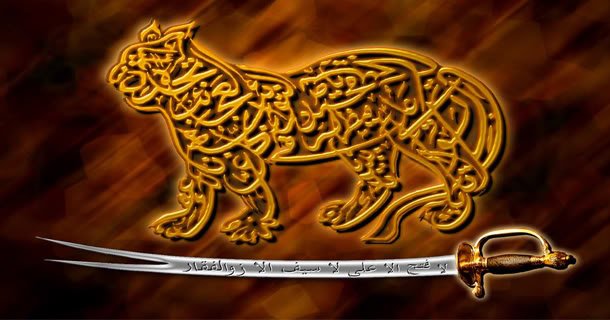


HAZRATH ALI (A.S.) and Philosophy of Religions
A man enters a garden laid out into beautiful flower-beds, artistically and aestheti cally arranged. Flowers in each bed have been grown by persons who know the art and science of it. The beauty of their colours and the delicacy of their forms and shade are pleasing to the eyes, and their fragrance enchants the minds. He knows that he has not the knowledge and capability to cultivate and grow flowers like that and the public have no time to go through the garden and enjoy the sights and fragrance of these beds at leisure. He picks up a few flowers from each of these beds and arranges them in a bouquet as a humble homage to the grandness and beauty of the garden.
With this view in my mind’s eyes I took up to write these chapters. I have drawn freely from the following books “Al-Murtaza”, Al-Kurrar, Siraj-ul-Mobeen. Thazeed- ul-Mateen, Nufs-e-Rasool, The Spirit of the Islam, The Islam under Arabs, The preaching of Islam, Quasais-e-Nisaace, Ahtejaj Tabresee, Behar-ul-Anwar, Almanaquib, Sharhay-ibne-Maisum, Sharhay Mirza Fathullah, Sharhay-ibne-Abil Hadeed and Ir- shad.
I am sure the selection is not the best, but it is the best that I can do and I am sure it will provoke minds superior to mine for better efforts.
In this last chapter I try to discuss the teachings of Hazrath in the field of philosophy of religion.
With Hazrath Ali and the Imams of his descent religion was a vital and positive force of life. Their phylosophy never sinks to that war of words without life and without earnestness which is main feature of the schools under Ptolemies or the vicious circles created by philosophers of the West and the East. Their ardent love of knowledge, their devotion in evolution of human mind, their sincere faith in God, and in His Mercy, Love and Kindness, and their looking upwards for above the literalness of common interpretation of the law, show the spirituality and expansiveness of their philosophy of religion, Hazrath Imam Jafer-e-Sadiq (A.S.) defines knowledge “Enlightenment of heart is its essence, Truth is its principal object, Inspiration is its guide, Reason is its ac- ceptor, God is its inspirer, and the words of man are its utterers”. To them evolution of mind was the essence of life and religion was the essence of the evolution of mind.
How correctly Hazrath Ali taught us that a man without mind is not a man, and a mind without region is worst than the instinct of a beast, more harmful, more dangerous and more carnivorous. Devotion without understanding will not bring Blessing of God, it is useless.
He attaches so much value to mind and its correct ways of grasping truth that he says your first leader and guide is your .nind. At another place he says that nothing is more useful to man than his intelligence, or there is nothing wealthier than wisdom, or there is no greater bounty of the Lord than the intellect granted to you, or you can dispense with everything but your mind and intelligence, or there is no better guide towards truth than wisdom, or one hour of deep and sober meditation is better than a life of prayers without understanding, or a wise man thinks first and speaks or acts afterwards.
Next to intelligence and wisdom he taught us to attach importance to sincerity of purpose in life. Once explaining a certain verse to Abdullah-ibne-Abbas, he said “Ibne Abbas if you sincerely and intelligently go in search of truth or religion and if you wander out of the right path even then there is a reward for you. There is sermon in Nahjul Balagha in which he says do not kill Kharijites after me because to go in search of truth and to lose the true path is better than to spend the entire span of ones life in pursuit of vicious pleasure and wickedness.
The natural and logical sequence of the above two attributes is to take count of yourself, your knowledge, your thoughts, your intentions, your desires and your deeds. He therefore advises us “To weight your own souls before the time of weighing of your actions arrives. Take count with yourself before you are called upon to account for your conduct in this existence”.
To obtain favourable results of such weighing and taking count of oneself one must have done good deeds. And so far as actions and reactions are concerned he wants us to understand that human conduct is not fortious, one act is the result of another, life, destiny and character mean connected series of incidents, events and actions which are related to each other, as cause and effect by an Ordained Law. Therefore, apply yourself 10 good and pure actions, adhere to truth, follow the true path to salvation, before death makes you leave this abode. If you do not warn yourself and do not guide yourself none other can direct you. The Lord has pointed out to you the path of salvation and has warned you of the temptation of this world. Abstain from foulness though it may be fairseeming to your sight. Avoid evil however pleasant, for you know not how far it takes you away from Him.
His discourses in Nahjul Balagha about noble deeds are supreme reading. His warnings against sinful life are very persuasive teachings. He says “O Ye servants of the Lord! fulfil the duties that are imposed on you for in their neglect there is abasement, your good work alone will render easy the road to death and to the Heaven. Remember each sin increases the debt and makes the chain heavier. The message of mercy has come, the path of truth (Haq) is clear; obey the command that has been laid on you; live in purity and work with nobility of purpose and ask God to help you in your endeavours and to forgive your past trasgressions. Cultivate humility and for-bearance, comfort yourself with sincere truth.
Next to sincere faith in the unity of God and the apostlehood of the Holy prophet (A.S.), he lays great stress on piety. He wants us to realize that piety is not a juicy morsel to be swallowed easily nor it is a dip in river to clean all dirt and filth from the body. Piety means actions and those actions in beginning may be sour, harsh, and painful to
perform. Piety means to free oneself from vicious desires and wicked deeds. This free. dom cannot be obtained but by constant efforts and endeavours. Such efforts are continuous struggle and long drawn war against vicious cravings of mind. No body can be free from vices and sins unless he develops the capacity to abhore and hate them. When once this capacity develops then to adopt a pious and sober life because a habit, a second nature. Few things are forbidden to you and so many things are allowed that no one is barred from normal relaxations, ease and comfort and from sober and harmless pleasures and pursuits.
With him asceticism was a sin against self. History cites many instances where he admonished the persons who had given up their homes and families, had severed every connection with society, had taken to a mosque, and had been praying, fasting and reciting the Holy Book morning, noon and night. He sent them back to their homes and told them that their duties lie among their fellow beings, and what they had taken to is not piety but fanatic asceticism which is not allowed in Islam. He strongly reprobated observance of asceticism and condemned the abandonment of the affairs of this life in fanatic pursuits of rictuals.
He says that he who acts with piety gives rest to his soul; he who takes warning understands the truth and he who understands it attains the perfect knowledge.
His teachings do not convey any impression of predestination; on the contrary they portray a soul animated with living faith in God and yet full of trust in human development founded on individual exertion springing from human volition. Somebody one day, asked him the meaning Quaza and Quader. He replied Quaza means obedience to commandments of God and avoidance of sin and Quader means the ability to live a pious and Holy life, and to do that which brings one nearer to God and to shun that which throws him away from His Perfection. Say not that man is compelled, for that attribution is tyranny to God, nor say that man has absolute discretion to decide what is right and what is wrong, we are furthered by His Help and Grace in our endeavours, to act righteously and we transgress because of our neglect of His Commands.
Explaining the meaning of the verse “There is no power nor help but from God” he said “It means that I am not afraid of God’s Anger, but I am afraid of His Purity; nor have I power to observe His Commandments, but my strength is in His assistance. God has placed us on earth to try each according to his endowments”. Explaining the verse “We will try you to see who are strivers (after truth and purity) and who are forbearing and patient, and we will test your actions and we will help you by degrees to attain what you know not!” he says that these verses prove the liberty of human volition. Explaining the verse ‘God directs him whom He Chooses, and leads him astray whom He Chooses he says that “This does not mean that He compels men to evil or good deeds, or that He either gives direction or refuses it according to His caprice, for this would do away all responsability for human action; on the contrary it means that God points out the road to truth, and lets men choose as they will”.
In a sermon in Nahjul Balagha he says. “The theory of compulsion, predestination or predetermination of fate is a satanic insinuation and a doctrine of faith amongst enemies of God. On the contrary God hath ordained man to obey His Commands and hath given him freedom of will and action, he is at full liberty to obey His Commands of to disobey. There is no compulsion in accepting the religions preached by His apostles
and no compulsion to obey His Commands. Even His Commands (like daily prayers. fasting, Zakath etc.) are not hard, harsh and unbearable and every leniency and case on account of age and health is granted to man.
The freedom of human will, based on the doctrine that man would be judged by the use he had made of his reason, was inculcated in the teachings of the Holy prophet (A.S.), along with an earnest belief in the Supreme Power ruling the universe. Hazrath Ali gave this idea a more definite form and it grew into a philosophy. In reply to a question he says, “Perhaps you consider predestination to be necessary and the particular decree to be irreversible; if it were so then would reward and punishment be vain, and the promise and the threat would be of no account; and surely blame would not have come from God for the sinner nor praise for the righteous, nor would the righteous be more worhty of the reward of his good deeds, nor the wicked be more deserving of the punishment of his sin than the righteous. God hath ordained the giving of choice to man and the putting of them in fear and He hath not laid duties upon men by force nor sent his prophets as farce”: When asked “What is predestination and particular decree which drove us”. He answered “The command of God, and therein His purpose. Then he repeated the verse “The Lord hath ordained (predestined) that you worship none but Him and kindness to your parents.”
Mortality of life is anothr point which Hazrath Ali wanted men to realize fully, sincerely and rationally. He wants us to understand that death is a biological incident of all forms of life and it is unavoidable, inevitable and sudden. No body knows when and how he is going to cross his barrier. Therefore it is foolish to imagine that it can be avoided, sinful self deception to forget it, and idiotically timid to be afraid of it. He says, “I am as fond of death as a baby is fond of his mother’s breast”. The natural sequence of the mortality of life is that everything connected with it and with this world is mundane, has no lasting value. Therefore, why concentrate on pleasure and take to vicious ways to acquire them, why not try to improve your lot in the hereafter..
Hazrath Ali’s teachings are gospel of work. He wants man to work, and to work honestly, sincerely and deligently. To work for the reward reserved in the Heaven. He says, work, work, and do good work while you still have life, health and opportunities. God ordains you to work while there is still time of work. Be thankful for the time and opportunities allotted to you and work for the good of mankind and for your own good. A life without work is a life without worth. A mind without sober thoughts and a life without programme of honest work is the most fertile soil for seeds of wikedness and vice. Work with nobility of poupose is one of the forms of prayers. His advice to his son was ‘exert yourself to earn an honest living. Worst form of folly is waste of opportunities. Opportunities do not repeat themselves make use of each one of them when it presents itself, but let piety guide you in all of your actions’.
Thus guiding us to the problems of man in respect of self he leads us towards the solution of problem pertaining to man versus man. In a letter to Imam Hussan (A.S.). he says “My dear son, so far as your behaviour with other human-beings is concerned let yourself’ act as scales to help you judge its goodness or wickedness. Do unto others as you wish others to do unto you. Whatever you dislike to happen to you spare others from such happenings”. At another place he advises “do not make yourself slave of anybody. God has created you a free man. Do not sell away this freedom in return for anithing. There is no real value or benefit that you derive by selling your honour, conscience and self respect. Do not run after him who tries to avoid you. Remember that to
oppress a weak or helpless person is the worst form of tyranny. Do good to your brother when he is bent upon doing harm to you. Befriend him when he ignores you: Be gene rous to him if he is miserly to you. Be kind to him if he is harsh and cruel to you. But be very careful that you do not behave thus with undeserving, mean and wicked persons.
Hazrath Ali had a very soft corner in his noble heart for poor, disabled, aged and orphans. To Malik he says, “I want to caution you about the poor. Fear God about your attitude towards them. Let it be remembered that their welfare is the first charge on a state and on well-to-do people.
So far as the question of man and God is concerned Hazrath Ali teaches us to be. lieve in a God Who has created us, Who loves us, nourishes us, help us and is our wel- wisher. He should be loved, adored and venerated.
Through many of his prayers Hazrath Ali has implanted in the minds of those who have faith in God the highest devotional spirit. He teaches us to love and adore him and to think of Him as “The Lord, the Adorable, the Eternal, the Ever Existing, the Cheri- sher, the True Sovereign, Whose Mercy and Grace overshadows the universe. Who is the Master, the Loving and Forgiving, Who bestows power and might on whom He pleases. None can lower him whom He exalted. Whose beneficence is all persuading. Whose Forgiveness and Mercy is all embracing. Who is the Helper of the afflicted, the Reliever of all distressed, the Consoler of the broken hearts. Who is present everywhere to help His Creatures. Who fulfils all needs, bestows all blessings. Who is friend of poor and bereaved”. At another place he beseechs the Lord thus “Thou art my Fortress; a Castle for all who seek Thy Protection and Help. The Helper of pure and true the Refuge of the weak. The Helper of those who seek Thy help. Thank be to Thee O Lord, Whose Mercy extends to every sinner and who provides for even those who deny Him”
This is how he wants us to have faith in God, a Creator, a Nourisher, a Helper, a Refuge, a Protection. One who loves you and One to be loved, adored, venerated and worshipped.
The other aspect of his teaching is that he has clearly and emphatically condemned all anthropomorphic (to attribute human forms, qualities or personally to God) and anthropopathic (ascription of human passion and affections to God) conceptions of deity. He says “God is not like any object that the human mind can conceive. No attri-. bute can be ascrived to Him which bore the least resemblance to any quality of which human-being have perception from their knowledge of material objects. The perfection of piety consists in knowing God; the perfection of knowledge is the affirmation of His Verity; and the perfection of verity is the acknowledgment of His Unity in all sincerity; and the perfection of sincerity is to deny all attributes to the Deity. He, who refers an attribute to God believes the attributes to be God, and he who so believes an attribute to be God, regards God as two or part of one. He who asks where God is assimilates him with some object. God is the Creator, not because He Himself is created. God is Existent not because he was non-existent. He is with every object, not from resemblance or nearness. He is outside everything not from separation or indifference towards His creatures. He works and creates not in the meaning of motions or actions. He sees and hears but not with help of bodily organs or outside agencies. He was seeing when there was nothing created to see. He has no relation to matter, time and space, God is Omni-scent because knowledge is His Essence, Loving because love is His Essence, Mighty because Power is His Essence, Forgiveness because Forgiveness is His Essence, and not because these are attributes apart from His Essence”.
At another place he says “O my Lord! Thou art the Creator, I am the created; Thou art the Sovereign, I am only Thy servant; I am the beseecher, Thou, my Lord art the Refuge. Thou art the Forgiver, I am the sinner, Thou my Lord, art the Merciful, All knowing, All loving; I am groping in the dark; I seek Thy knowledge and Love. Bestow my Lord all Thy Knowledge, Love and Mercy and let me approach Thee, my Lord. Thou Livest in every heart and every soul. Thy Knowledge is ingrained in every mind.


 Aal-e-Qutub Aal-e-Syed Abdullah Shah Ghazi