Ahmad ibn Fadlan: The Arab Diplomat

🕌📜 Ahmad ibn Fadlan: The Arab Diplomat Who Witnessed the Vikings Burn Their Dead
Zane History Buff – From the Abbasid Court to the Frozen Volga: One Man’s Journey Across Cultures

In the 10th century, when Baghdad was the intellectual capital of the Islamic world, a man was dispatched not as a conqueror, but as a cultural ambassador, theologian, and eyewitness to worlds few Muslims had ever seen. That man was Ahmad ibn Fadlan ibn al-Abbas ibn Rashid ibn Hammad, and his account of his journey remains one of the most extraordinary travelogues in pre-modern history.


🛕 The World of Ibn Fadlan: Baghdad in the Abbasid Era

📍Year: 921 CE
• The Abbasid Caliphate was formally in power, but true control lay with the Buyid dynasty (Shi’a Persian rulers), who used the Abbasid caliphs as symbolic figureheads.
• Caliph al-Muqtadir ruled, while the actual mission was overseen by the powerful vizier al-Hamid.

🔹 Ibn Fadlan was chosen for a diplomatic and religious mission—to deliver aid, reinforce Islamic law (sharīʿa), and confirm the religious conversion of the King (or Khan) of the Volga Bulgars, a Turkic-Muslim people seeking to strengthen ties with the Islamic heartland.


🧭 The Journey: 4,000 Kilometers into the Frozen North

📆 Departure: June 921 CE from Baghdad
Route Highlights:
• Crossed the Iranian Plateau and Khwarazm (Khiva)
• Traveled north along the Caspian Sea, through the Ural Mountains and the steppes of modern-day Kazakhstan and southern Russia
• Braved harsh winters, political instability, and tribal raiders

📍Arrival: May 922 CE on the Volga River, near the Bulgar capital (modern-day Bolgar, Russia)


🌍 Ethnographic Observations: A Mirror to the Medieval World

📜 Ibn Fadlan’s Risāla is both a diplomatic report and a proto-anthropological marvel.

🛖 Volga Bulgars:
• Practicing Muslims, but had little formal knowledge of Islamic ritual
• Ibn Fadlan acted as a religious teacher, correcting their prayer practices and rituals
• Observed their architecture, food customs, and governance, often through an Islamic lens of orthodoxy

🌾 Oghuz Turks:
• Described as nomadic, animist, and fiercely independent
• Lived in felt tents, worshipped spirits, and had distinct tribal laws and rituals
• Ibn Fadlan was both fascinated and horrified by their lifestyle, calling them “like wild asses” in their lawlessness

🏹 Khazars:
• Rulers were Jewish, population was multi-religious (Muslim, Christian, Pagan, and Jewish)
• Ibn Fadlan noted their wealth, fortresses, and cross-cultural influence
• The Khazar Khaganate was a powerful trade intermediary between the Islamic world and Eastern Europe


⚔️ The Rus’ (Scandinavian Vikings in Russia)

📍 Location: Volga trade centers near Bulgar territory
• Called al-Rūs, these Norsemen had established trading outposts between the Baltic and Black Seas
• Described by Ibn Fadlan as:
– “Tall as date palms, with red hair, blue eyes, and perfect bodies”
– Dressed in fur and silk, adorned with arm rings and tattoos from fingertips to neck

🛶 Famous Account: Viking Chieftain’s Funeral
• Ibn Fadlan witnessed and described in painful detail a Viking ship burial ritual:
1. A slave girl volunteered (or was forced) to join her master in death
2. The girl was given alcohol and raped ritually by the chieftain’s men as a spiritual send-off
3. She was stabbed to death by a priestess (angel of death)
4. Her body, the chieftain, and the belongings were burned in a ship pyre on the Volga River

🔥 “Then they set fire to the ship… and the girl and the master were consumed together by the flames.” – Ibn Fadlan

This is one of the only surviving eyewitness accounts of a Norse cremation ritual, predating most Scandinavian sagas.


📚 Why Is Ibn Fadlan So Important?

• His Risāla gives us a firsthand Islamic perspective on the frontiers of Europe and Asia in the 10th century
• Offers insights into how Islamic scholars viewed the “barbarian” world beyond the caliphate
• Serves as one of the earliest field ethnographies in recorded history
• Chronicles the early Islamic presence in Russia, Volga Bulgaria, and the Turkic world


🎬 Legacy in Popular Culture & Academia

• Influenced Michael Crichton’s novel Eaters of the Dead
• Inspired the film The 13th Warrior (1999) starring Antonio Banderas as Ibn Fadlan
• Today, scholars study his text not just as a curiosity, but as a serious document of cross-cultural contact during the Islamic Golden Age


🕊️ A Scholar Among Savages—or an Observer Among Equals?

Ibn Fadlan’s writings reveal his inner conflict: admiration for the Rus’ physicality and bravery, disgust at their paganism and moral codes.
But what shines through is not judgment—it’s observation.
A rare Muslim voice at the fringes of the known world, he stands as a bridge between Baghdad’s domes and the dark forests of the Viking trade routes.


What’s the Difference Between Outer Islam and Inner Ihsan? Or What’s the difference between the outer Shari’ah and the inner Haqiqat?

■ What’s the Difference Between Outer Islam and Inner Ihsan? Or What’s the difference between the outer Shari’ah and the inner Haqiqat? And where do we stand in all this spiritual traffic?

So, what’s the Zahir (Outer) Path?

This is the Islam everyone sees — the salah, the fasting, the zakah, the halal biryani, and the haram Instagram scrolling (👀). It’s the external discipline that gives your soul a beautiful frame. Think of it like a garden wall — protecting what’s inside.

It’s made up of rules, ethics, laws.

This is the Shari’ah — and it’s 100% necessary.

Without it… It is Chaos.

Too much of it without spirit… it is Dryness.

It’s like a lantern. But lanterns need oil.

🌸 Now enter… the Batin (Inner) Path.

This is where the Sufis take a deep breath and speaks:

“Ya Allah, what do You want from my heart?”

This inner path is called Ihsan — the soul’s beautification. It’s not just about doing good; it’s about being good, from the inside out.

You don’t just look humble.

You are humble, even when no one is watching.

You don’t just avoid major sins.

You avoid secret arrogance, judgment, envy, pride — the ones that quietly grow like weeds in the garden of your heart.

That’s the difference. One is the body of the rose. The other is its fragrance.

Shari’ah trains your actions. Ihsan trains your soul.

One is about not stealing — the other is about not even wishing for what’s not yours.

One is about lowering your gaze — the other is about cleaning your heart from attachment.

And here’s the intresting part:

The Shari’ah is what you do.
The Ihsan is what you become.

The Qur’an spills the tea — We’re not all the same.

Okay, listen to this divine mic-drop moment from the Qur’an:

ثُمَّ أَوْرَثْنَا الْكِتَابَ الَّذِينَ اصْطَفَيْنَا مِنْ عِبَادِنَا…

Then We gave the Book as inheritance to those We chose from Our servants…

And then what?

Allah ﷻ divides us into 3 spiritual squads:

1️⃣ The Self-Zone – “ظَالِمٌ لِّنَفْسِهِ”

The ones who wrong themselves.

These are our lovely folks who, despite being Muslim, still struggle big-time. They get lazy with prayers, slip into talking, delay repentance, and are driven more by their nafsani (ego-beast) urges than divine light.

They want Jannah but… keep tripping on Netflix sins and inner greed. 🫣

We love them. They’re trying. But they haven’t answered the call of their ruh (spirit) yet. They’re still ruled by the bahimi (animal side) of the soul.

2️⃣ The Middle Grounders – “مُقْتَصِدٌ”

The balanced ones.

These are your Friday Muslims, Ramadan warriors, Eid experts — sincere but still figuring it out. They’re trying to balance dunya and deen.

Some days they wake up for Tahajjud. Other days they Snooze button wins.

But their hearts are open. They want Allah ﷻ. They’re just learning to hold the light longer.

They taste both sweetness and struggle. They know what’s out there, but they’re slowly falling in love with what’s inside.

3️⃣ The Sprinters of Good – “سَابِقٌ بِالْخَيْرَاتِ”

The advanced souls. The ones racing in goodness.

These are the people who, when you sit with them, your heart automatically softens. They glow. They’re not preaching — they are the message.

They’ve surrendered. Their hearts are gardens of tawakkul (trust), sabr (patience), and love. They live simply, but their souls are oceans.

They’re not here to be seen.

They’re here to see — Allah ﷻ in every leaf, tear, and smile.

This group, they are rare. But they exist in every age. Sometimes it’s the old lady next door. Sometimes it’s the silent stranger in the masjid.

But what makes the difference?

The Sufis say: It all depends on which force dominates inside you.

Inside every human being, there’s a bahimi or Nasooti force (like the animal soul — craving, eating, sleeping, ego)… and a malaki or Malakooti force (angelic — loving, worshiping, giving, glowing).

If the bahimi side wins, you slip into darkness.

If the malaki side wins, you rise toward Light.

That’s why the Sufis do all this tazkiyah (soul-cleansing) and mujahadah (inner struggle). It’s like a spiritual gym. They’re trying to give the angel inside a chance to shine.

So if you’re wondering where you stand… don’t panic.

This path is not a competition. It’s a calling.

Some of us start in group 1, fall to group 2, and dream of group 3. Some sprint early. Some bloom late. Some fall, cry, repent, rise — fall again, cry deeper, rise higher.

That’s life.

And that’s love — divine love.

So wherever you are, say from your heart:

“Ya Allah, don’t let me stay where I am. Pull me closer. Light up my inside. And make me one of those who run toward You, laughing, crying, glowing.”

Because one day, this outer shell will return to dust.

But that inner light?

It’s going home.

اللّٰهُمَّ صَلِّ عَلَىٰ مُحَمَّدٍ وَّعَلَىٰ اٰلِ مُحَمَّدٍ

May Allah ﷻ make us from the people of Ihsan — those whose hearts become mirrors to His Light. آمين يا رب العالمين

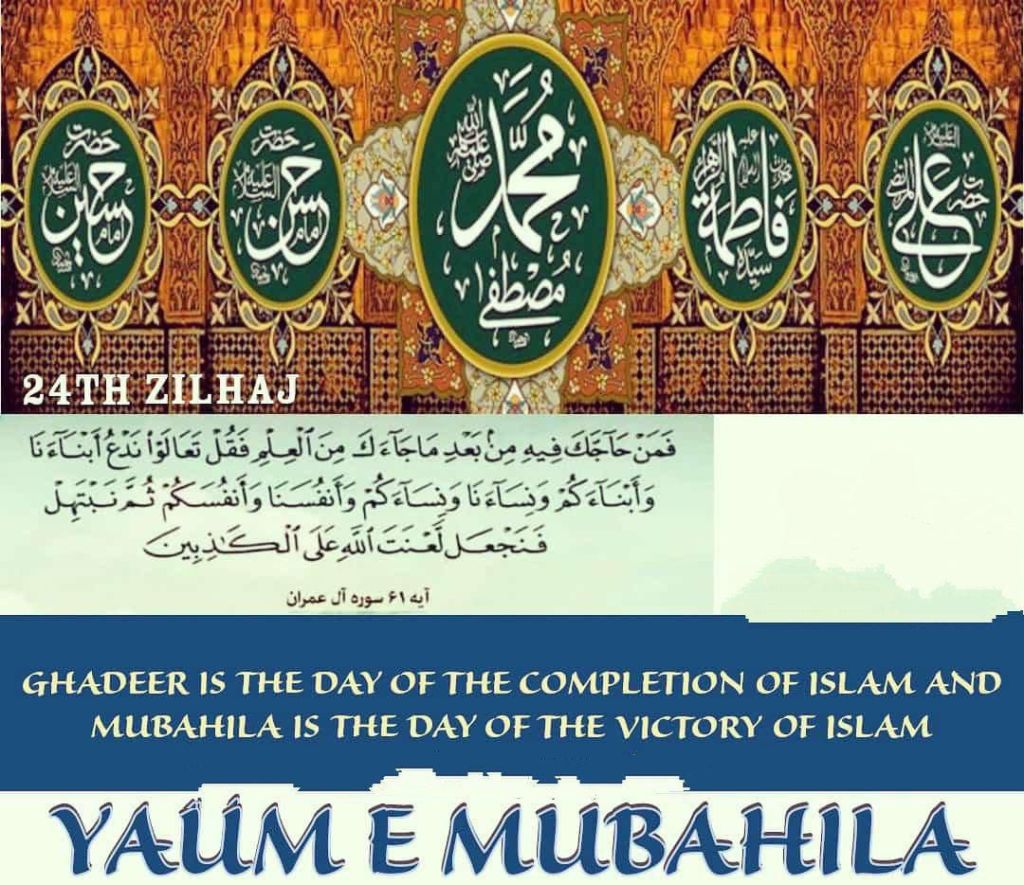
24 Zil Hajj – Yaum e Fatah Mubahila

24 Zil Hajj – Yaum e Fatah Mubahila*
*ﻓَﻤَﻦْ ﺣَﺎﺟَّﻚَ ﻓِﻴﻪِ ﻣِﻦ ﺑَﻌْﺪِ ﻣَﺎ ﺟَﺎﺀَﻙَ ﻣِﻦَ ﺍﻟْﻌِﻠْﻢِ ﻓَﻘُﻞْ ﺗَﻌَﺎﻟَﻮْﺍ ﻧَﺪْﻉُ ﺃَﺑْﻨَﺎﺀَﻧَﺎ ﻭَﺃَﺑْﻨَﺎﺀَﻛُﻢْ ﻭَﻧِﺴَﺎﺀَﻧَﺎ ﻭَﻧِﺴَﺎﺀَﻛُﻢْ ﻭَﺃَﻧﻔُﺴَﻨَﺎ ﻭَﺃَﻧﻔُﺴَﻜُﻢْ ﺛُﻢَّ ﻧَﺒْﺘَﻬِﻞْ ﻓَﻨَﺠْﻌَﻞ ﻟَّﻌْﻨَﺖَ ﺍﻟﻠَّﻪِ ﻋَﻠَﻰ ﺍﻟْﻜَﺎﺫِﺑِﻴﻦَ*
[Qur’an : 03 Surah Aal e Imran, Ayat No 61, Aayat e Mubahila] *ﺃَﺑْﻨَﺎﺀَﻧَﺎ ﻭَﺃَﺑْﻨَﺎﺀَﻛُﻢْ*
Hum Apne Beto Ko Late Hain Tum Apne Beto Ko Lao Kehkar Sirf Hazrat Imaam Hasan Aur Hazrat Imaam Hussain Alahimus Salam Ko Pesh Kiya Ja Raha Tha. *ﻭَﻧِﺴَﺎﺀَﻧَﺎ ﻭَﻧِﺴَﺎﺀَﻛُﻢْ*
Hum Apni Aurto’n Ko Late Hain Tum Apni Aurto Ko Lao Kehkar Koi Aur Na Tha Sirf Sayyeda Fatima Zahra Salamullah Alaiha Thi. *ﻭَﺃَﻧﻔُﺴَﻨَﺎ ﻭَﺃَﻧﻔُﺴَﻜُﻢْ*
Hum Apni Jaano Ko Late Hain Tum Apni Jaano Ko Lao Kehkar Ek Jaan Tane Hazrat Muhammad Mustafa ﷺ Aur Dusri Jaan Tane Hazrat Sayyedna Mola Ali Alahis Salam Thi.
📚 *Reference* 📚
*1.* Tafseer Baizavi, Jild 2, Safa 20.
*2.* Kitab ul Waseet, Jild 1, Safa 585.
*3.* Tafseer Jilani, Jild 1, Safa 280.
*4.* Tafseer Mazhari, Jild 2, Safa 64.
*5.* Tafseer ul Khazin, Jild 1, Safa 254.
*6.* Tafseer Darr Al Mansoor, Jild 3, Safa 607.
*7.* Tafseer Tabari, Jild 5, Safa 473.
*8.* Tafseer Qurtabi, Jild 4, Safa 104,105.
*9.* Tafseer Kabeer, Jild 8, Safa 89,90.
*10.* Tafseer Thalabi, Jild 2, Safa 75.
*11.* Tafseer Al Kashaf Zamakhshari, Jild 1, Safa 564,565.
*12.* Tafseer Baghawi, Jild 2, Safa 48.
*13.* Tafseer Ibn Kaseer, Jild 2, Safa 54,55.
*14.* Tafseer Jalalain, Safa 57.
*15.* Al Nukat wa Al A’uyun, Tafseer Al Mawardi Jild 1, Safa 398.
*16.* Tafseer Samarqamdi, Jild 1, Safa 274.
*17.* Tafseer Madarik, Safa 163.

अल्लाह सुब्हानहु व तआला और रसूलअल्लाह स्वल्लल्लाहो अलयहे व आलेही व सल्लम की नज़र में सबसे सच्चा कौन ❓*

ये किस्सा 10 हिजरी का है जब अरब मुल्क में मौजूद एक इलाक़ा जिसको नजरान के नाम से जाना जाता है वहाँ के ईसाइयों ने अल्लाह के रसूल अलैहिस्सलाम से हज़रत ईसा अलैहिस्सलाम के मुताल्लिक़ बहस की और हज़रत ईसा अलैहिस्सलाम को अल्लाह का बेटा बताया(माज़ अल्लाह) और हुज़ूर पाक के लाख समझाने के बावजूद की हज़रत ईसा अल्लाह के बेटे नही बल्कि अल्लाह की तरफ से नबी बनाये गए हैं इस बात का इनकार करते रहे जब नजरान के ईसाइयों के बड़े बड़े पादरी भी हुज़ूर की बात को नही मानें बल्कि हुज़ूर पाक को और  दीने इस्लाम को झूठा कहने लगे(माज़ अल्लाह) तो फिर अल्लाह तआला ने सूरए आले इमरान की ये आयत न 61 को नाज़िल फ़रमाया

فَمَنْ حَاجَّكَ فِيهِ مِن بَعْدِ مَا جَاءَكَ مِنَ الْعِلْمِ فَقُلْ تَعَالَوْا نَدْعُ أَبْنَاءَنَا وَأَبْنَاءَكُمْ وَنِسَاءَنَا وَنِسَاءَكُمْ وَأَنفُسَنَا وَأَنفُسَكُمْ ثُمَّ نَبْتَهِلْ فَنَجْعَل لَّعْنَتَ اللَّهِ عَلَى الْكَاذِبِينَ

(अल-ए-इमरान – 61)
*फिर जब तुम्हारे पास इल्म (कुरान) आ चुका उसके बाद भी अगर तुम से कोई (नसरानी) ईसा के बारे में हुज्जत करें तो कहो कि (अच्छा मैदान में) आओ हम अपने बेटों को बुलाएं तुम अपने बेटों को और हम अपनी औरतों को (बुलाएं) और तुम अपनी औरतों को और हम अपनी जानों को बुलाएं ओर तुम अपनी जानों को,उसके बाद हम सब मिलकर (ख़ुदा की बारगाह में) गिड़गिड़ायें और झूटों पर ख़ुदा की लानत करें।*

जब अल्लाह का ये हुक्म नाज़िल हुआ कि अब जब बात झूठ और सच की आ ही गई है तो फिर ए नबी आप इन ईसाइयों के आलिमों से फ़रमा दीजिए कि आओ एक मैदान में *हम अपने बेटों को बुलाएँ* तुम अपने बेटों को बुलाओ,और *हम अपनी औरतों को* और तुम अपनी औरतों को बुलाओ और *हम अपनी जानों(नफ्सों) को बुलाएँ* और तुम अपनी जानों (नफ्सों) को बुलाओ उसके बाद हम सब मिलकर खुदा की बारगाह में दुआ करते हैं कि हम में से *जो झूठा है उस पर अल्लाह की लानत हो।*

जब दिन और वक़्त मुक़र्रर हो गया तो फिर 24 ज़िलहिज्ज् 10 हिजरी को तमाम नजरान के बड़े बड़े आलिम व पादरी जमा हुए अपने पूरे लोगों के साथ और फिर रसूलअल्लाह के आने का इंतज़ार करने लगे थोड़ी देर में वो लोग देखते हैं कि हुज़ूर पाक चले आ रहे हैं लेकिन उनके साथ कोई भीड़ भाड़ नही है ना असहाबे किराम हैं बल्की क़ुरआन में *अल्लाह के हुक्म के मुताबिक़ रसूलअल्लाह के साथ हुक्मे परवरदिगार के मुताबिक बेटों में इमाम हसन अलैहिस्सलाम हुज़ूर पाक की उंगली पकड़े हुए और इमाम हुसैन अलैहिस्सलाम हुज़ूर पाक की गौद मुबारक में* उनके बाद *औरतों में सिर्फ़ एक अकेली इकलौती ख़ातून ए जन्नत की सरदार हज़रत फ़ातिमा ज़हरा सलामुल्लाह अलैहा*(जबकि हुक्म औरतों का हुआ था लेकिन शर्त सच्चा होने की थी जिसने पूरी ज़िन्दगी में झूठ न बोला हो इसलिए तन्हा एक ही ख़ातून) और *रसूल की जान ओ नफ़्स के तौर पर सिर्फ़ हज़रत अली अलैहिस्सलाम(यहाँ पर भी नफ्सों का हुक्म था लेकिन शर्त वही ऐसे इंसान की थी जिसने पूरी ज़िंदगी में कभी भी झूठ न बोला हो वरना वो झूठों पर लानत कैसे कर सकता है जिसने खुद कभी झूठ बोला हो वरना लानत पलट के खुद पर आ जाती)*।जब ईसाइयों के बड़े बड़े पादरियों ने इन पंजेतन पाक की इन नूरानी शख़्सियतों को आते देखा तो अचानक उन पादरियों ने बोलना शुरू किया कि हम ऐसी शख़्सियतों को मैदान में हमारी तरफ़ आते हुए देख रहे हैं कि *अगर ये लोग (पंजेतन पाक) पहाड़ की तरफ इशारा कर दें तो पहाड़ अपनी जगह से हट जायेंगे, और अगर इन्होंने हमारे ऊपर लानत कर दी तो क़यामत तक कोई ईसाई नही आएगा* सब अभी ख़त्म हो जायेंगे।

इसलिए उन पादरियों ने हुज़ूर से हार मानली और बिना मुबाहिला किये ही लौटने का फ़ैसला कर लिया और जज़िया भी देना मन्ज़ूर कर लिया।

अहलेसुन्नत की मशहूर किताब मुसनद अहमद में हदीस नम्बर 12320 में इस वाक़ये का ज़िक्र आया है—


Musnad Ahmed Hadees # 12320

۔ (۱۲۳۲۰)۔ وَعَنْ سَعْدِ بْنِ اَبِیْ وَقَّاصٍ، قَالَ: وَسَمِعْتُہُ یَقُولُیَوْمَ خَیْبَرَ: ((لَأُعْطِیَنَّ الرَّایَۃَ رَجُلًا یُحِبُّ اللّٰہَ وَرَسُولَہُ، وَیُحِبُّہُ اللّٰہُ وَرَسُولُہُ۔)) فَتَطَاوَلْنَا لَہَا فَقَالَ: ((ادْعُوا لِی عَلِیًّا۔)) فَأُتِیَبِہِ أَرْمَدَ فَبَصَقَ فِی عَیْنِہِ وَدَفَعَ الرَّایَۃَ إِلَیْہِ فَفَتَحَ اللّٰہُ عَلَیْہِ، وَلَمَّا نَزَلَتْ ہٰذِہِ الْآیَۃُ {نَدْعُ أَبْنَائَ نَا وَأَبْنَائَ کُمْ} [آل عمران: ۶۱] دَعَا رَسُولُ اللّٰہِ صَلَّی اللّٰہُ عَلَیْہِ وَسَلَّمَ عَلِیًّا وَفَاطِمَۃَ وَحَسَنًا وَحُسَیْنًا، فَقَالَ: ((اَللّٰہُمَّ ھٰوُلَائِ اَھْلِیْ۔)) (مسند احمد: ۱۶۰۸)

तर्जुमा–सैय्यदना साद बिन अबी वकास रज़ियल्लाहु अन्हू से रिवायात है, वो कहते हैं : जब ये आयत ➡️

*فَمَنْ حَاجَّكَ فِيهِ مِن بَعْدِ مَا جَاءَكَ مِنَ الْعِلْمِ فَقُلْ تَعَالَوْا نَدْعُ أَبْنَاءَنَا وَأَبْنَاءَكُمْ وَنِسَاءَنَا وَنِسَاءَكُمْ وَأَنفُسَنَا وَأَنفُسَكُمْ ثُمَّ نَبْتَهِلْ فَنَجْعَل لَّعْنَتَ اللَّهِ عَلَى الْكَاذِبِينَ*

(अल-ए-इमरान – 61)
*फिर जब तुम्हारे पास इल्म (कुरान) आ चुका उसके बाद भी अगर तुम से कोई (नसरानी) ईसा के बारे में हुज्जत करें तो कहो कि (अच्छा मैदान में) आओ हम अपने बेटों को बुलाएं तुम अपने बेटों को और हम अपनी औरतों को (बुलाएं) और तुम अपनी औरतों को और हम अपनी जानों को बुलाएं ओर तुम अपनी जानों को,उसके बाद हम सब मिलकर (ख़ुदा की बारगाह में) गिड़गिड़ायें और झूटों पर ख़ुदा की लानत करें।*

*जब 👆आयत नाज़िल हुई तो रसूलअल्लाह स्वल्लल्लाहो अलयहे व आलेही व सल्लम ने सैय्यदना अली अलैहिस्सलाम, सय्यदा फ़ातिमा ज़हरा सलामुल्लाह अलैहा, सैय्यदना इमाम हसन और सैय्यदना इमाम हुसैन को बुलाया और फ़रमाया या अल्लाह!ये मेरे अहलेबैत हैं।*


एक और जगह सुनने इब्ने माजा में हदीस नम्बर 120 में आया है कि➡️

Sunnan e Ibn e Maja Hadees # 120

حَدَّثَنَا مُحَمَّدُ بْنُ إِسْمَاعِيل الرَّازِيُّ، ‏‏‏‏‏‏حَدَّثَنَا عُبَيْدُ اللَّهِ بْنُ مُوسَى، ‏‏‏‏‏‏أَنْبَأَنَا الْعَلَاءُ بْنُ صَالِحٍ، ‏‏‏‏‏‏عَنْ الْمِنْهَالِ، ‏‏‏‏‏‏عَنْ عَبَّادِ بْنِ عَبْدِ اللَّهِ، ‏‏‏‏‏‏قَالَ، ‏‏‏‏‏‏قَالَ عَلِيٌّ:‏‏‏‏   أَنَا عَبْدُ اللَّهِ، ‏‏‏‏‏‏وَأَخُو رَسُولِهِ صَلَّى اللَّهُ عَلَيْهِ وَسَلَّمَ، ‏‏‏‏‏‏وَأَنَا الصِّدِّيقُ الأَكْبَرُ لا يَقُولُهَا بَعْدِي إِلا كَذَّابٌ، ‏‏‏‏‏‏صَلَّيْتُ قَبْلَ النَّاسِ بِسَبْعِ سِنِينَ  .

*तर्जुमा–हज़रत अली अलैहिस्सलाम फ़रमाते हैं कि: में अल्लाह का बन्दा और उसके रसूल स्वल्लल्लाहो अलैहे व आलेही व सल्लम का भाई हूँ, और में सिद्दिके अकबर (सबसे बड़ा सच्चा) हूँ मेरे बाद इस फ़ज़ीलत का दावा झूठा शख़्स ही करेगा,मैंने सब लोगों से सात बरस पहले नमाज़ पढ़ी।*


इन्ही अहलेबैत अलैहिस्सलाम की फ़ज़ीलत बयान करने के लिए ये एक हदीस ही काफ़ी है कि अहलेसुन्नत की बड़ी किताब जामये तिर्मिज़ी शरीफ़ में आया है कि➡️

Jam e Tirmazi Hadees # 3733

حَدَّثَنَا نَصْرُ بْنُ عَلِيٍّ الْجَهْضَمِيُّ، حَدَّثَنَا عَلِيُّ بْنُ جَعْفَرِ بْنِ مُحَمَّدِ بْنِ عَلِيٍّ، أَخْبَرَنِي أَخِي مُوسَى بْنُ جَعْفَرِ بْنِ مُحَمَّدٍ، عَنْ أَبِيهِ جَعْفَرِ بْنِ مُحَمَّدٍ، عَنْ أَبِيهِ مُحَمَّدِ بْنِ عَلِيٍّ، عَنْ أَبِيهِ عَلِيِّ بْنِ الْحُسَيْنِ، عَنْ أَبِيهِ، عَنْ جَدِّهِ عَلِيِّ بْنِ أَبِي طَالِبٍ، أَنَّ رَسُولَ اللَّهِ صَلَّى اللَّهُ عَلَيْهِ وَسَلَّمَ أَخَذَ بِيَدِ حَسَنٍ،‏‏‏‏ وَحُسَيْنٍ،‏‏‏‏ فَقَالَ:‏‏‏‏    مَنْ أَحَبَّنِي وَأَحَبَّ هَذَيْنِ،‏‏‏‏ وَأَبَاهُمَا،‏‏‏‏ وَأُمَّهُمَا كَانَ مَعِي فِي دَرَجَتِي يَوْمَ الْقِيَامَةِ   . قَالَ أَبُو عِيسَى:‏‏‏‏ هَذَا حَسَنٌ غَرِيبٌ، ‏‏‏‏‏‏لَا نَعْرِفُهُ مِنْ حَدِيثِ جَعْفَرِ بْنِ مُحَمَّدٍ إِلَّا مِنْ هَذَا الْوَجْهِ.

*तर्जुमा–रसूलअल्लाह अलैहिस्सलाम ने इमाम हसन और इमाम हुसैन अलैहिस्सलाम का हाथ पकड़ा और फ़रमाया:”जो मुझसे मोहब्बत करे,और इन दोनों से,और इनदोनों के बाप (हज़रत अली अलैहिस्सलाम) और इन दोनों की माँ (हज़रत फ़ातिमा ज़हरा सलामुल्लाह अलैहे) से मोहब्बत करे,तो वो क़यामत के दिन मेरे साथ मेरे दर्जे में होगा”!*

ऊपर दी हुई क़ुरआन और अहादीस की तमाम मोतबर रिवायतों से एक बात तो समझ में आ गई के *तमाम आलमीन मैं पंजेतन पाक से बढ़कर कोई भी सच्चा व सिद्दिके अकबर नही है, क्योंकि अगर ऐसा कोई और होता तो हुज़ूर अल्लाह के हुक्म से उसको भी अपने साथ ईसाइयों के सामने मुबाहिला के लिए अपने साथ उनको भी ले जाते।*
और इस्लाम की ईसाइयों पर इस बिना हथियार से लड़ी गई जंग में जीत की खुशी को ईद की ख़ुशी में कई तरह आलमे इस्लाम को हर साल मनाना चाहिए।

*तमाम आलमे इस्लाम को 24 ज़िलहिज्ज् की इस ईद(ख़ुशी) की बहुत बहुत मुबारकबाद*

What Did the Prophet ﷺ Say About Imam Ali (ع)?

■ What Did the Prophet ﷺ Say About Imam Ali (ع)?

Ya Ali (ع)! The name alone melts hearts and stirs something deep within the soul because our beloved Prophet Muhammad ﷺ said something — not in some ordinary gathering, not to just anyone — but to his most beloved daughter, Sayyida Fatima Zahra (ع).

SubhaanAllah that moment… The Noor of the heavens and the earth ﷺ sits with the Queen of Jannah, his gentle, radiant daughter Sayida Fatima (ع), and he begins to speak — not of battle, not of politics, not of worldly affairs — but of love, knowledge, and divine favour.

He says to her:

❝Fatima, I have married you to a man who was the first to believe in me… the one who knows more than anyone else… and who is more patient, more forbearing than all.❞

SubhanAllah… Can you feel it? The pride of a father, the love of a Prophet ﷺ, and the heavenly honour being showered on the Lion of Allah — Mawla Ali ibn Abi Talib (ع).

And it wasn’t just this one beautiful moment. Even later, Sayyida Aisha Siddiqa (ر) — Umm al-Mu’minin — confirms this blessed memory. She herself narrated that Sayyida Fatima (ع) told her how her father ﷺ said that he married her to the most knowledgeable of all believers, the first to accept Islam, and the most forbearing.

SubhanAllah! Now pause for a second and let that settle in your heart. Not only was Imam Ali (ع) the door to the city of knowledge, but he was also the first to open his heart to the message of RasoolAllah ﷺ when others hesitated. He was there in the shadows, when it was still dangerous to believe… and yet he believed without doubt, without delay.

Even the mighty Farooq al-Azam (ر) — the great Umar ibn al-Khattab — would say with utter humility:

❝Ali is the best of us when it comes to judgment.❞

What does that mean? It means when matters were complicated, when people were confused, when the Haq was hard to see — Ali (ع) saw it clearly. His heart was so close to the Prophet ﷺ that his words, his insight, his wisdom — were like mirrors reflecting the Noor of Prophethood.

Ya Allah ﷻ… How can one speak of Ali (ع) and not weep out of love and Adab? He was not just a cousin, not just a son-in-law — he was the soul-mirror of the Prophet ﷺ, the one who slept in the Prophet’s ﷺ bed when enemies were waiting to kill him, the one who stood in every battlefield as if death meant nothing when truth was at stake.

He was the man whom Jibreel (عليه السلام) called “the victorious,” the man whose sword Zulfiqar became a symbol of Divine Justice, and yet… he wept in the silence of night, calling upon his Lord with broken tears.

He was Knowledge walking. He was Patience breathing. He was Love serving at the door of RasoolAllah ﷺ.

So when the Prophet ﷺ said:

❝I married you to the most knowledgeable and the most patient,❞
— he wasn’t just speaking as a father… he was revealing the secret of hearts.

And O lovers, if you truly want to understand the fragrance of Ali (ع), you must first inhale the scent of RasoolAllah ﷺ — because Ali (ع) was raised in his lap, fed by his hands, and moulded in the warmth of Prophetic mercy.

O Allah ﷻ, allow our hearts to love Imam Ali (ع) with the same sincerity that Your Beloved ﷺ did… and may we be resurrected among his lovers and those who follow his footsteps in knowledge, humility, and forbearance.

اللّٰهُمَّ صَلِّ عَلَىٰ مُحَمَّدٍ وَّعَلَىٰ اٰلِ مُحَمَّدٍ