Hazrat Dhul-Nun Misri was known as a spiritual master, embodying purity like Prophet Yusuf (Joseph) in spirituality and depth like Prophet Yaqub (Jacob). He was once on a boat when a merchant on board suddenly lost a precious pearl. The merchant, noticing Hazrat Dhul-Nun’s worn-out clothing, suspected him and accused him of theft.
In response, Hazrat Dhul-Nun turned to the river and called out, “O dwellers of the river! These people do not know me, but you recognize who I am.” As soon as he said this, fish appeared at the surface, each holding a pearl in its mouth. The merchant’s lost pearl was found among them, and Hazrat Dhul-Nun took it from the fish and returned it to the merchant. Then, he stepped out of the boat onto the water and disappeared, leaving everyone in awe.
■ How can we become mindful of always cleansing our hearts?
To become mindful of consistently cleansing our hearts, it’s essential to make meditation and self-accountability a daily practice. Before beginning your meditation each day, take a moment to reflect on your actions. Ask yourself, “How did my day go? What did I do wrong? Who did I hurt with my words or actions? Where did I lose my temper?”
This process of daily self-reflection and meditation is critical. If you don’t take time at the end of each day to meditate and assess yourself, to truly examine your words and behavior, you may miss the opportunity to seek forgiveness from Allah ﷻ. This neglect can lead to a buildup of negative traits, like scabs that cover a wound. Without asking Allah ﷻ to cleanse these faults, they harden and become part of us.
Prophet Muhammad ﷺ described how sins can accumulate like scabs on a person if one doesn’t seek forgiveness, saying that they become scars of wrongdoing. If we don’t examine ourselves, we risk being deceived by Shaytan into thinking we’ve done nothing wrong, and those sins settle into our hearts.
Therefore, it’s essential each night to account for our actions, to think carefully and sincerely ask for forgiveness, especially for those moments we know were wrong—when we lost our temper, shouted, or acted harshly. This sincere accounting helps prevent these mistakes from multiplying and hardening. Remember, Allah ﷻ is patient. Just because no harm came immediately doesn’t mean that our actions are forgotten. Accountability prevents these sins from taking root and keeps us vigilant in seeking forgiveness.
When we make this a daily practice, we start recognizing patterns. If we find ourselves repeatedly asking forgiveness for the same issues, it’s a sign that we need to address the root of these behaviors. Allah ﷻ wants us to identify and understand our weaknesses so that we can work on them, controlling our energy and refining our communication.
Over time, with sincere effort, we learn to avoid repeated mistakes and grow closer to Allah ﷻ by purifying our hearts and actions.
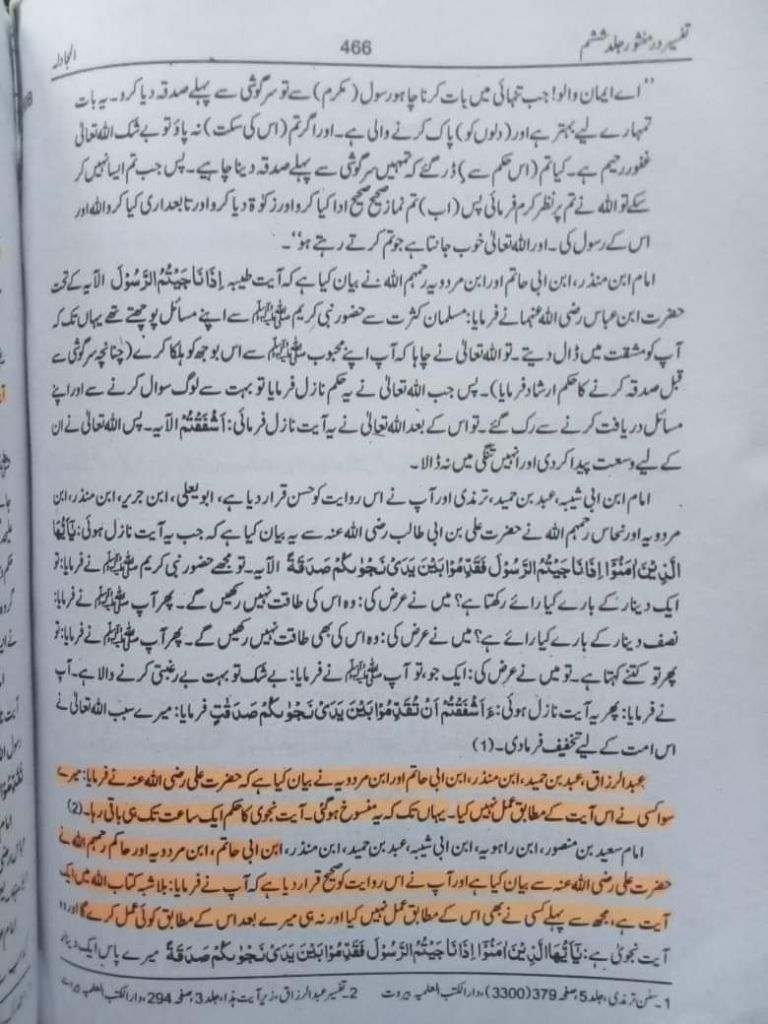
आयत 12 में जो हुक़्म है जिस पर सिर्फ़ मौला अली शेरे खुदा ع ने ही अमल किया और इस आयात के बाद यानी आयत 13 में यह हुक़्म अल्लाह ﷻ ने मनसूख कर दिया ।
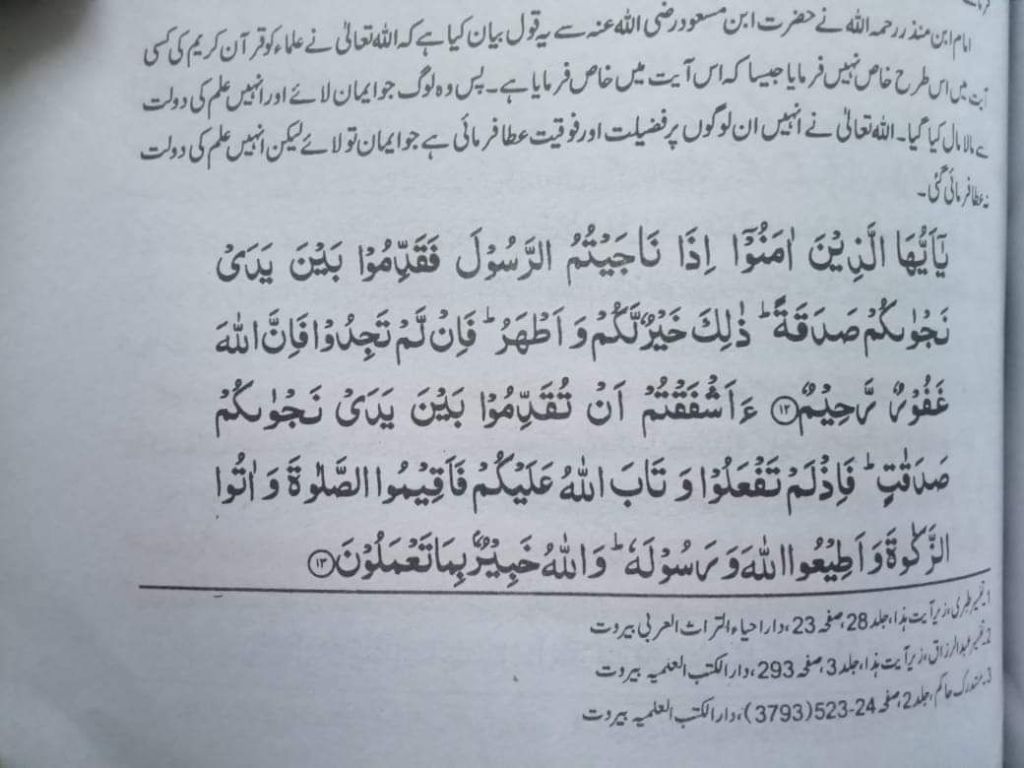
आयत नम्बर 12 “ऐ लोगो, जो ईमान लाये हो! जब तुम रसूल ﷺ से अकेले में बात करो तो बात करने से पहले कुछ सदक़ा दो, यह तुम्हारे लिये बेहतर और पाकीज़ातर है। अलबत्ता अगर तुम सदक़ा देने के लिये कुछ ना पाओ तो अल्लाह ﷻ गफ़ूर वा रहीम है।”
मफ़हूम हदीस: हज़रत अब्दुल्लाह बिन अब्बास رازي الله تالا أنه इस हुक़्म की वजह यह बयान करते है रसूल अल्लाह ﷺ से मुसलमान अकेले में बात करते और अपने मसले पूछते और रसूल अल्लाह ﷺ किसी को मना नहीं करते थे जिससे रसूल अल्लाह ﷺ बहुत परेशान हो गये तो अल्लाह ﷻ ने चाहा कि रसूल अल्लाह ﷺ पर यह बोझ हल्का कर दे फ़िर यह हुक़्म दिया कि नबी ﷺ से शरगोशी करने से पहले सदका किया करो।
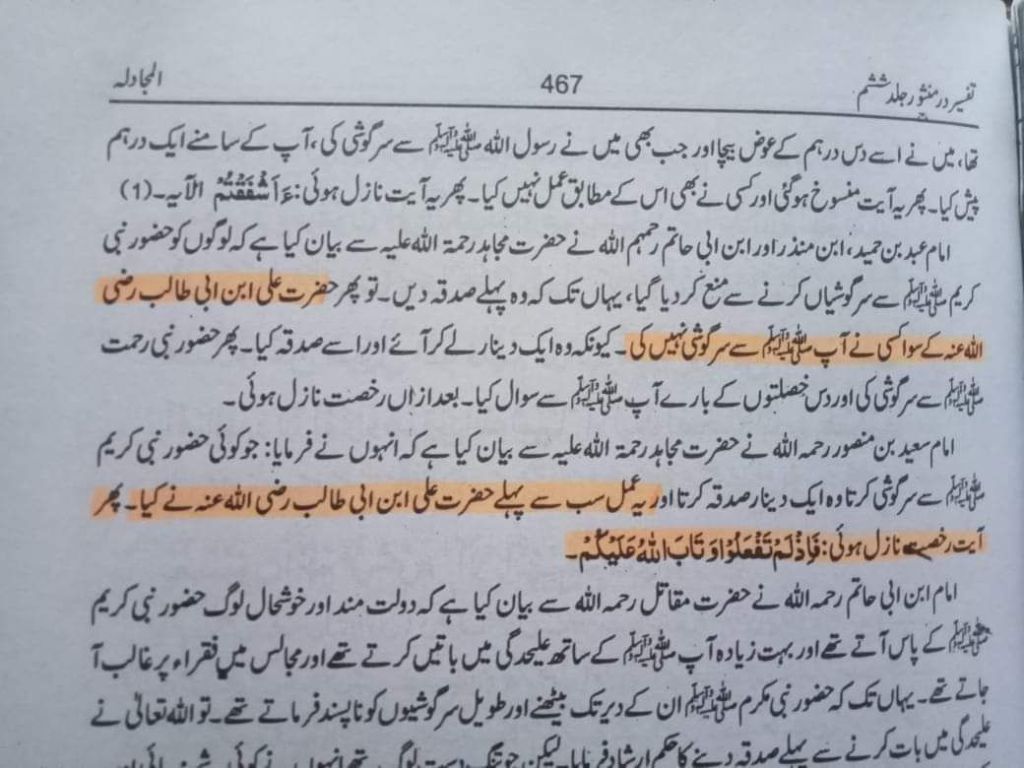
इस हुक़्म के आ जाने पर मौला अली शेरे खुदा ع ने पहले सदका दिया और फ़िर रसूल अल्लाह ﷺ से बात करी! यह हदीस क़ुरआन की कई तफ़सीर में नकल की गई है! मैंने यहां सिर्फ़ तफ़सीर दुर्रे मंसूर का हवाला लगाया/अपलोड किया है ।
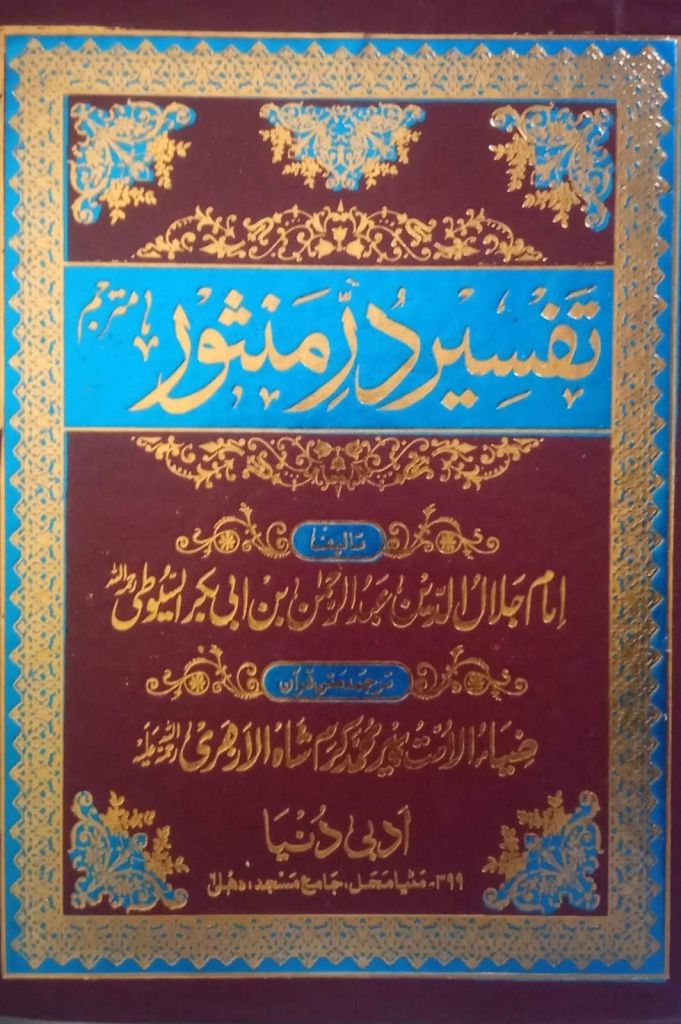
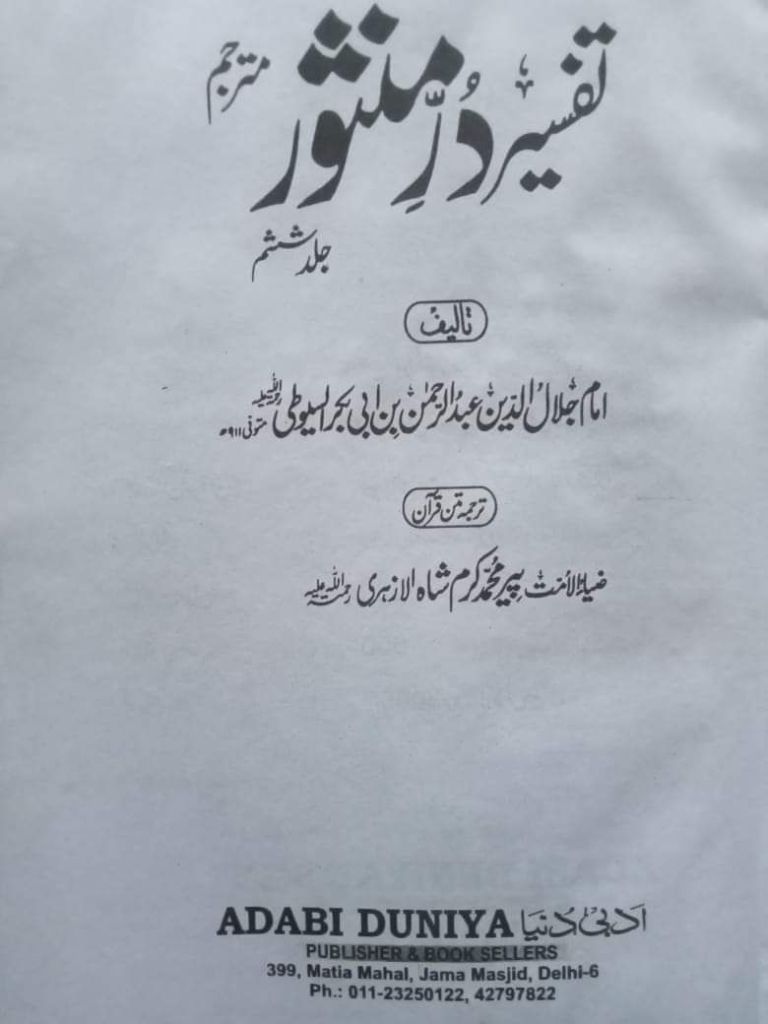
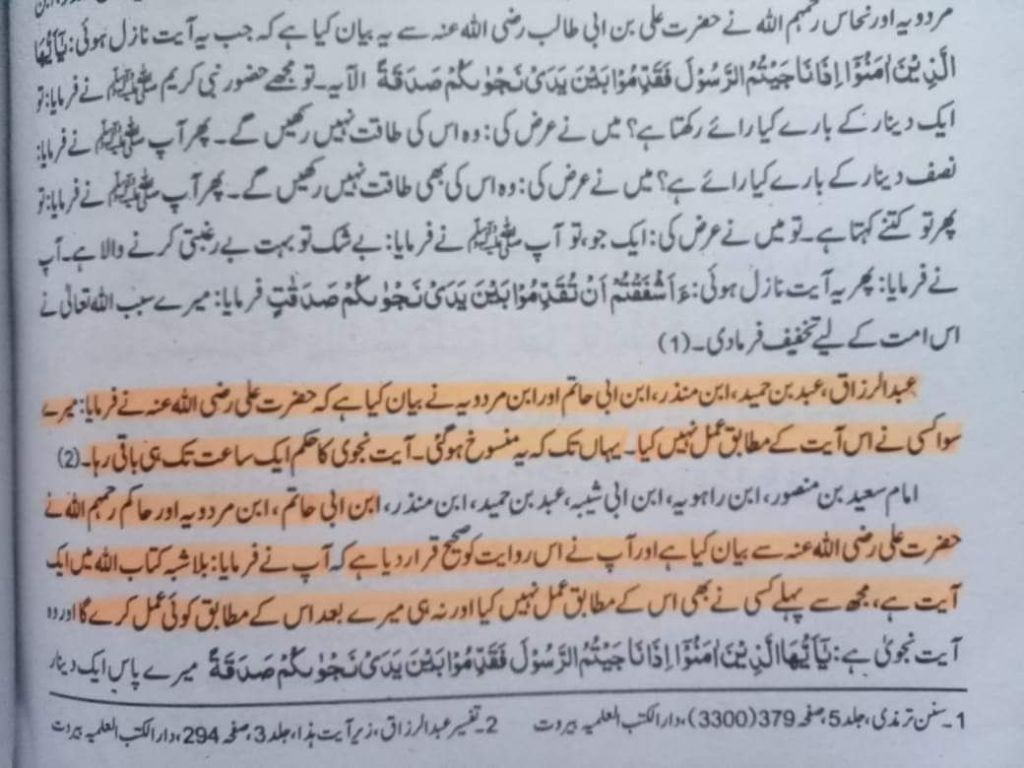
इमाम जलालुद्दीन अब्दुर्रहमान बिन अबी बकर अल सुयूती رحمة الله तफ़सीर दुर्रे मंसूर में इस आयात की तफ़सीर में लिखते है की:- इमाम अब्दुर्रज़्जाक, अब्द बिन हमीद, इब्ने मुंदिज, [इमाम] इब्ने अबी हातिम और इमाम इब्ने मर्दवया ने बयान किया है कि हज़रत अली रज़ि’अल्लाह ने फ़रमाया कि:-
मेरे सिवा किसी ने इस आयत के मुताबिक अमल नहीं किया, यहां तक कि यह [आयत] मन्सूख हो गयी।
आयत-ऐ-नज़्वा का हुक़्म एक साथ तक ही बाकी रहा।’
जब आयत 12 का हुक़्म लोगो ने सुना की नबी ﷺ से सरगोशी करने से पहले सदका करना पड़ेगा तो लोगों ने सरगोसी नही करी, सिवा मौला अली ع के तो अल्लाह ﷻ ने आयत 13 में इस हुक़्म को मंसूख कर दिया । फ़िर यह हुक़्म आया।
आयत नम्बर 13 “क्या तुम डर गये इस बात से कि अकेले में बातचीत करने से पहले तुम्हें सदक़ात देने होंगे? अच्छा, अगर तुम ऐसा ना करो और अल्लाह ﷻ ने तुमको इससे माफ़ कर दिया तो नमाज़ क़ायम करते रहो, ज़कात देते रहो और अल्लाह ﷻ और उसके रसूल ﷺ की इताअत करते रहो। तुम जो कुछ करते हो अल्लाह ﷻ उससे बाख़बर है।












 Aal-e-Qutub Aal-e-Syed Abdullah Shah Ghazi