
चौदह सितारे  हज़रत इमाम ज़ैनुल आबेदीन पार्ट 1

अबु मोहम्मद हज़रत इमाम ज़ैनुल आबेदीन ( अ ( . स .

बन के सज्जादे की ज़ीनत आये सज्जाद हज़ी चूमती है जिनके क़दमों को, इबादत की जबीं दोस्त का क्या ज़िक्र है मूज़ी को यह कहना पड़ा अनता ज़ैनुल आबेदीन व अनता जैनुल आबेदीन (साबिर थरयानी, कराचीं)

मिसाले जद ख़ुद इमामे अवलिया चूँ पदर मशहूर, दर सबरे रज़ा दर इबादत ईं क़दर सर गर्म बूद अन्ता ज़ैनुल आबेदीन आमद निदा

हज़रत इमाम ज़ैनुल आबेदीन (अ. स.) पैग़म्बरे इस्लाम हज़रत मोहम्मद (स.अ.) के चोथे जां नशीन, हमारे चौथे इमाम और चाहरदा मासूमीन (अ.स.) की छटे मोहतरम फ़र्द हैं। आपके वालिदे माजिद शहीदे करबला हज़रत इमाम हुसैन (अ.स.) थे और वालेदा माजेदा जनाबे शाहे ज़नान उर्फ़ शहर बानो थीं। आप अपने आबाओ अजदाद की तरह इमामे मन्सूस, मासूम, आलमे ज़माना और अफ़ज़ले कायनात

थे। उलेमा का बयान है कि आप इल्म, जोहद, इबादत में हज़रत इमाम हुसैन (अ. स.) की जीती जागती तस्वीर थे। (सवाएके मोहर्रेका पृष्ठ 119)

इमाम ज़हरी इब्ने अयनिया और इब्ने मुसय्यब का बयान है कि हम ने आपसे ज़्यादा किसी को अफ़ज़ले इबादत गुज़ार और फ़क़ीह नहीं देखा । ( नूरूल अबसार पृष्ठ 126)

एक शख़्स ने सईद बिन मुसय्यब से किसी का ज़िक्र करते हुए कहा कि वह बड़ा मुत्तक़ी है। इब्ने मुसय्यब ने पूछा, तुम ने इमाम ज़ैनुल आबेदीन (अ.स.) को देखा है? उसने कहा नहीं। उन्होंने जवाब दिया “ मा रायता अहदन अवरा मिनहा मैंने उनसे ज़्यादा मुत्तक़ी और परहेज़गार किसी को नहीं देखा । (मतालेबुस सूऊल पृष्ठ 267) “

66 ” इब्ने अबी शेबा का कहना है कि असहा इलासा नीद वह रवायत है जो ज़हरी इमाम ज़ैनुल आबेदीन (अ. स.) मन्सूब करे । ( तबक़ात अल हफ़्फ़ाज़ ज़हबी अरजहुल मतालिब पृष्ठ 435) अल्लामा दमीरी फ़रमाते हैं कि इमाम ज़ैनुल आबेदीन (अ.स.) हदीस बयान करने में निहायत मोतमिद इलैहे और सादिकुल रवायत थे। आप बहुत बड़े आलिम और फ़िक़हे अहलेबैत में बे मिस्ल व बे नजीर थे । ( हयातुल हैवान जिल्द 1 पृष्ठ 121 तारीख़ इब्ने ख़ल्कान जिल्द 1 पृष्ठ 320 ) आप ऐसे पुर जलाल व जमाल थे कि जो भी आपको देखता था ताज़ीम करने पर मजबूर हो जाता था । ( वसीलतुन जात पृष्ठ 319)

आपकी विलादत बा सआदत

आप बतारीख़ 15 जमादिउस सानी 38 हिजरी यौमे जुमा बक़ौले 15 जमादिल अव्वल 38 हिजरी यौमे पन्चशम्बा बा मक़ाम मदीनाए मुनव्वरा पैदा हुए। (आलामुल वुरा पृष्ठ 141 व मनाक़िब जिल्द 4 पृष्ठ 131)

अल्लामा मजलिसी तहरीर फ़रमाते हैं कि जब जनाबे शहर बानो ईरान से मदीने के लिये रवाना हो रही थीं तो जनाबे रिसालत मआब (स. अ.) ने आलमे ख़्वाब में उनका अक़्द हज़रत इमाम हुसैन (अ.स.) के साथ में पढ़ दिया था । (जिलाउल उयून पृष्ठ 256) और जबा आप वारिदे मदीना हुईं तो हज़रत अली (अ.स.) ने इमाम हुसैन (अ.स.) के सिपुर्द कर के फ़रमाया कि वह असमत परवर बीवी है कि जिसके बतन से तुम्हारे बाद अफ़ज़ले अवसिया और अफ़ज़ले कायनात होने वाला बच्चा पैदा होगा। चुनान्चे हज़रत इमाम ज़ैनुल आबेदीन (अ.स.) पैदा हुए लेकिन अफ़सोस यह है कि आप अपनी मां की आगोश में परवरिश पाने का लुत्फ़ उठा न सके। मातत फ़ी नफ़ासहा बेही ” आपके पैदा होते ही ” मुद्दते नेफ़ास ” में जनाबे शहर फ़ी ” 66 बानो की वफ़ात हो गई। (क़मक़ाम जलाल अल उयून, उयून अख़बारे रज़ा, दमए साकेबा जिल्द 1 पृष्ठ 426)

कामिल मुबरद में है कि जनाबे शहर बानो, मारूफ़तुल नसब और बेहतरीन औरतों में थीं।
” शेख़ मुफीद तहरीर फ़रमाते हैं कि जनाबे शहर बानो, बादशाहे ईरान यज़द जरद बिन शहरयार बिन शेरविया इब्ने परवेज़ बिन हरमज़ बिन नौशेरवाने आदि किसरा ” की बेटी थीं। (इरशाद पृष्ठ 391 व फ़ज़लुल ख़त्ताब)

अल्लामा तरयिही तहरीर फ़रमाते हैं कि हज़रत अली (अ.स.) ने शहर बानो से पूछा ” कि तुम्हारा नाम क्या है तो उन्होंने कहा शाहे जहां ” हज़रत ने फ़रमाया नहीं अब “” शहर बानो ” है । (मजमउल बहरैन पृष्ठ 570)

नाम, कुन्नियत, अल्काब

आपका इस्मे गेरामी ” अली ” कुन्नियत अली ” कुन्नियत ” अबू मोहम्मद ” “ अबुल हसन ” ” और अबुल क़ासिब था। “”

आपके अल्काब बेशुमार थे जिनमें ज़ैनुल आबेदीन सय्यदुस साजेदीन, जुल शफ़नात, सज्जाद व आबिद ज़्यादा मशहूर हैं। (मतालेबुस सूऊल पृष्ठ 261, शवाहेदुन नबूवत पृष्ठ 176, नूरूल अबसार पृष्ठ 126, अल फ़रा अल नामी, नवाब सिद्दीक़ हसन पृष्ठ 158)

लक़ब ज़ैनुल आबेदीन की तौज़ीह

अल्लामा शिब्लन्जी का बयान है कि इमाम मालिक का कहना है कि आपको ज़ैनुल आबेदीन कसरते इबादत की वजह से कहा जाता है। नूरूल अबसार पृष्ठ

126 उलेमाए फ़रीक़ैन का इरशाद है कि हज़रत ज़ैनुल आबेदीन (अ.स.) एक शब नमाज़े तहज्जुद में मशगूल थे कि शैतान अज़दहे की शक्ल में आपके क़रीब आ गया और आपके पाए मुबारक के अंगूठे को मुंह में ले कर काटना शुरू किया, इमाम जो अमातन मशगूले इबादत थे और आपका रूजहाने कामिल बारगाहे ईज़दी की तरफ़ था। वह ज़रा भी उसके अमल से मुताअस्सिर न हुए और बदस्तूर नमाज़ में मुन्हमिक व मसरूफ़ व मशगूल रहे बिल आखिर वह आजिज़ आ गया और इमाम ने अपनी नमाज़ भी तमाम कर ली। उसके बाद आपने शैतान मलऊन को तमाचा मार कर दूर हटा दिया। उस वक़्त हातिफ़े गैबी ने अनतः ज़ैनुल आबेदीन की तीन बार आवाज़ दी और कहा बे शक तुम इबादत गुज़रों की जीनत हो। उसी वक़्त से आपका यह लक़ब हो गया। (मतालेबुस सूऊल पृष्ठ 262 शवाहेदुन नबूवत पृष्ठ 177)

अल्लामा शहरे आशोब लिखते हैं कि इस अजदहे के दस सर थे और उसके दांत बहुत तेज़ और उसकी आंखें सुख थीं और वह मुसल्ले के क़रीब से ज़मीन फाड़ के निकला था। (मनाक़िब जिल्द 4 पृष्ठ 108)

एक रवायत में इसकी वजह यह भी बयान कि गई है कि क़यामत में आपको इसी नाम से पुकारा जायेगा। (दएम साकेबा पृष्ठ 426)

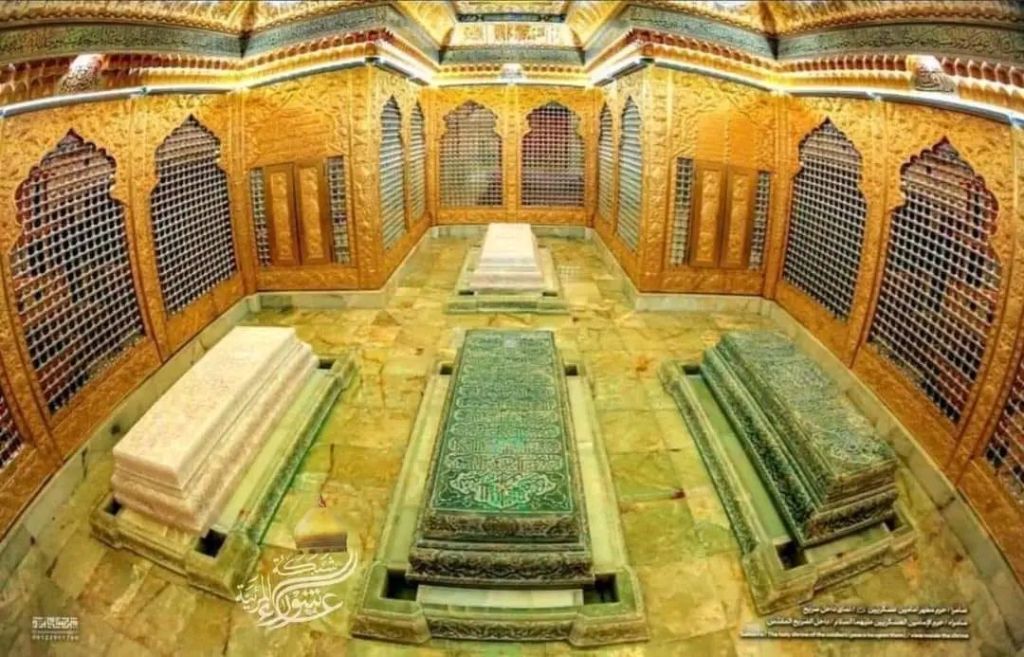
Brief description of life of Imam Hasan al Askari AlaihisSalam

Name : Hasan ibn Ali (a.s).-                The 11th  Holy Imam
Title : al-Askari
Agnomen : Abu Muhammad
Father: Imam Ali Naqi Al Hadi(a.s.) the 10th Holy Imam
Mother : Bibi Hadithah ( or Susan )from Mali, Africa.
Birth : on Monday, 10th Rabi-us-Sani 232 AH (846 AD)
Martyred : on  8th Rabi-ul-Awwal 260, A.H.                                               Friday the 5th January 874,                            at the age of 28,                           
Cause of Death/Burial: Poisoned by al-Mu`tamid ,the Abbasid ruler and buried at Samarrah in Iraq.                                                              Imam Hasan al- Askari (a.s.) spent twenty-two years of his life under the patronage of his father, Imam Ali Naqi al-Hadi (a.s.) after whose martyrdom he became his divinely commissioned Imam .

Imam Hasan al-Askari(a.s.), the son of the Tenth Imam , was born in 232 AH and according to some Shi`ite sources was poisoned and killed in 260 AH through the instigation of the Abbasid caliph al-Mu`tamid . The Eleventh Imam(a.s.) gained the Imamate , after the death of his noble father , through Divine Command and through the decree of the previous Imams. During the seven years of his Imamate, due to untold restrictions placed upon him by the caliphate , he lived in hiding and dissimulation ( taqiyyah ) . He did not have any social contact with even the common people among the Shi`ite population.
Only the elite of the Shi`ah were able to see him .
Even so , he spent most of his time in prison . 
There was extreme repression at that time because the Shi`ite population had reached a considerable level in both numbers and power . Everyone knew that the Shi`ah believed in the Imamate , and the identity of the Shi`ite Imams was also known .
Therefore , the caliphate kept the Imams under its close supervision more than ever before . It tried through every possible means and through secret plans to remove and destroy them .
Also ,the caliphate had come to know that the elite among the Shi`ah believed that the Eleventh Imam , according to traditions cited by him as well as his , forefathers , would have a son who was the promised Mahdi (Atfs).                  The coming of the Mahdi had been foretold in authenticated hadith of the Prophet (saww) in both Sunni and Shi`ite sources . For this reason the Eleventh Imam Hassan Askari (a.s.), more than other Imams, was kept under close watch by the caliphate .

The caliph of the time had decided definitely to put an end to the Imamate in Shi`ism through every possible means and to close the door to the Imamate once and for all. Therefore , as soon as the news of the illness of Imam Hasan Askari(a.s.) reached al-Mu`tamid , he sent a physician and a few of his trusted agents and judges to the house of the Imam Hassan Askari (a.s.) to be with him and observe his condition and the situation within his house at all times .After the death of the Imam Hassan Askari (a.s.), they had the house investigated and all his female slaves examined by the midwife . For two years the secret ageins of the caliph searched for the successor of the Imam Hassan Askari (a.s.) until they lost all hope . The Eleventh Imam Hassan Askari (a.s.) was buried in his house in Samarrah next to his noble father.

Birth and Childhood

When he was born his father said that it was an order from the prophet (saww) that he should be named Hasan. It was so well known that the last Imams father would be called Hasan that people had previously looked for the 12th Imam amongst the sons of Imam Hasan Al-Mujtaba (a.s.)

His mother was Sulail (or Hudaitha) who was from Mali, Africa, who was a slave of the 10th Imam Hadi (a.s) whom he had freed and subsequently married. The 10th Imam Hassan  Askari (a.s) said of her that she was one who was free from all vice and pollution and that she was one of the righteous ones. After the 11th Imam’s martyrdom he left all the “orders” of Imamate with her (his mother). As first Shia Marjha, the shia Scholars would come to her for advised.

Once when Imam Hasan Al-Askari (a.s.) was a young child he fell into a well near their house. His father Imam Ali An-Naqi (a.s.) was praying and didn’t even notice the commotion around him of the ladies crying. When he finished praying and asked what had happened, he was told. He went towards the well. The water rose and all saw the 11th Imam Hassan Askari (a.s.) sitting peacefully on the water and playing.

Bahlool once saw the young Imam crying in the street where all the other children were busy playing with their toys. He asked whether Imam Hassan Askari (a.s.) was crying because he had no toys to play with. Imam Hassan Askari (a.s.) replied: “We have not been created to play!”

Bahlool asked where he had learnt this from and the Imam Hassan Askari (a.s) said :

“Have you not read the Qur’an where it says – “Do you think we have created you in vain and that you will not be returned to us”.

When Bahlool heard this he asked Imam Hassan Askari (a.s.) for some advice. Imam  Hassan Askari (a.s.) talked about death, barzakh and qiyama and cried so much, he fainted. When he came to, Bahlool asked him why he was so fearful as he was not even baligh yet. Imam Hassan Askari (a.s.) said:

“I have watched my mother light a fire; she uses the little twigs to get the big pieces of wood to burn; I fear that on qiyama Allah(swt) too will use little ones to light the big ones”.

Title: Al-Askery

The 10th and 11th Imamayn were both called Al-Askery as they lived in an area of Samarra called Askery.

Another reason that the 11th Imam was called Askery is said to be that once Mutawakkil wanted to show the Imam the strength of his army of 90,000 men and so he asked his men to fill their sacks with sand and pile all the sacks up. He then showed Imam this mountain of sacks. Imam Hassan  Askari (a.s) asked Mutawakkil, to look through his (Imam’s) two fingers, where he saw a an army of armed Angels. Imam Hassan  Askari (a.s) told him that they were at his disposal but he would not use them. (An army is called Askery).

Life and Works

Ahmed Bin Ishaq relates that when he heard of the death of the 10th Imam he went to Samarra and asked for the whereabouts of the 11th Imam. He was told that Imam Hassan  Askari (a.s) had been imprisoned by Mo’taz Billah. After bribing the guards he was able to visit Imam one night. He described the prison as a tunnel under the Khalifa’s home where there was no space to stretch ones legs nor room to be able to stand. Ahmed says he cried when he saw Imams condition. Food was only one glass of water and a piece of dry bread a day.

He was imprisoned because all the rulers knew of the justice that was promised to come with the coming of the 12th Imam and they wished to prevent anyone being born of the 11th Imam.

Whilst in prison he told his companions to accumulate all the masails of Fiqh and he completed the masails on the chapters that were found missing. He introduced the institution of “Taqleed” advising people to follow those who were learned, “Muttaqi”, and just, as he was in prison and it was extremely difficult for people to meet him. Khums was collected through his representative and masails too asked to him, Abu-Ja’fer Uthman bin Saeed, who was later to become the representative of the 12th Imam.

There was once a severe drought in Samarra and a Christian priest came who whenever he raised his hands caused rain to fall from the heavens. The Muslims faith started wavering and the Khalifa Mo’taz Billah got worried for if they left Islam he would have none to rule over.

He went to the 11th Imam saying that Imam’s grandfathers religion was in trouble. Imam asked him to call all the people outside Samarra with the Christian priest. He asked the Christian priest to pray for rain. When he raised his hands to pray it started to rain. Imam Hassan Askari (a.s) asked for whatever was in this hands to be taken away and then asked him to pray for rain again. There was no rain this time. Imam Hassan  Askari (a.s) showed that what the priest had in this hand was the bone of a Prophet (a.s) which whenever placed under the open sky caused it to rain.

Imam Hassan  Askari (a.s) then prayed for rain and it rained. Mo’taz could not re imprison Imam for some time for when the people saw the miracle they all wanted to visit Imam Hassan  Askari (a.s) and asked where they might find him. Imam Hassan  Askari (a.s) pointed to the Khalifa and asked them to ask him. Mo’taz told them that Imam Hassan  Askari (a.s) was staying at the house where the 10th Imam used to reside.

Bibi Nargis Khatoon (sa) was there and it was in that year that the 12th Imam was born. Imam was allowed out of prison for 13 months after which he was rearrested.

Martyrdom

In the six years of his Imamate several attempts were made on his life. On the 1st of Rabi-ul Awwal 260 A.H. Mo’tamad arranged for Imam Hassan Askari (a.s.) to be poisoned in prison and then sent him home. Imam Hassan Askari (a.s.) was in great pain and difficulty for 8 days. On the 8th of Rabi-ul Awwal he asked his son, the 12th Imam, to bring him some water and then leave him. He died that day and was given ghusl and kafan by his son, Imam Muhammad Mahdi (Atfs).

Burial

The funeral prayers were led by the 12th Imam Muhammad Mahdi (Atfs) and it was then that a lot of Shia’s saw him for the first time. A large number of people attended the funeral and he is buried in Samarra.


What Role Do Angels Play in Our Lives?

■ What Role Do Angels Play in Our Lives?

I love how you see these incidents online where a person is walking on the street and doesn’t notice a bunch of cars coming, and a huge truck is about to collide with them. Suddenly, it’s as if an arm pulls the truck away, and it goes in a completely different direction. Or someone narrowly misses four cars as they collide, and that person just stands there unharmed.

In some situations, you witness someone involved in a freak accident, like the person jogging on the beach, suddenly hit by a plane. It’s as if you witness divine decree and precision, seeing the perfection of Allah ﷻ’s control. When you reflect on your own life, you might remember driving on the highway, distracted, and just missing a car accident. In that moment, you think, “Subhan Allah, Allah ﷻ protected me.”

Those who have seen their children fall might think, “If they had fallen just a little differently, it would have been so much worse.” These moments remind us of Allah ﷻ’s overwhelming power, but they also involve the role of angels.

Allah ﷻ says in the Qur’an:

لَہٗ مُعَقِّبٰتٌ مِّنۡۢ بَیۡنِ یَدَیۡہِ وَ مِنۡ خَلۡفِہٖ یَحۡفَظُوۡنَہٗ مِنۡ اَمۡرِ اللّٰہِ ؕ

❝For each one are successive angels, before and behind him. They guard him by the command of Allah.❞ (13:11).

Every single person has a guardian angel in front of them and behind them, protecting them by Allah ﷻ’s decree.

Reflect on this concept. Often, we are paranoid about the devils and the Shayateen (devils) around us, but proportionally speaking, every human being has four angels assigned to them, while only one devil (Shaytan) is assigned to each person. Two angels protect you, and two angels record your deeds. Any additional angels or devils in your life are invited by your good or bad deeds.

The guardian angels are always with you—during the day, while you sleep at night, and during significant or insignificant moments of divine decree. As Mujahid and Wahb ibn Munabbih said, these angels protect you from wild animals, riding beasts, harmful people, and even small insects like ants. If it is not decreed for you to be harmed, these angels will shoo away bugs and objects, keeping you safe.

Sayidina Ali ibn Abi Talib (رضي الله عنه) was once informed of a tribe planning to attack him. He said,

❝They cannot harm me unless Allah ﷻ has decreed it. For Allah ﷻ has set guardian angels for each person, and the only time harm befalls someone is when those angels are commanded to step aside.❞

Sayidina Ibn Abbas (رضي الله عنه) similarly said that these angels protect you out of obedience to Allah ﷻ and only step aside when it is decreed otherwise.

This is a powerful concept to reflect on, especially when we think of the Prophet Muhammad ﷺ and Saydina Jibril (Gabriel) protecting him from enemies, or the Muslims during the Battle of Badr, where angels were sent to protect them. The Muslims witnessed their enemies being thrown off their horses, hearing the crack of a whip but not seeing who was doing it.

Even at the end of times, the Dajjal (Antichrist) will try to enter Madinah, only to find angels guarding its gates, protecting the city from all sides.

In our individual lives, these angels protect us unless Allah ﷻ has decreed otherwise. As Saydina Ibn Abbas (رضي الله عنه) said, the only time they step aside is when Allah ﷻ has decreed harm, something written for us in the womb by an angel—our date of death, our lifespan, and that moment for our souls to depart. When the decree of death comes, these angels move aside, allowing the soul to be transferred to another group of angels, either wrapped in the shroud of paradise or the shroud of Hellfire.