
The Best of Creation part 16

The eighth year after the Migration 1

The delegation of ‘Abd al-Qays arrived [in Medina]. The Messenger ﷺ said to them, ‘Welcome to a group of people, who are without disgrace and regret.’ He, furthermore, said to Ashajj, their chief, ‘You have two qualities that Allah and His Messenger ﷺ love: forbearance and deliberation.’ Amongst their merits was that when
the Arabs apostatised, there was not a place left on earth wherein anyone was prostrating to Allah except three mosques: the mosque in Mecca, the mosque in Medina and the mosque of ‘Abd al-Qays. ‘Amr ibn al-‘As, Khālid ibn al-Walid and ‘Uthman ibn Talḥah accepted Islam.

The Prophet’s ﷺ oldest daughter Zaynab, the wife of Abū al-‘Āṣ ibn al-Rabi’, passed away; he placed his garment over her after she was washed and before being shrouded so as to grant her the blessings from his relic.

There was inflation in Medina, so they [the Companions] said, ‘O Messenger of Allah, fix the prices for us,’ to which he ﷺ replied, ‘Verily, Allah is the one Who determines the prices, the one Who withholds, gives generously and provides sustenance.’

The expedition (sariyyah) of Ghālib in Ṣafar to Banī al-Mulawwiḥ in al-Kadid took place; he  seized considerable amount of spoils.

The expedition (sariyyah) of Ghālib [also took place] in Şafar, to the place in Fadak where the companions of Bashir were killed; the group consisted of two hundred men; they [the Muslims] them and captured some livestock. massacred them

The expedition (sariyyah) of Shuja’ ibn Wahb al-Asadi to Banim ‘Amir in al-Si’ a stream from Dhāt ‘Irq to Wajrah – took place. The location is approximately eighty-four miles from Mecca on the route to Basra and five marḥalahs [approximately one hundred and thirty-eight miles] from Medina. The group consisted of twenty-four men, and was to confront a group from Hawāzin. They managed to seize considerable spoils.

The expedition (sariyyah) of Ka’b ibn ‘Umayr al-Ghifārī, together with fifteen men, to Dhāt Aṭlāh — beyond Dhāt al-Qurā – in Rabī‘ al-Awwal. The disbelievers killed them all except for one man.

Then there was the Expedition (Ghazwah) of Mu’tah. The Prophet did not take part in it himself. The reason behind
sent al- this expedition was that when Allah’s Messenger ﷺ Harith ibn ‘Umayr al-Azdi, from Bani Lahab, with his  letter to the Roman King in Shām – and it has been said that it was the King of Buṣrā – Shuraḥbīl ibn ‘Amr al-Ghassānī stopped him and tied him with a rope; he then had him brought forth and smote his neck. He was the only envoy of Allah’s Messenger ﷺ to be killed; therefore, when news of his death reached him, he was distressed by it. So he dispatched an army and appointed Zayd ibn Harithah as the commander in charge and said, ‘If Zayd is martyr, then Ja’far [is to succeed him], and if Ja’far is Martyr, then ‘Abd-Allāh ibn al- Rawāḥah.’ So Zayd, with the flag [in his hand], fought until he was martyred; then Ja’far took it [the flag] and fought ferociously until his right forearm was severed, so he took the flag with his left hand and it also got severed [from an enemy blow], so he embraced it [the flag] with his upper arms; so Allah compensated him for that with two wings to fly with in Paradise. He then fought until he was martyred. Then ‘Abd-Allāh ibn al-Rawāḥah took the flag and fought until he was martyred. Thereafter, the people chose Khalid ibn al-Walid [to lead them], so he took the flag and fought and saved
all the Muslims [from further major loss].

The Messenger announced the martyr of Zayd, Ja’far and Ibn Rawāḥah to the people [of Medina] before the news of their deaths reached them. He informed them, as tears flowed from his eyes, “Zayd took the flag and was struck dead; then Ja’far took it and was struck dead; then Ibn Rawāḥah took it and was struck dead’; then he said, ‘One of the swords of Allah – [i.e. Khālid] – took the flag until Allah granted victory at his hands.’

When the army returned to Medina, some people started saying, ‘O fleers (farrar), you fled from Allah’s cause.’ However, the Prophet ﷺ received them himself and said about them, ‘They are not fleers; rather, they are karrār [those who retreat to re- launch an offensive], if Allah wills.’

The Expedition of Chains (Dhāt al-Salāsil) took place; it was called that because the polytheists chained one another out of fear that some might flee, and it has been said that it was named after a well at which the expedition ended. The reason behind it was that he ﷺ dispatched a group of his Companions, appointing ‘Amr ibn al-‘As as a commander over them, to invite the Arabs to Islam. The enemies, however, stopped them in their tracks, so ‘Amr sent a message back [to Medina], seeking reinforcements from the Messenger of Allah, ﷺ who sent Abu Bakr, ‘Umar and Abū ‘Ubaydah ibn al-Jarrāḥ [and two hundred fighters from the Supporters and Migrants] as reinforcement, and thus they triumphed by Allah’s grace.

Ali AlaihisSalam the Super man part 7 MILITARY CAMPAIGNS

The enmity of the Jews

The victory at Badr removed the threat of invasion by the Meccans but the Islamic community at Medina was still a long way from feeling secure. From the beginning the Muslim emigrants had been obliged to endure the bitter animosity of the Jewish tribes that had settled in and near Medina and, when earlier attempts at conciliation failed, Prophet Muhammad ﷺ was forced to resort to stronger measures. Hazrat Ali, as his right-hand man, leading part in all these expeditions.

In order to gain a fuller understanding of the posi- tion it is necessary here to digress, to explain how the Jews came to be in Medina in the first place and what
manner of people they were. At the dawn of history tne Jews, or ‘Hebrews’ or ‘sons of Israel’ had taken by force the country later known as Palestine. From the beginning they were fond of amassing wealth and their habit of lending money to people at exorbitant interest gained them notoriety as the most avaricious race of mankind. As civilisation became more complicated, they gained control of banking in many countries but their greed was to prove their downfall. Actuated partly by motives of nationalism and partly by envy and hatred for the Jews were living off the fat of the land and exploiting the masses other races began a steady process of con- quest and expulsion. As early as 722 B.C. Sargon II is said to have expelled them from their home. Then followed the invasion of Nebuchadnezzar in 586 B.C., and of Pompey in 63 B.C., and of Titus in 70 A.D. their final downfall coming after the invasion of Hadrian in 135 A.D. Probably it was the sack of Jerusalem by Titus that compelled the Jewish tribes of the Banu Qainuqa, the Banu Qureiza and the Banu an-Nadir, to seek refuge at Yathrib (or Medina as it was named later on) and settle there. Having settled at Medina, however, the Jews soon wanted to dominate over the local Arab affairs in politics,
religion, economics, and sociology.

This led to a continual warfare between the Jewish tribes of Medina and the local tribes of the Banu Aus and Khazraj. Indeed it was because of their fear of these Jewish raids that the Medinites invited Muhammad ﷺ to come and settle at Medina.

Prophet Muhammad’sﷺ  first efforts towards the Jews were conciliatory. He drew up the famous Medina Charter in which the rights of all Jews living in or near the city were safeguarded in the following terms:-

“The Jews who attach themselves to the Islamic Commonwealth shall be protected from all insults, injuries and vexations: they shall have an equal right with our own people to our assistance and good offices: the Jews of the various branches of Auf, Najjar, Harrith, Jashm, Thalaba and all others domiciled in Medina shall form with the Muslims one composite nation; they shall practise their re- ligion as freely as the Muslims: the clients and allies of the Jews shall enjoy the same security and free- dom; the guilty shall be pursued and punished, the Jews shall join the Muslims in defending Medina against all enemies, the interior of Medina shall be a sacred place for all who accept this charter; the clients and allies of the Muslims and the Jews shall be as respected as the patrons, all true Muslims should hold in abhorrence every man, guilty of crime, injustice or disorder: no one shall uphold the culpable, though he were
his nearest of kin.”

But in spite of these concessions, the Jews remained inimical to Nabi Pakﷺ  and the Muslims. Nabi Pakﷺ emphatic insistence that he ﷺ was God’s Apostle, the promised Messiah and the Redeemer of mankind irritated the Jews who refused to accept the fact that any one other than a person of their own race could interpret the will of God. The Jewish belief in a theo- cratic government, with their own Prophets  as the only legal interpreters of God’s will, had long made them an intolerant people. How far they were prepared to carry
their policy of intolerance had already been demonstrated in their persecution of Jesus Christ and of Paul and they to
were now, some centuries later, equally unwilling leave Nabi Pak ﷺ  unmolested. Syed Ameer Ali¹ says of the situation at Medina:- “We have seen with what bitter animosity the Jews dogged Prophet Muhammad’s ﷺfootsteps from the moment of his arrival at Medina. They tried to sow disaffection among his people. They libelled him and his followers. They mispronounced the words of the Qur’an so as to give them an offensive meaning. But this was not all. By their superior education and intelligence, by their union with the party of the “Munafikin” (the hypocrites), and by the general unanimity which prevailed among them (so different from the disunion of the Arabs), the the Jews formed a most dangerous element within federated state which had arisen under the Teacher of Islam. Among unadvanced nations poets occupy the position and exercise the influence of the press in modern time. The Jewish poets by their superior culture na- turally exercised a vast influence among the Medinites; and this influence was chiefly directed towards sowing sedition among the Muslims, and widening the breach between them and the opposing faction.”

The Muslims could not tolerate the satires and lampoons of the Jewish poets, especially those of Asma, daughter of Merwan, a Jewish poetess whose daily output of obscene couplets about Prophet and his com- panions, was on every one’s lips in the streets of Medina. Omeir, a devout Muslim, incensed beyond measure, entered Asma’s apartment one night and stabbed her; Abu Afaq, another Jewish poet, was similarly murdered by a Muslim. This led to an open breach between the Muslims and the Jews..

The “Munafikin”

The Jewish instigation of the “Munafikin”
Military Campaigns
to by Syed Ameer Ali in the preceding passage constitut- ed such a powerful threat to Muhammad that further reference needs to be made to this political party. The “Munafikin” or “Hypocrites” had been amongst the earliest converts to Islam but their conversion had been prompted by self-interest and expediency and they had paid only lipservice to its tenets. Urged on by the Jews, they were now as ready to turn against the Muslims as they had previously been eager to join with them, and their leader, Abdullah bin Ubayy, became, with Jewish support a serious threat to Prophet Muhammad ﷺ (may peace be upon him).

Operations against the Banu Qainuqa, February 624 A.D.

The first of the Jewish tribes to break the charter of agreement with the holy Prophet ﷺ were the tribesmen of the Banu Qainuqa, who had settled in a walled strong- hold outside Medina. When Muhammad ﷺ called upon them to respect the alliance, their leader became in- furiated and said, “O Muhammad! Do you take us to be akin to the men of your tribe and race? So far you have only crossed arms in war with the rabble of your own tribe whom you could defeat, dictate and slay. But when you meet us, by the Lord of Israel, you shall know what tough men we are. Even this did not make  Prophet Muhammad ﷺ to take the offensive against them, though he told them to take warning.

“Once again “says Col Bodley,” the Jews did not heed the warning. A Muslim girl was seated in the shop of one of the Banu Qainuqa waiting to be served. A light hearted Hebrew youth crept up behind her and pinned her skirt to her bodice.  The result was that the young lady walked unsuspectingly into the street with her posterior exposed.The lewd jeers of the practical jokers made her rush back into the shop blushing with shame. At the same time a Muslim who had witnessed the occurrence drew his sword and fell on the laughing Jews and killed one. Before he could kill a second, he was killed himself.”

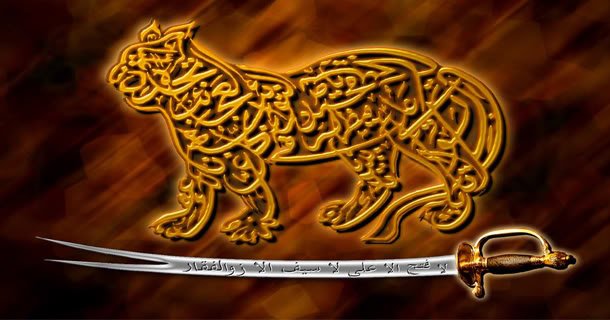
This exhausted the patience of  Nabi Pakﷺ (may peace be upon him). He ﷺ prepared an army and, giving the white banner (under which the Muslims had fought in the Battle of Badr) to Ali  AlaihisSalam ordered him to besiege the Jewish stronghold. After a fortnight, starvation drove the men of Banu Qainuqa to lay down their arms in surrender. Some four hundred Jews of the Banu Qainuqa were marched off with their hands tied behind their backs, but Nabi Pak ﷺ with his usual clemency did not have them beheaded. Instead they were banish- ed to migrate eventually to Syria, and their homes and land near Medina were confiscated. In accordance with Prophet Muhammad’s ﷺordinance the booty was shared among all men of the Fraternity. The Prophet’s own share on this occasion was the ancient sword, the bow, and the silver cuirass which Saul had offered to David when he had gone out to fight with Goliath.

1. R.V.C. Bodley-The Messenger, p. 155. Publishers Orientalia, Lahore. Ed. 194.