

The seventh year after the Migration
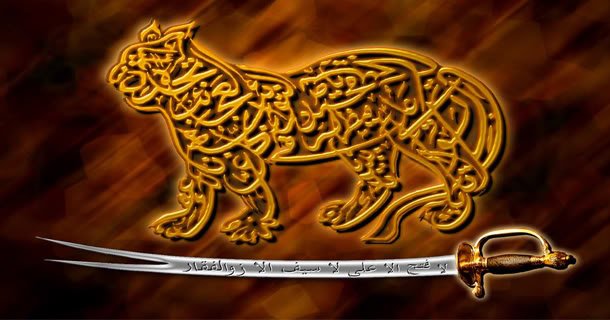
The Expedition (Ghazwah) of Khaybar took place – Khaybar is the name given to a group of citadels and villages, which are approximately one hundred and twenty miles north of Medina. Allah, Glorified is He, had promised the Prophet Muhammad ﷺ the conquest of Khaybar whilst he was in al-Hudaybiyah. Some of the scholars have said that it is indicated in His Most High’s words, ‘And he rewarded them with the speedy triumph’ [Qur’an 48: 18]. The one carrying the war banner on the day of the Muslim victory was ‘Alī ibn Abi Talib AlaihisSalam, after the Messenger ﷺ had said, ‘I will indeed give the banner tomorrow to a man at whose hands Allah will give victory and whom Allah and His messenger love.’ Thus, he plunged through the gate of the fortress and pulled off one of its doors and threw it on the floor. As for the fortresses which Allah had liberated at his hands in Khaybar, then they are: the fortress of Nä’im and al- Qamus, the fortress of al-Sa’d ibn Mu’adh and others.
The following incidents took place during this expedition:
1. fifteen [of his ﷺ ] companions were martyred;
2. Şafiyyah bint Huyayy was taken as a war prisoner. She later to become his ﷺ wife;
3. The incident of the [lamb] shank: Zaynab bint al-Ḥārith, a Jewish woman, invited the Prophet ﷺ and prepared for him grilled mutton to which she had added poison, more so to its shank as she was informed that he preferred it. The Messenger of Allah ﷺ said, ‘This shank is telling me that it is poisoned,’ so he ﷺ summoned her and she confessed;¹³¹
Those who migrated to Abyssinia returned. Their return was on the day that Khaybar was liberated; they were led by Ja’far ibn Abi Ṭālib. When he [Ja’far ibn Abī Ṭālib] arrived, he [the Prophet ﷺ]. said, ‘I don’t know with which of the two I should be happier: the conquest of Khaybar or Ja’far’s arrival!’ Alongside Ja’far, Abū Mūsā al-Ash’arī and his tribesmen [literally the Ash’ariyyin] arrived.
Abu Hurayrah accepted Islam, and that was at Khaybar.
The Expedition of Wādī al-Qurā – one of the Jewish villages between Medina and Khaybar, which is now called al-‘Ulā – occurred. The Messenger of Allah ﷺ passed by it on his way back from Khaybar to Medina. He ﷺ invited its inhabitants to Islam, but they refused to accept and instead fought him. Therefore, the Messenger of Allah ﷺ liberated it by force and Allah granted him its inhabitant’s wealth and property as spoils.
In Sha’ban, he ﷺ dispatched ‘Umar ibn al-Khaṭṭāb, among a group of thirty men, to Turabah, which is a distance of four nights from Mecca. However, he ﷺ did not encounter any confrontation.
Also in Sha’bān, there was the expedition of Abu Bakr to Banī albia- Kilāb – it has also been said [that it was to] Fazārah – towards zaran towards m Dariyyah. A group of them were taken as prisoners of war, while others were killed.
Thereafter [also] in Sha’ban, there was the expedition of Bashir ibn Sa’d to Bani Murrah [a tribe] in Fadak, and together with him there were thirty men who got killed; Bashir was injured but nevertheless survived.
Then there was the expedition of Ghālib ibn ‘Abd-Allāh al- Laythi in Ramadan, among one hundred and thirty men, to Mayfa’ah towards Najd – one hundred and ten miles from Medina. –
Then there was the expedition of Bashir ibn Sa’d in Shawwal, together with three hundred men, to Yumn and Jabār the land of Ghaṭafan – because a group had amassed in al-Janāb in
order to attack Medina. When news of Bashir’s march towards the group reached them, they fled [hurriedly], and thus he gained substantial spoils from them and captured two men, who both subsequently accepted Islam.
The Make-up Umrah (Umrah al-Qaḍā’) occurred. It was his second umrah: he had left in the month of Dhu al-Qa’dah. This umrah is also called ‘the Umrah of Equitable Retribution’ (‘Umrah al-Qiṣās) because of His Most High’s words, ‘and violations of sanctities [call for] equitable retribution’ [Qur’an 2: 194]. It was also called the ‘Umrah al-Qadiyyah’ from the word al-muqāḍah [meaning reconciliation] since it was agreed that he would return [home] the previous year and then return [to perform umrah] the following year. This umrah is mentioned in His Most High’s words, ‘Allah has confirmed His messenger’s dream: you shall surely enter the Inviolable Mosque God willing, safely, with your heads shaved or your hair cut short without fear’ [Qur’an 48: 27].
Then there was the expedition of al-Akhram, who is called Ibn Abī al-‘Ūjā’ al-Sulami, to Bani Sulaym in Dhū al-Ḥijjah, together with fifty men. The disbelievers surrounded them and killed all with the exception of Ibn Abi al-‘Ūja’, who escaped.
He ﷺ took for himself a pulpit and began to deliver sermons on it. He would previously deliver sermons reclining against a tree trunk, and so when he initially left the tree trunk, it hankered after him like a mother who has lost a child, so much so that it could be heard in the mosque; so he embraced it and it calmed down. This report is in the authentic collection [of al-Bukhārī].

 Aal-e-Qutub Aal-e-Syed Abdullah Shah Ghazi