
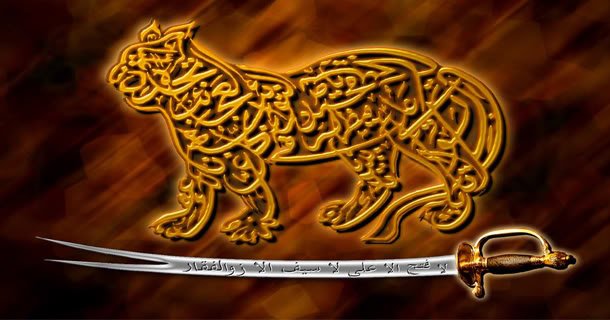


CHAPTER SIX
Miracles
His greatest miracle is the Qur’an. Further miracles include all to Jerusalem and from there to the heavens and his informing [the Quraysh] the following morning about Jerusalem, and his splitting of the moon.
Furthermore, he emerged in front of a group of Quraysh, who were conspiring to kill him, and their gazes lowered and their chins fell on their chests, and he proceeded until he stood over their heads; he then took a handful of soil and said, ‘May their faces be made hideous,’ and threw small stones at them. There was not a man among them who was struck by those stones except that he was killed on the Day of Badr, and everyone of those polytheists who had soil thrown on their faces was defeated on the Day of Ḥunayn by Allah Most High.
Moreover, there is what happened to Suraqah ibn Mālik when he followed him during his [Prophet’s] migration, when his horse’s legs were swallowed up by the hard earth.
He ﷺ wiped over the back of a she-camel that had not been mated by a male camel, and it started to produce milk. Umm Ma’bad’s sheep was frail and not producing any milk, so he wiped over its udder whereupon she began to produce milk.
His prayer to Allah for ‘Umar to strengthen Islam [by conversion] was answered. His prayer to Allah to alleviate ‘Alī AlaihisSalam [from] the heat and cold was answered; hence, ‘Ali AlaihisSalam would wear summer clothing during winter and, winter clothing during the summer, and he was not affected by either the heat or cold.
He ﷺ prayed for ‘Abd-Allāh ibn ‘Abbās to be given the ability to interpret [the Qur’an] and for understanding in the religion, and thus he earned the epithet al-Ḥabr [the Scholar] and the Tarjumān al-Qur’an [Interpreter of the Quran]. He prayed for Jābir’s camel, so it became a frontrunner after having being previously outclassed. He prayed for Anas to be given a long life and lots of wealth and children, and so it came to pass. He [prayed] over Jābir’s dates; after which Jabir managed to pay off his debtors [by selling those dates], with a surplus of thirteen wasq remaining [in his possession].
He prayed for rain, so it rained for a week, after which the clouds disappeared and the sky cleared. He prayed against ‘Atībah ibn Abū Lahab, whereupon he was eaten by a lion in Zarqa’, Shām. He spat in ‘Ali’s inflamed eye, whereupon he immediately recovered and never suffered an eye inflammation thereafter. He returned Qatādah ibn Nu’mân’s eyeball when it fell over his cheek [during the Battle of Uḥud], and it thereafter became his better eye.
Stones and trees greeted him on the nights [just before the beginning of] his prophetic mission, saying, ‘Peace be upon you, O Messenger of Allah,’ and he would say, ‘Verily, I know a stone in Mecca that used to greet me before I was sent [as a messenger]. “The tree trunk hankered after him,58 the stones glorified Allah in his palm, as did food, the [grilled shank of a] sheep informed him that it was poisoned and a camel complained to him of being burdened by excessive labour and lack of fodder.
He foretold of the places where the polytheists would be killed
Chapter six: Miracles
on the Day of Badr; hence, none of them fell out of his place. He foretold of a group from his nation who would lead a militarily expedition by sea and that Umm Ḥarām bint Malḥan would be amongst them, and it transpired as such.
He said to ‘Uthman, ‘You will be afflicted by a severe tribulation,’ and so it was the case, as he was murdered.
He said to the Anṣār, ‘You shall encounter after me leaders withholding from you your rights,’ and so it came to pass.
He foretold of the killing of al-‘Ansĩ the false prophet in Sana’a [Yemen] on the night he was killed, and who would kill him.
He said to Thabit ibn Qays, ‘You shall live praiseworthy and die as a martyr;’ he was killed on the Day of al-Yamāmah.
A man abandoned Islam and joined the polytheists, and the ews reached him that he had died, whereupon he said, “The earth shall not accept him,’ and so it was the case.
He said to a man who was eating with his left hand, ‘Eat your right hand,’ to which he replied [in defiance], ‘I cannot,’ whereupon he replied, ‘May you never be able [to eat with the right hand;’ and he was unable to raise the hand to his mouth thereafter.
He entered Mecca on the Day of the Conquest (Fath), as the idols hung around the Kaaba, with a staff in his hand and began to point at them and say, “The truth has come, and falsehood has vanquished,’ while they [the idols] began to successively fall one after another.
He fed [a group of his Companions] at the trench⁰ from a sā [approximately kilogrammes] of barley, whereupon they were all satiated, and what was leftover of the food was more than what it was [at the beginning].
He fed many from a small quantity of dates and gathered the
resulting surplus in a belt and prayed for it to be blessed; he then distributed it among the troops, and it sufficed them.
Abu Hurayrah came to him with some dates which he had gathered with his own hands and said, ‘Pray [over them] so that I be given blessings in them,’ so he did [pray over them]. Abū Hurayrah said, ‘I removed from those dates such and such amount (wasq) in the way of Allah [during military expeditions] which we used to eat from and feed others until they expired during the reign of ‘Uthman.’
He prayed for the people of Șuffah over a plate of tharīd [a dish consisting of meat and shredded bread in meat broth]. Abu Hurayrah said, ‘I began to raise my head high so that he may pray for me when the people stand. There was only a small amount around the edges of the plate, so the Messenger of Allah gathered it, and turned out to be a morsel; he then placed it on his fingers and said, “Eat in the name of Allah,” by the one in whose hands is my soul I [Abū Hurayrah] didn’t stop eating from it until I was satiated.’
Water gushed forth between his fingers, so the people drank and performed ablution; the number of people in total was one thousand four hundred.
He was brought a cup of water wherein he placed his fingers and said [to his Companions], ‘Come forth,’ and so they all performed ablution from it. They were between seventy to eighty [on that occasion].
During the Military Expedition of Tabük, he came to a well that could not quench the thirst of a single person. The people, however, were thirsty and complained to him, so he took an arrow from the quiver and planted it [in the well], whereupon the water began to gush forth; then they all quenched their thirst. Their number was thirty thousand.
A group of people complained to him of the salinity of their water, so he proceeded along with a group of his Companions until he stood over the well and then spat in it, whereupon fresh spring water began to gush forth.
A woman came to him with a baby of hers who was bald, so he wiped over his head, whereupon his hair became full and copious,
and his condition disappeared. The people of al-Yamāmah heard about that, so a woman came to Musaylimah [the false prophet of al-Yamāmah] with her baby, and so he wiped his head, whereupon he became bald, and baldness continued in his offspring.
The sword of ‘Ukashah broke on the Day of Badr, so he gave him a wooden stump, which turned into a sword in his hand. It remained with him thereafter [to use in future battles].
The boulder in the trench was too tough to be broken by the pickaxe [used by others],6¹ so he struck it, and thus it became like a heap of sand.
He wiped over someone’s broken foot, so it became as if he had never had the complaint.
His miracles are more than can be enumerated in a compilation.

 Aal-e-Qutub Aal-e-Syed Abdullah Shah Ghazi