

Praises of some Scholars on a group of Sahabah from Ahl Al-Bait
The uncle of the Messenger of Allâh AlAbbas bin Abdul Muttalib
Adh-Dhahabi in his book Siyar A’alam AnNubala’ (Vol.2, page: 79-80) said: “He was among the tallest men and the best among them in appearance and the most noticeable, with a nice and clear voice, great patience and honor…”
Az-Zubair bin Bakkar said: “Al-Abbas had a special clothe for the naked among the Banu Hashim, a bowl of food for the hungry and a Minzarah for the ignorant ones; he used to protect the neighbour, spend money (for the needy) and help at times of disasters”.
His statement: Minzarah in Tahdhib Ta’rikh Ibn Asakir (is written as) Miqtarah and it is what is used to tie the offender and evil doer with (See Ha’shiyat As-Siyar).
The uncle of the Messenger of Allâh Hamza bin Abdul Muttalib
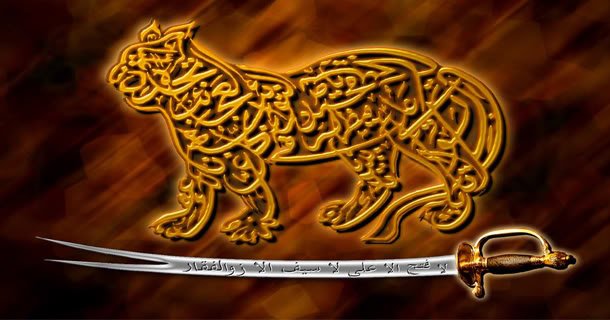
Ibn Abdul Bar in his book Al-Isti’aab (Vol. 1 page: 270 Hashiyatul Isabah) said: “Hamza bin Abdul Muttalib bin Hashim, the uncle of the Prophet; he was called the lion of Allâh and the lion of the Messenger of Allâh . He was nicknamed Abu Omarah and also Abu Ya’ala”.
And Adh-Dhahabi (in describing him) said: “The Imam, the hero, the Lion of Allâh, Abu Omarah and Abu Ya’ala, the Quraishian, the Hashemite, the Meccan and the Madinian, the Badri (i.e. He fought the Battle of Badr), the Martyr, the uncle of the Messenger of Allâh and his breastfed brother”. As-siyar (Vol.1, page: 172).
Amir Al-Mu’minin Ali bin Abi Talib
Muslim narrating in his Sahih (276) with his Isnad attributed to Shuraih bin Hani’e said: “I came to Aisha and asked her about wiping over the scuff and she said: ‘go to Ibn Abi Talib and ask him, for he used to travel with the Messenger of Allâh’. We asked him and he said: The Messenger of Allâh gave three days and their nights to the traveler (to wipe over his scuff during ablution), and a day and its night for the resident”.
And in another version of the Hadith, she said: “Go to Ali for surely he knows about it better than me”. I came to Ali, and he mentioned from the Prophet the same thing.
Ibn Abdul Bar (Rahimahullah) in his book Al-Isti’aab (Vol.3 page: 51 Hashiyatul Isabah) said: “Ahmad bin Hanbal and Ismael bin Ishaq Al-Qadi said: it has not been narrated in (showing) the virtues of any of the companions with authentic chain of narration like what has been narrated (in showing) the virtues of Ali bin Abi Talib; a similar statement has also been reported from Ahmad bin Shuaib bin Ali AnNasa’e (Rahimahullah)”.
He also said (Vol.3 page: 47): “Al-Hassan bin Abi Al-Hassan Al-Basri was asked about Ali bin Abi Talib and he said: By Allâh! Ali was indeed the perfect arrow which Allâh has thrown on His enemies, the Rabbaniyy of this Ummah (i.e. the learned man of religion who practices what he knows and preaches to others). He owned virtues in the community. He was among its foremost members and had kinship with the Messenger of Allah. He has never napped on the command of Allâh neither has he been blamed in the religion of Allâh nor has he been a thief of the wealth of Allâh. He gave the Qur’an all his determination and gained therein the purified and beautiful gardens. That was Ali bin Abi Talib, O slave of Allâh!”
He also said (Vol.3 page: 52): “Al-Asam narrated from Al-Abbas Ad-Dawri that Yahya bin Ma’een said: The best of this Ummah after our Prophet are Abubakr and Omar, then Othman and then Ali: this is our belief and the statement of our Imams”.
He also said (Vol. 3 page: 65): “And Abu Ahmad Az-Zubairi and others narrated from Malik bin Migwal who was quoting Ukail that Ash-Sha’abi said: ‘Alqamah said to me: ‘Do you know the parable of Ali in this Ummah?’ I said: ‘and what is his parable?’ He said: the parable of Issa (Jesus) the son of Mariam (Mary): people loved him till they perished in their love for him, and others hated him till they perished in their hatred for him”.
In other words, Alqamah compares the Khawarij and Rafidah to the Jew and the Christians, respectively.¹
He also said (Vol.3 page 33): “They unanimously agreed that he (i.e. Ali) prayed towards the two Qiblas (Bait Al-Maqdis [Jerusalem] and then the Ka’aba) migrated (to Medina), took part in the Battle of Badr, that of Al-Hudaibiyat and all confrontations. He excelled himself greatly in the Battles of Badr, Uhud, Al-Khandaq and Khaibar. He fought courageously in those confrontations, and stood in them an honorable position. He was the holder of the flag of Allâh’s
¹The Khawarij who hated Ali after the trial of “Sifin” till they perished; the Rafidah claimed to love Ali and exceeded the limit of love for mankind which perished them. Messenger in many places: he held it on the day of Badr (there is a dispute on that among the scholars) and when Mus’ab bin Umair was killed on the day of Uhud, the Messenger of Allâh transferred the flag to his hands.
Ibn Taimiyah in his book Minhaj AsSunnah (Vol.1, page: 178) said: “Abubakr and Omar have always been kind to Ali in every manner: they always considered him and the rest of the Banu Hashim before others in donations; they considered him in rank, sanctity, love, loyalty, praises and respect as they did with his counterparts; they granted him the merit, which Allâh has blessed him with besides others of his type. They were never known to have uttered any ill statement against Ali, neither against any of the Banu Hashim […] As well as Ali, it has been confirmed from him his love for both of them (Abubakr and Omar), his loyalty, respect and his consideration for them more than for all others in this Ummah; and he has never been known to have said any ill word against them, nor to have said that he was the worthier of the leadership (after the death of the Prophet) than Abubakr and Omar. And this is well known by those among specialists and profanes who know authentic reports from the companions by people of authority.
He also said: “As for Ali, the people of the Sunnah love and befriend him, and they testify that he is one of the Orthodox Caliphs and rightly guided Imams”.
Ibn Hajar (Rahimahullah) in his book AtTaqreeb said: “Ali bin Abi Talib bin Abdul Muttalib bin Hashim, the Hashemite, Hidarat, Abu Turab, and the father of the two Hassans (Hassan and Hussein), son of the uncle of Allâh’s Messenger, and husband of his daughter, he was among the first to accept Islam. In fact the majority considered him to be the first, and he is the preceding Arab, one of the ten (mentioned by the Prophet to enter Paradise). He died in Ramadan in the 40th year of Hegira. The people of Sunnah have unanimously agreed that by then he was the best son of Adam among the living on the earth. He had 63 years according to the predominant opinion. He had 15 sons and 18 daughters. That has been mentioned by Al-A’miriy in his book Ar-Riyad Al-Mustatabah among the Sahabah who narrated in Sahihain (page: 180). He then mentioned them by their names, mentioned their mothers and then said: “and the progeny of Ali is from the children of Al-Hassan, Al-Hussein, Muhammad, Omar and Al-Abbas”.
The grandson of the Messenger of Allâh Al-Hassan bin Ali bin Abi Talib
Ibn Abdul Bar in Isti’aab (Vol.1, page: 369 Hashiyatul Isabah) said: “It has been confirmed by many authentic narrations that the Prophet said about Al-Hassan bin Ali: This son of mine is a Saiyid (i.e. chief), perhaps Allâh will keep him alive until He brings reconciliation between two great groups of the Muslims through him”. (Narrated by a group of Sahabah) And in the Hadith reported by Abubakr (he added): ‘He is my sweet scented plant (rayhanah) in this world’. There is no chief greater than the one whom the Messenger of Allah has called a chief. He was very patient, pious and virtuous. His piety and virtue urged him to give up the power and this world, longing for that which is in the hands of Allâh, and he said: ‘By Allâh I have never loved ever since I realized what benefits and harms me- to take up the affairs of the Ummah of Muhammad as far as that is requiring bloodshed, even in a small proportion. He was among the first set of people who hastened to help Othman and among his defenders”.
Adh-Dhahabi said about him in AsSiyar (Vol.3 pages: 245-246): “The Imam, the honorable, the sweet scented plant (Rayhanah) of the Messenger of Allâh, his grandson, and the leader of the youths of Paradise, Abu Muhammad the Quraishian, the Hashemite, the Medinian, the martyr”.
He also said (Vol. 3 page: 253): “This Imam was indeed honorable, good-looking, handsome, rational, calm, generous, praised, charitable, religious, pious, modest, and great”.
And Ibn Kathir said about him in AlBidayah wan-Nihayah (Vol.11 pages 192193): “As-Siddiq used to respect him and honor him and served him devotedly, and also Omar bin Al- Khattab […] Likewise, Othman bin Affan used to honor Al-Hassan and Al-Hussein and love them, and on the day when the house of Othman was besieged, Al-Hassan was there with his sword defending him, but Othman swore to Allâh urging him to return in fear for him to be harmed and in order to please Ali. May Allâh be pleased with all of them”!
The grandson of the Messenger of Allâh Al-Hussein bin Ali bin Abi Talib
Ibn Abdul Bar said in Al-Isti’aab (Vol. 1 page: 377 Hashiyatul Isabah): “Al-Hussein was virtuous, religious, full of fasting, prayer and Hajj”.
Ibn Taimiyah said as it is in Majmu alFatawa (Vol. 4 page: 511): “And Al-Hussein was honored by Allâh the highest with martyrdom on this day (i.e. the day of A’shura), and by that, He humiliated those who killed him, assisted in killing him, or were pleased with his death. And he had a good example in those who preceded him in the martyrdom; in reality, he and his brother are the leaders of the youths of Paradise. They were brought up in the esteem of Islam, they did not encounter what the other members of their family encountered (from the constraints) of Hegira (migration to Medina), Jihad and the patience upon the disturbance in the cause of Allâh. Allâh blessed them both with martyrdom in order to perfect their honor, and raise their position.
His killing was a great misfortune; and Allâh has ordained these words to be said during misfortune: (But give glad tidings to As-Sâbirûn (the patient), who when afflicted with calamity say: ‘Truly! To Allâh we belong and truly, to Him we shall return’. They are those on whom are the salawat (i.e. who are blessed and will be forgiven) from their Lord, and (they are those who) receive His mercy, and it is they who are the guided ones) ¹.
Surah Al-Baqara Ayaats: 155-157.
Adh-Dhahabi (Rahimahullah) said about him in As-Siyar (Vol. 3 page 280): “The noble and complete Imam, the grandson of the Messenger of Allâh and his sweet scented plant (Rayhanah) from the world, his beloved one, Abu Abdullah Al-Hussein bin (the son of) Amir AlMu’minin (Prince of the Believers) Abu AlHassan Ali bin Abi Talib bin Abdul Muttalib bin Hashim ibn Abdu Manaf bin Qusai, the Quraishian and the Hashemite”.
And Ibn Kathir said in Al-Bidayah wanNihayah (Vol.11, page: 476): “The point here is that Al-Hussein witnessed the Messenger of Allah and accompanied him till he died pleased with him. But he was a little boy then, and As-Siddiq used to honor and respect him, so did Omar and Othman. He also accompanied his father and narrated from him. He was with him in all his battles; in Al-Jamal and Sifin, and he was greatly honored and respected”.
Abdullah bin Al-Abbas Allâh’s Messenger cousin of
Al Bukhari narrated in his Sahih (4970) that Ibn Al-Abbas said: “Omar used to make me sit with the elderly men who fought in the Battle of Badr. Apparently, some of them did not like that and said to Omar: why do you bring in this boy to sit with us while we have sons like him? Omar replied: ‘Because of what you know of his position (i.e. his religious knowledge)’.
One day Omar called me and made me sit together with those people and I think he called me just to show them (my religious knowledge). He said to them: what do you say about the interpretation of this statement of Allah : When there comes the Help of Allâh (to you O Muhammad against your enemies) and the conquest (of Makkah)¹. Some of them said: “we have been ordained to praise Allâh and seek His forgiveness when Allâh helps us and when He gives us the Victory’. Some others kept quiet and did not say anything, on that he said to me: is that what you ay, O the son
Surah An-Nasr Ayah: 1.
of Al-Abbas?’ I replied: ‘no’. He said: ‘what do you say then’? I replied: ‘that is the sign of the death of the Messenger of Allâh*, which Allâh has made known to him’. He said: When there comes the Help of Allâh (to you O Muhammad against your enemies) and the conquest (of Makkah) > and that is the sign of the moment of your death (So glorify the praises of your Lord, and ask His forgiveness. Verily He is the One Who accepts the repentance and Who forgives. Omar said: I don’t know about it another meaning except what you have said.
And in At-Tabaqaat of Ibn Sa’ad (2/369), (it is narrated from Sa’ad bin Abi Waqaas that he said: “I have never seen a sensible, sober minded, knowledgeable, and widely forbearing (person) like Ibn Al-Abbas. I have seen Omar bin Al-Khattab calling him (to solve) difficult and problematic matters”.
And in this book also (Vol.2, page: 370), it is narrated from Jabir bin Abdullah “Ibn Al-Abbas has been blessed with
Surah An-Nasr 1-3.
understanding, intelligence, and knowledge. I have never seen Omar bin Alkhattab precede anyone before him”.
And in this same volume and page it is narrated from Jabir bin Abdullah that when he heard about the death of Ibn AlAbbas, he clapped one of his hands on the other and said: “The most learned and most forbearing person has died and this is a great misfortune to this Ummah”.
And in it is also narrated that Abubakr bin Muhammad bin Amr bin Hazm said: “When Ibn Al-Abbas died, Raafi’e bin Khadij said: “the one whose knowledge was needed by those between the east and the west has died today”.
And in Isti’aab of Ibn Abdul Bar (Vol. 2, pages: 344-345) it is narrated that Mujahid said: “I have not listened to a fatwa (Islamic advisory opinion) better than the fatwa of Ibn Al-Abbas, except when someone was saying (directly): ‘the Messenger of Allâh has said’. A similar statement has been narrated by Al-Qa’sim bin Muhammad”.
And Ibn Kathir (Rahimahullah) said in Al-Bidayah wan-Nihayah (Vol. 12, page 88): “It is confirmed from Omar bin Al-Khattab that he used to let Ibn Al-Abbas sit with the elderly men from the Sahabah, and he would say: ‘Blessed is the interpreter of the Qur’an Abdullah bin AlAbbas, and whenever he appears, Omar would say: ‘the youth of the elderly has arrived, the owner of the enquiring tongue and sensible mind”.
Ja’afar bin Abi Talib, cousin of Allâh’s Messenger
In Sahih Al Bukhari (3708) it is said from the Hadith reported by Abu Hurairah about Ja’afar: “The most charitable person towards the needy is Ja’afar: he used to take us to his home and offer us what was available therein; he would even offer us an empty container which he would split for us to lick whatever was in it”.
Al Hafiz Ibn Hajar said in his explanation (Al-Fath Vol.7, page: 76): “and it is according to this precision that must be understood the generality which is narrated by Ikrimah from Abu Hurairah, he said: ‘none has worn slippers and rode a camel, after the Messenger of Allâh, better than Ja’afar bin Abi Talib. This is recorded by At-Tirmidhi and Al-Hakim with an authentic Isnad”.
And Adh-Dhahabi said about him in AsSiyar (Vol.1, page: 206): “The honorable, the martyr, the great, the star of the Mujahidin, Abu Abdullah, the son of the uncle of the Messenger of Allâh, Hashim bin Abdu Manaf bin Qusai, the Hashemite, the brother of Ali bin Abi Talib; he was 10 years older than Ali. He made the two Hegiras, he migrated from Abyssinia to Medina, he joined the Muslims in Khaibar after they have conquered it, and stayed in Medina for months, and then the Messenger of Allâh appointed him as Commander of the army prepared for the Battle of Mu’uta towards Al-Karak, he was martyred there. The Messenger of Allâh was very happy for his coming (to Medina) and-by Allâh- he was so grieved on his death”.
And in At-Taqreeb of Ibn Hajar, he said: “Ja’afar bin Abi Talib, the Hashemite, the father of the needy, the owner of the two wings, the honorable Sahabi and the cousin of the Messenger of Allah, martyred during the Battle of Mu’uta in the 8th year of Hegira. He is mentioned in Sahihain but nothing has been narrated from him”.
He is called the owner of the two wings because he was compensated for the loss of his both hands, when they were cut off during the Battle of Mu’uta, with two wings with which he flew together with the Angels. It is reported in Sahih Al Bukhari (3709) with its Isnad attributed to AshSha’abi “That Ibn Omar, whenever he greeted the son of Ja’afar, he used to say: ‘Assalamu ‘alaika’ (may peace be upon you), O you the son of the owner of the two wings”.
Al-Hafiz Ibn Hajar said in his explanation: “It is as if he was referring to the Hadith of Abdullah bin Ja’afar in which he said: the Messenger of Allâh said to me: ‘Congratulations, your father is flying with the Angels in heaven’; recorded by AtTabarani with a good Isnad”.
He then mentioned other routes of this Hadith from Abu Hurairah, Ali and Ibn AlAbbas, and he said in the route of Ibn AlAbbas: “Verily Ja’afar is flying with Jibril and Mi’ka’eel: he has two wings with which Allâh compensated him for his hands”. He said: “The Isnad of this (Hadith) is good”.
The grandson of the uncle of the Messenger of Allâh, Abdullah bin Ja’afar
In Sahih Muslim (2428) it is narrated from Abdullah bin Ja’afar: “Whenever the Messenger of Allah returns from a journey, he is received by the youths of his household. Once he returned from a journey, I was preceded to him; he put me before him. Then one of Fatima’s sons was brought (on the scene), he placed him behind him; he (Abdullah bin Ja’afar) said: ‘we entered Medina, -the three of us together on the mount”.
Adh-Dhahabi (Rahimahullah) said about him in As-Siyar (Vol.3, page: 456): The master, the scholar, Abu Ja’afar the Quraishian, the Hashemite, the Abyssinian born, the Medinian settler, the hospitable, the generous, the son of the generous, and son of the owner of the two wings, he was blessed with the companionship of the Prophet and narrated Hadiths. He is considered among the junior Sahabah. His father was martyred on the day of the Battle of Mu’uta, the Prophet took up his responsibility, and he was brought up in his house.
He also said: “He was great, generous, and fit for leadership”.
And in Riyad Al-Mustatabat of Al-A’miriy (page: 205) “Abban bin Othman prayed on his corpse. He was by then the governor of Medina, he raised his stretcher while his tears were flowing down and he said: ‘By Allâh you were good, there is no evil in you, and you were by Allâh respectable, virtuous, and righteous”.
And among the companions of the Messenger of Allâh who belong to his household are
Abu Sufyan, Nawfal, Rabee’ah and Ubaidah who are the sons of Al-Harith bin Abdul Muttalib.
Abdul Muttalib bin Rabee’ah bin AlHarith bin Abdul Muttalib.
Al-Harith and Al-Mugirah the sons of Nawfal bin Al-Harith bin Abdul Muttalib.
Ja’afar and Abdullah the sons of Abu Sufyan bin Al-Harith bin Abdul Muttalib Mu’atib and Utbah the sons of Abu
Lahab Abdul Uzza bin Abdul Muttalib.
Al-Fadl and Ubaidullah the sons of AlAbbas bin Abdul Muttalib.

 Aal-e-Qutub Aal-e-Syed Abdullah Shah Ghazi