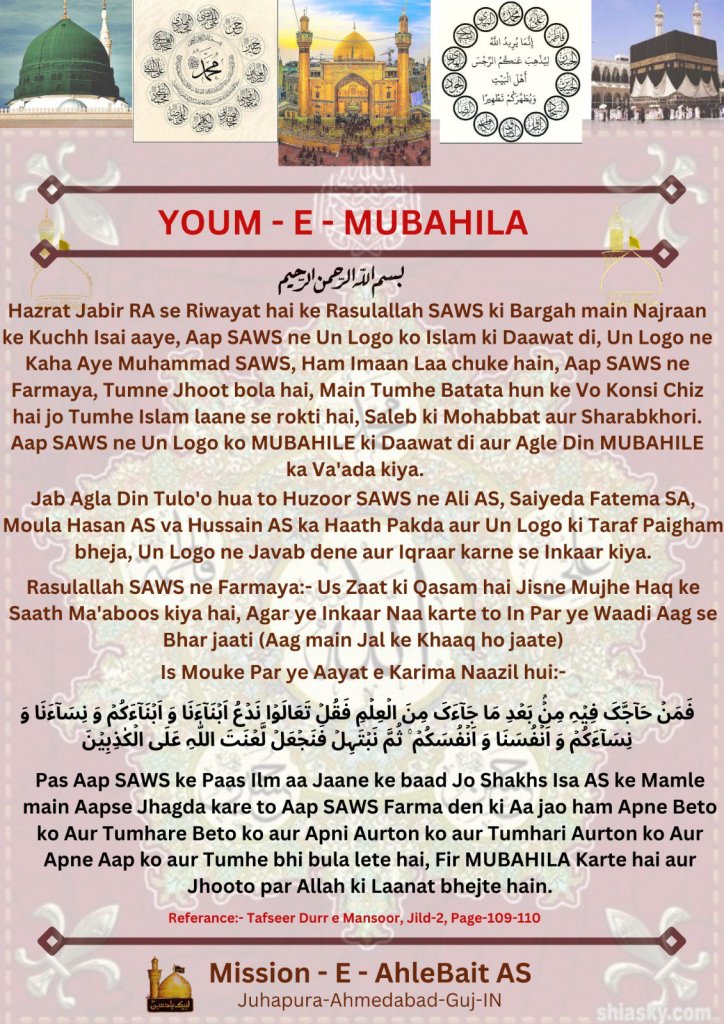
[Qur’an : 03 Surah Aal e Imran, Ayat No 61, Aayat e Mubahila]
*ﺃَﺑْﻨَﺎﺀَﻧَﺎ ﻭَﺃَﺑْﻨَﺎﺀَﻛُﻢْ*
Hum Apne Beto Ko Late Hain Tum Apne Beto Ko Lao Kehkar Sirf Hazrat Imaam Hasan Aur Hazrat Imaam Hussain Alahimus Salam Ko Pesh Kiya Ja Raha Tha.
*ﻭَﻧِﺴَﺎﺀَﻧَﺎ ﻭَﻧِﺴَﺎﺀَﻛُﻢْ*
Hum Apni Aurto’n Ko Late Hain Tum Apni Aurto Ko Lao Kehkar Koi Aur Na Tha Sirf Sayyeda Fatima Zahra Salamullah Alaiha Thi.
*ﻭَﺃَﻧﻔُﺴَﻨَﺎ ﻭَﺃَﻧﻔُﺴَﻜُﻢْ*
Hum Apni Jaano Ko Late Hain Tum Apni Jaano Ko Lao Kehkar Ek Jaan Tane Hazrat Muhammad Mustafa ﷺ Aur Dusri Jaan Tane Hazrat Sayyedna Mola Ali Alahis Salam Thi.
हज़रत सुहैब और हज़रत अम्मार रज़ियल्लाहु तआला अन्हुमा दोनों इस्लाम लाने की ग़र्ज़ से हुजूर सल्लल्लाहु अलैहि वसल्लम की ख़िदमत में हाज़िर हुए। हुजूर सल्लल्लाहु अलैहि वसल्लम अरकम रज़ियल्लाहु तआला अन्हु के मकान पर तशरीफ फरमा थे कि यह दोनों हज़रात अलग अलग हाज़िरे खिदमत हुए और मकान के दरवाज़ों पर दोनों इत्तिफाकिया आ खड़े हो गये। हर एक ने दूसरे की ग़र्ज़ मालूम की तो एक ही ग़र्ज़ यानी इस्लाम लाना और हुजूर के फैज़ से मुस्तफ़ीद होना दोनों का मक़सूद था । इस्लाम लाये और इस्लाम लोने के बाद जो उस ज़माने में उस थोड़ी और कमज़ोर जमाअत को पेश आता था वह पेश आया। हर तरह सताये गये, तकलीफें पहुंचायी गयीं, आखिर तंग आकर हिजरत फ़रमाई तो काफिरों को यह चीज़ भी गवारा न थी ताकि वह किसी दूसरी जगह जाकर आराम से ज़िन्दगी बसर करें । इसलिये जिस किसी को हिजरत का हाल मालूम होता था उसको पकड़ने की कोशिश करते थे कि तकलीफ़ से निजात न पा सके। चुनांचे उनका भी पीछा किया गया और एक जमाअत उनको पकड़ने के लिये गयी । उन्होंने अपना तरकश संभाला जिसमें तीर थे। हज़रत सुहैब ने उन लोगों से कहा कि देखो तुम्हें मालूम है कि मैं तुम सबसे ज्यादा तीर अंदाज़ हूं। जब तक मेरे पास एक भी तीर बाकी रहेगा तुम लोग हमारे नज़दीक न आ सकोगे। जब तीर ख़त्म हो जायेंगे तो मैं तलवार से मुकाबला करूंगा। यहां तक कि तलवार भी न रहे। उस वक्त तुम जो चाहे करना। अगर तुम चाहो तो अपनी जान के बदले में मैं अपने माल का पता बता सकता हूं, जो मक्का में है इस पर वह लोग राज़ी हो गये। हज़रत सुहैब ने अपने माल का पता बताकर अपनी जान छुड़ाई। फिर हुजूर की खिदमत में पहुंच गये और हुजूर उस वक्त कुबा में तशरीफ़ फ़रमा थे। उनको देखकर फ्रमायाः नफा की तिजारत की। (असदुल गाबा व हिकायातुस-सहाबा सफा १६) सबक : सहाबाए किराम को अपनी जान व माल और दुनिया की हरचीज़ से इस्लाम ज़्यादा प्यारा था। उन्होंने सब कुछ कुरबान करके इस्लाम को अपनाया। इस तिजारत में वह सरासर नफा में रहे।
Hazrat Imam Raza was an ocean of knowledge, wisdom and spiritual conscience. He was always ready to serve the people socially and spiritually. According to an episode, once when he was taking a bath, an army man came and told him to help him take a bath. He went aside and started helping him. At that time, another man, who knew him well, came. He shouted loudly on the army man and told him that the man from whom he was taking services as a slave was none but one of the descendants of Huzur. He cursed him. When the army man came to know the fact, immediately he fell to Hazrat Imam Raza’s feet and begged for forgiveness. He asked him, “Why did you not deny when I asked you to serve me?” He said, “Why should I not do the work which will give me spiritual benefit?” (Masaalik-ul-Saalikin)
Holy Marriage
It has been given in Sava’aik-e-Moharaka’a that so far as knowledge, virtues, spiritual stages and etiquettes were concerned, he was the topper among all the Saada’at. Due to his virtues and nobility, Ma’amun was very much pleased with him and married his daughter, Umm-e-Habiba with him. He made him heir of his entire kingdom. (Masaalik-ul-Saalikin)
His Knowledge and Wisdom
Looking to the wisdom and virtuous life of Hazrat Imam Ali Raza, Caliph Ma’amun made up his mind to marry his daughter with him. Bani Abbas did not like this. They doubted lest like his father; he also may not be made successor of the time. Mamun told Abbaasis that he had selected him because of his way of life, virtues and his devotion towards religion. The Abbas argued about the virtues and finally, they staunchly proposed for the discussion about the selection on the basis of virtues. They decided to send experienced scholar and skilled orator Yahya Ibne Akasm to Hazrat Imam Raza. The agitators took Hazrat Imam Raza just to be a child and expected that he would not be able to stand before the arguments of such learned person. The agitators expected in this way, his importance from Mamun’s heart would vanish. The best arrangements were made for the occasion on a particular date. Seats were assigned for rich and poor, laymen and learned people, all gathered together. Hazrat Imam Ali Raza also came there. Yahya Ibne Aksam asked him some questions, and absolutely proper answers were given by him. This silenced Yahya. Then Mamun said, “You have answered all the questions made by Yahya. Now, you also ask him some questions.” Hazrat Imam Ali also asked him a question, “During the morning, a man looked at a woman, when, she was forbidden for him. During sun-rise (Tulu’a Aftab) she was permitted for him. During noon she was forbidden for him and again in the evening, she was permitted for him. At sun-set, she was forbidden for him and was permitted at the time of night prayer (Isha). During mid-night, she was forbidden, and at dawn again, she was permitted for him. What do you say about this issue?”On hearing this, Yahya’a was dumb-founded and said that he did not know the answer to that question.
Hazrat solved the problem in such a way that the whole group of people was wonder-struck. He said, “A man looked at a maid-servant in the morning when she was forbidden for him. During sun-rise he bought her, and she became permitted for him. At noon, she became forbidden for him because he freed her. At evening he married her, and she was permitted for him. At sun-set, he divorces her, and she became forbidden for him. At night he begged for forgiveness, and she was permitted for him. During mid-night, he divorced (Talaq-e-baeen) her, and she was forbidden for him. In the morning, he got married to him, and she was permitted for him. (Sava’aik Moharka Maakhuj Raah Akidat)” This silenced all the people. Mamun looked at Bani Abbas and said, “Have, you all, seen this?” Then he fulfilled his purpose and got his daughter married to him.
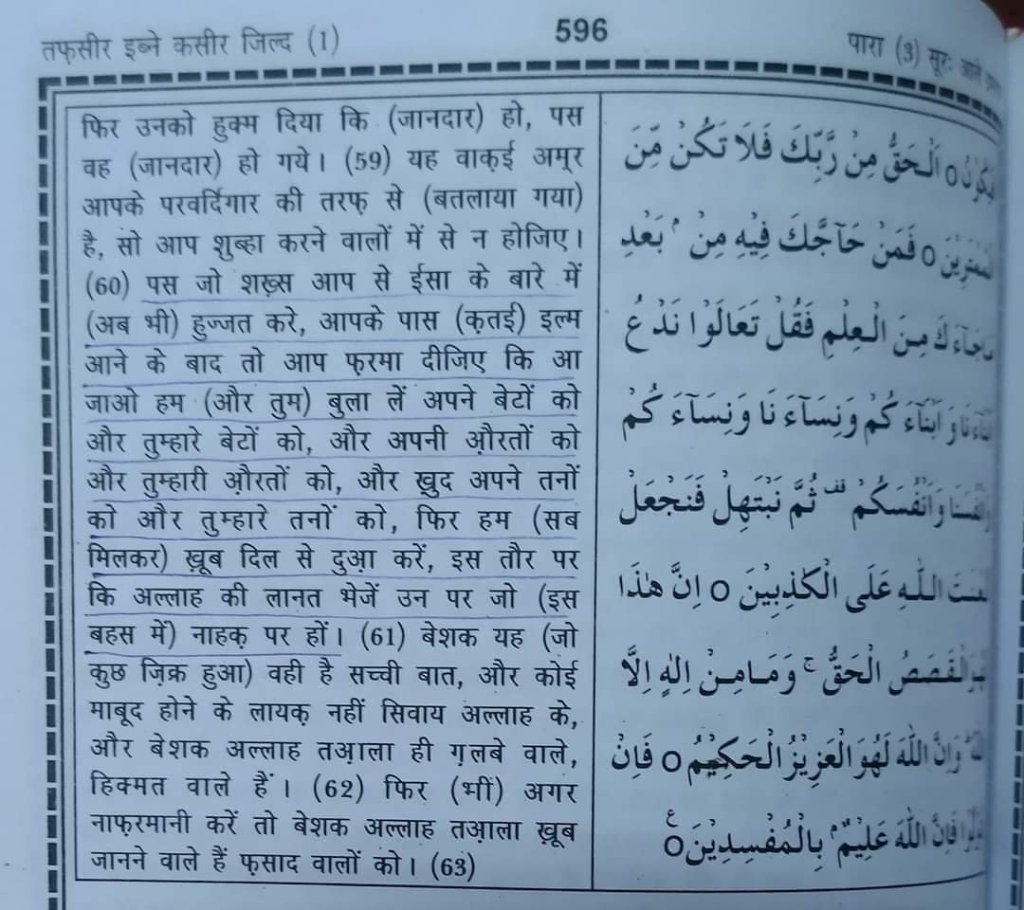
” पैग़म्बरﷺइल्म (क़ुरान) के आ जाने के बाद भी अगर लोग तुम से (ईसा के बारे में) कट हुज्जती करें तो उनसे कह दीजिए कि (अच्छा मैदान में) आओ हम अपने फ़रज़न्द (बेटों को बुलाएं, तुम अपने बेटों को बुलाओ), हम अपनी औरतों को बुलाएं तुम अपनी औरतों को बुलाओ और हम अपने नफ़्सों (जानों) को बुलायें तुम अपनी नफ़्सों (जानों) को बुलाओ फिर ख़ु़दा की बारगाह में (सब मिलकर) दुआ करें और झूठों पर ख़ु़दा की लाअनत क़रार दें “
– सूरह आले इमरान, आयत न. 61
इस आयत में अल्लाह ने रसुलल्लाह ﷺ को हुक्म हुवा की नज़रान के ईसाई ओ के सामने अपनी औरतो को और बच्चो को ले जाओ तो रसुलल्लाह ﷺ मौला ऐ कायनात अली अ.स., हसनैन करीमैन अ.स. और सैयदा ऐ कायनात स.अ. को लेकर गए।
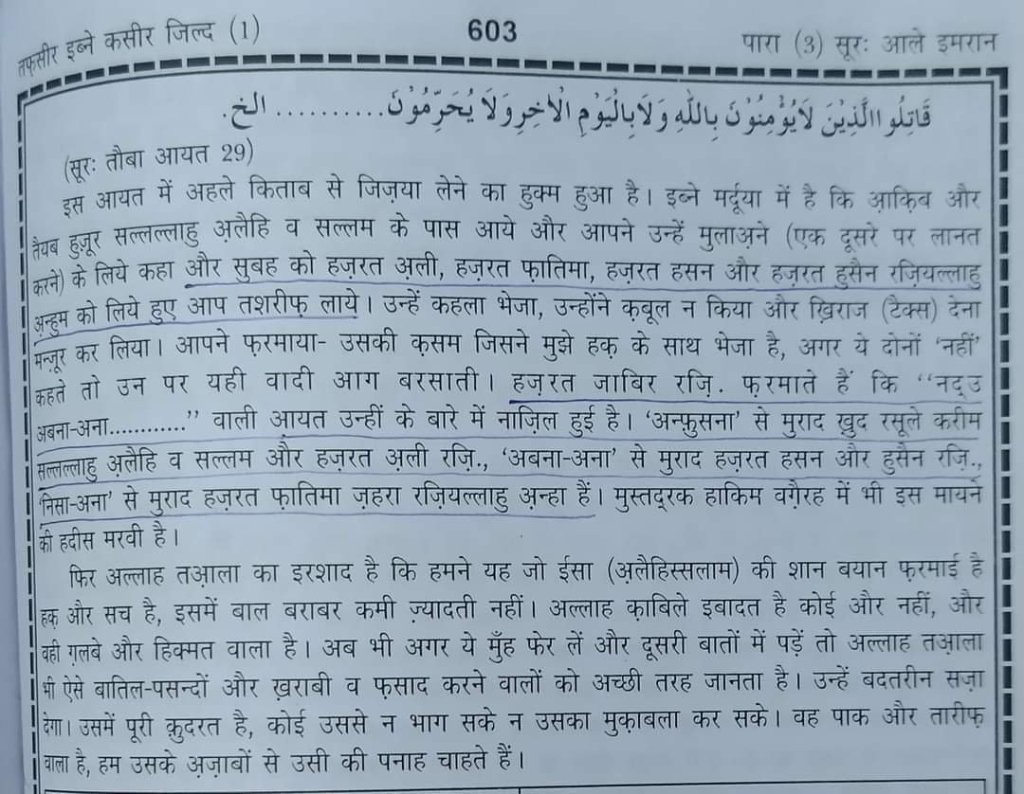
1) तफ़्सीर इब्न कसीर – सूरह आले इमरान, आयत न. 61 अेहले सुन्नत की सब से मोअतबर तफ़्सीर में लिखा है की ईसाई ओ के साथ मुबाहिले के लिए रसुलल्लाह ﷺ के साथ मौला ऐ कायनात अली अ.स. थे, हसनैन करीमैन अ.स. को रसुलल्लाह ﷺ अपनी चादर में लिए हुवे तशरीफ़ लाये और पीछे सैयदा ऐ कायनात स.अ. आ रही थी।
और इसमें लिखा है हज़रत जाबिर फरमाते है “अनफुसना से मुराद रसुलल्लाह ﷺ और मौला ऐ कायनात अली अ.स. है, अबना-अना से मुराद हसनैन करीमैन है और निसा-अना से मुराद सैयदा फातिमा स.अ. है। ”
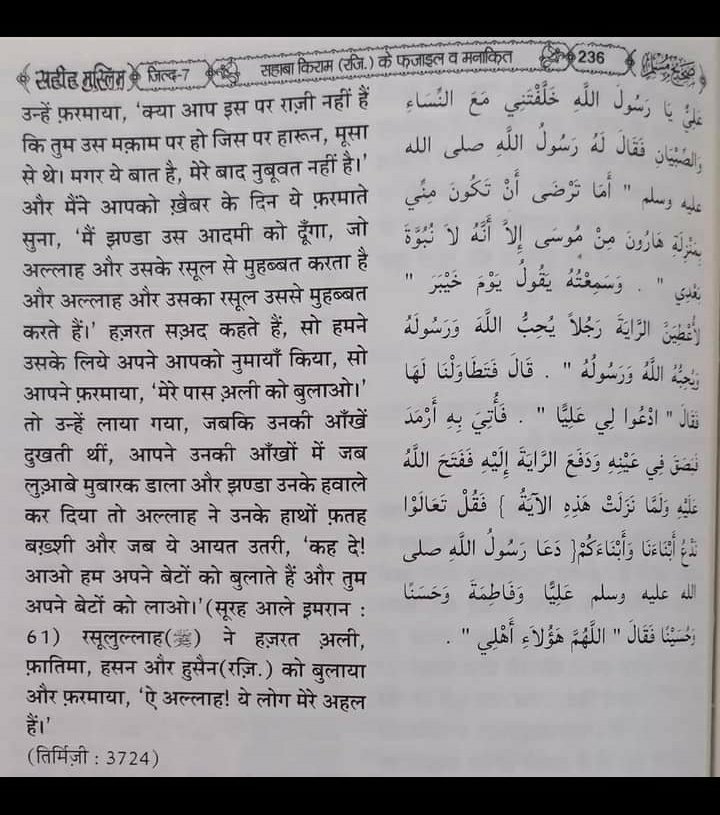
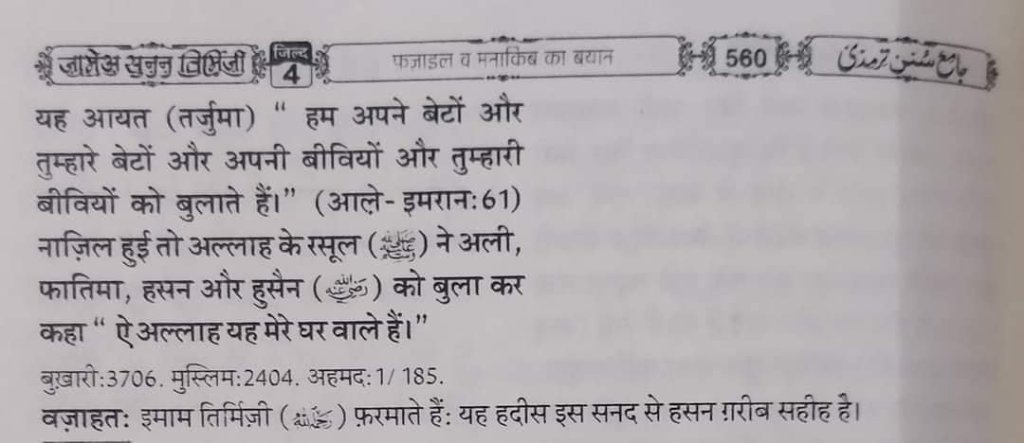
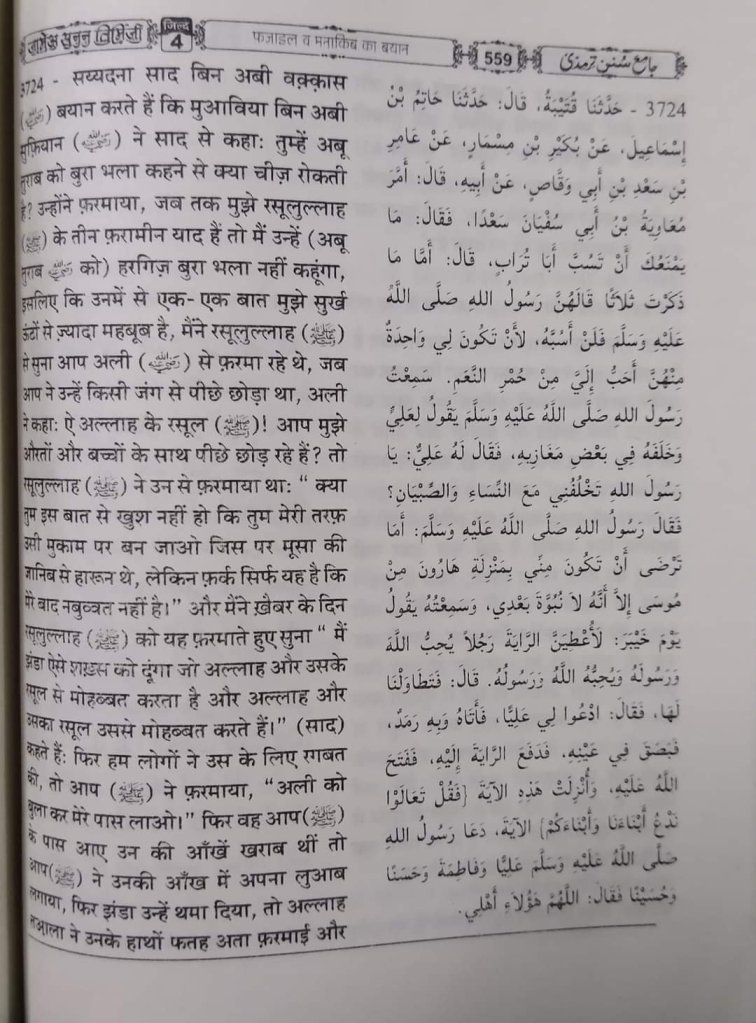
2) जामें तिर्मिज़ी – हदीस न. 3724 इस हदीस में साद इब्न अभी वकास को जब मुआविया, मौला अली अस पर लानत करने के लिए हुक्म देता है तो साद उसे केहते है “मैनें 3 फ़ज़ीलत मौला अली अ.स. के बारे में खुद रसुलल्लाह ﷺ से सुनी उसमें से एक भी मेरे लिए सुर्ख ऊंट से बेहतर है” और
फिर उन तीन फ़ज़ीलत में से एक फ़ज़ीलत बताते है की यह आयत (आले इमरान, 61) नाज़िल हुवी तो अल्लाह के रसुल ﷺ ने अली, फातिमा, हसन और हुसैन को बुलाकर कहा “अय अल्लाह, ये मेरे अेहलेबैत है ”
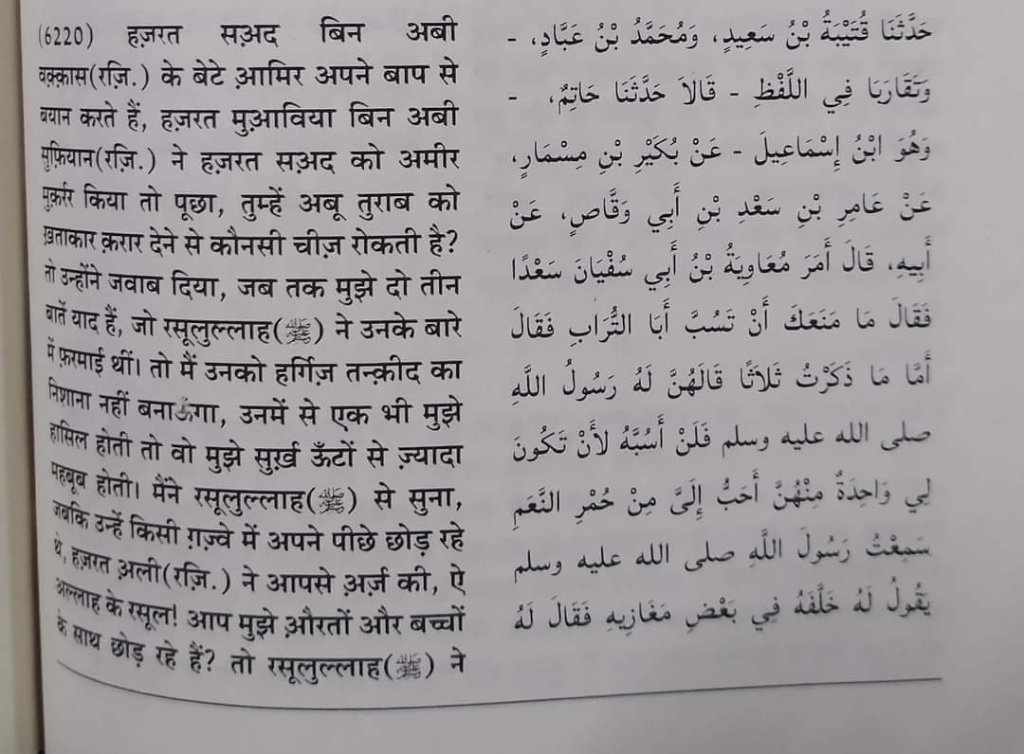
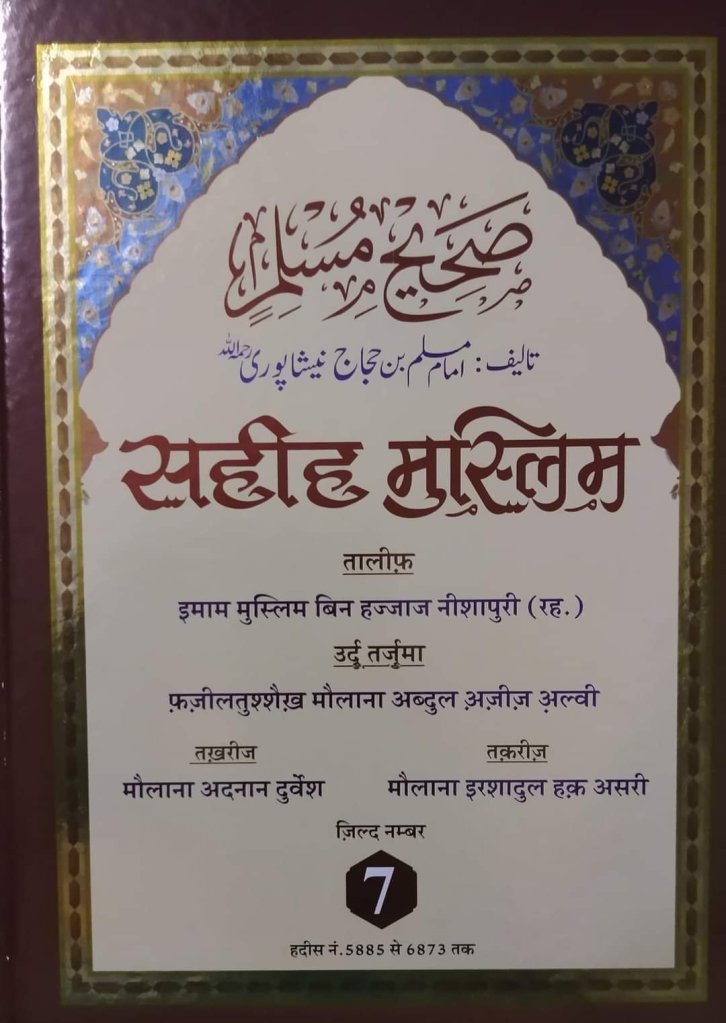
3) सहीह मुस्लिम – हदीस न. 6220 ये वही रिवायत है जो ऊपर मुस्लिम में बयान हुवी है।
यहाँ एक बात गौर करने वाली है की कुरान में हुक्म हुवा अपनी औरतो को लेकर जाओ और सब अज़वाज हयात है लेकिन रसुलल्लाह ﷺ किसी को ना ले गए बल्कि मलिका ऐ दो जहाँ सैयदा ताहिरा बीबी फातिमा स.अ. को लेकर गये। कहा अपने बेटो को ले जाओ तो अली, हसन और हुसैन अलैहिसलाम को लेकर गये और किसी को लेकर नहीं गये।
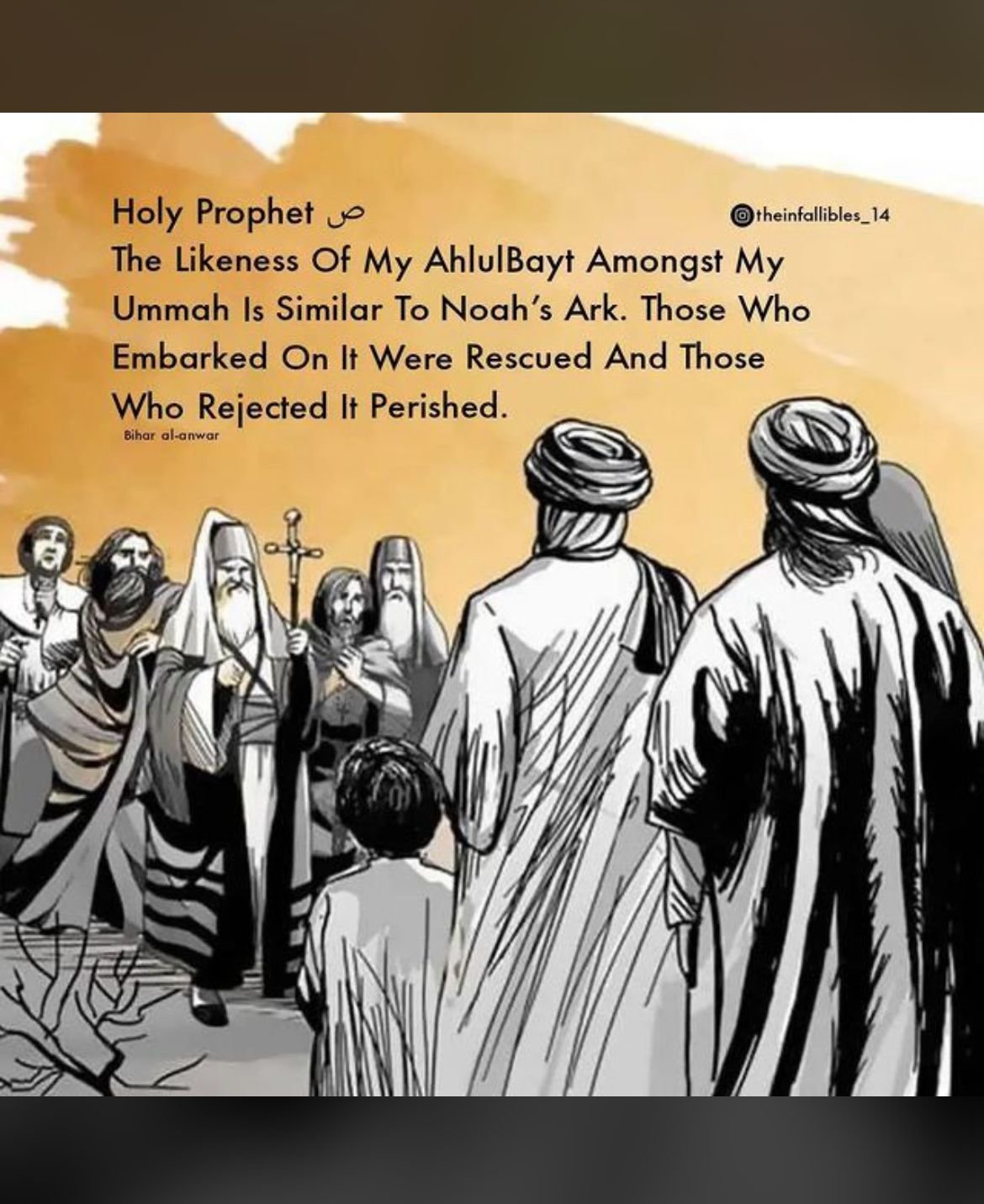
और नजरान के ईसाईओ ने ये पसमंज़र देखा की सामने से कौन आ रहा है वो डर कर मैदान छोड़ कर भागे।













 Aal-e-Qutub Aal-e-Syed Abdullah Shah Ghazi